
Customer Success Plan Template
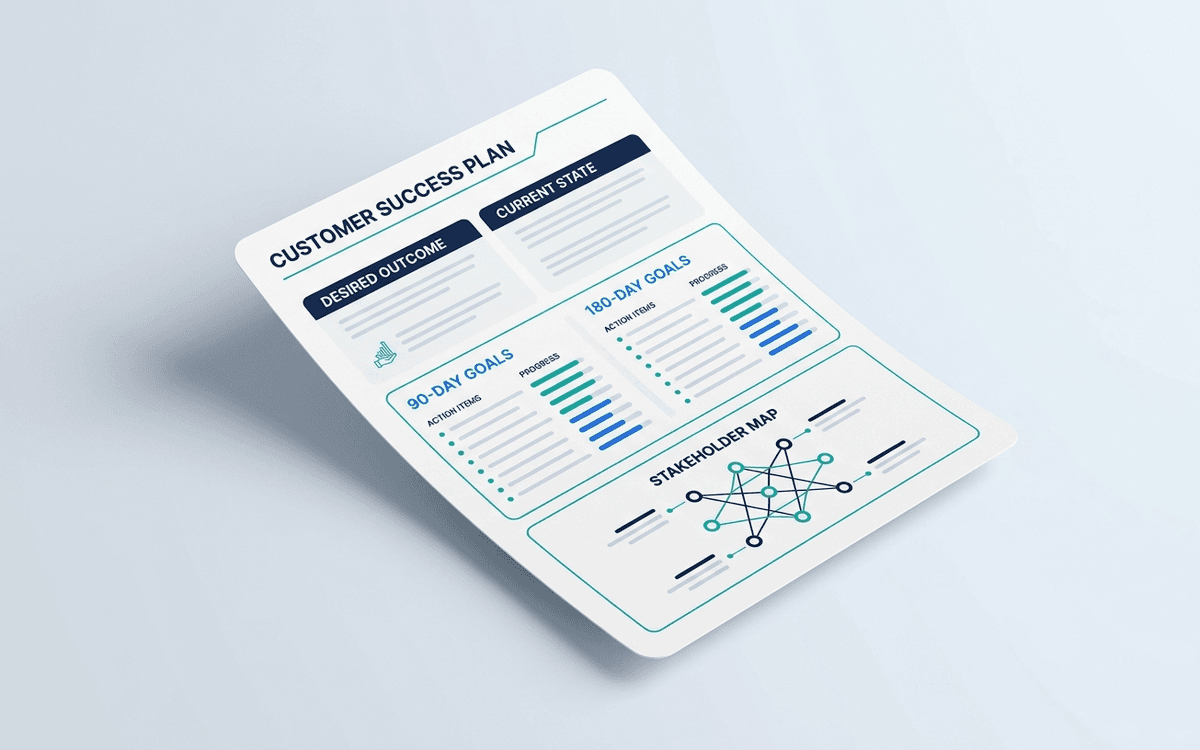
A customer success plan template anchored to the customer's desired outcome, not your product roadmap. Six months of goals, milestones, and owners — the document that makes your QBR a value review instead of a status update.
- Format:
- Word (.docx) (38 KB)
- Price:
- Free, no paywall
- Published May 2026
Download this template — free
Tell us where to send the link. We'll never share your email.
What's included
- Customer context block (use case, team, scale)
- Desired outcome (what success looks like in customer's language)
- Current state baseline (where we are today)
- Gap analysis (current state → desired outcome)
- 90-day and 180-day goals
- Milestones with owners and dates
- Success criteria for each milestone
- Adoption metrics to track
- Risk register and mitigation plan
- Stakeholder map (executive sponsor, champion, day-to-day owner)
- Renewal trajectory and key dates
How to use this template
1. Write the desired outcome in the customer's WORDS
The desired outcome section is the single most important part. It has to be in the customer's language, not yours. "Reduce time-to-onboard new employees by 40%" is a customer outcome. "Increase platform usage" is a vendor outcome. Get the former; if the customer can't articulate it, that's the first conversation.
2. Tie EVERY milestone to a measurable outcome
Activity-based milestones ("complete training") aren't enough. Outcome-based milestones ("reduce ticket volume by 25%") drive value. Translate every activity into the outcome it should produce. Customers and renewals both care about outcomes.
3. Identify the EXECUTIVE sponsor early
The champion runs the day-to-day; the executive sponsor signs the renewal. They're usually different people. Identify both. Build the plan so the exec sponsor sees value without having to ask. If you can't name the exec sponsor, that's a churn risk.
4. Update the plan, don't restart it
Customer success plans drift. The temptation is to rewrite from scratch every QBR. Don't. Show progress against the existing plan, adjust where reality has changed, add new goals. Continuity in the document mirrors continuity in the relationship.
5. Co-author with the customer
A CSM-written plan is half a plan. The customer needs to co-own the outcomes and own at least half the milestones. "Things we'll do for you" creates passive customers; "things WE'LL do together" creates active ones. Renewal data is consistently better for co-authored plans.
Who it's for
- CSMs at SaaS companies running structured success motions
- Account managers at enterprise accounts
- Implementation leads transitioning to ongoing CS
- Founders running founder-led CS at early stage
Frequently asked questions
- How is a customer success plan different from a project plan?
- Project plans are about delivering features or services. Success plans are about achieving outcomes — which features and services are tools in service of that. A customer can complete every project milestone and still not achieve success; the success plan catches that gap.
- How often should the success plan be reviewed?
- Monthly with the day-to-day champion. Quarterly with the exec sponsor (at the QBR). Annually for a full plan refresh. Continuous tracking against the plan happens in the CSM's own systems; the visible review cadence matches the customer's rhythm.
- Who writes the customer success plan?
- CSM drafts; customer reviews and co-edits. Drafted in week 2-3 of onboarding, signed off by end of month 1. Plans drafted entirely by the vendor with customer "approval" rarely drive customer-side action.
- What should be in the success plan vs. the QBR?
- Success plan = forward-looking goals, milestones, owners. QBR = backward-looking review of progress against the plan, plus next-quarter goal-setting. The plan is the document; the QBR is the conversation that updates it.
- Should every customer have a success plan?
- Every strategic and high-touch account, yes. Mid-touch accounts get a lightweight version (one-page). Low-touch / self-serve accounts get a generic playbook, not an individualized plan. Match the artifact to the segment.
More customer success templates
QBR Template
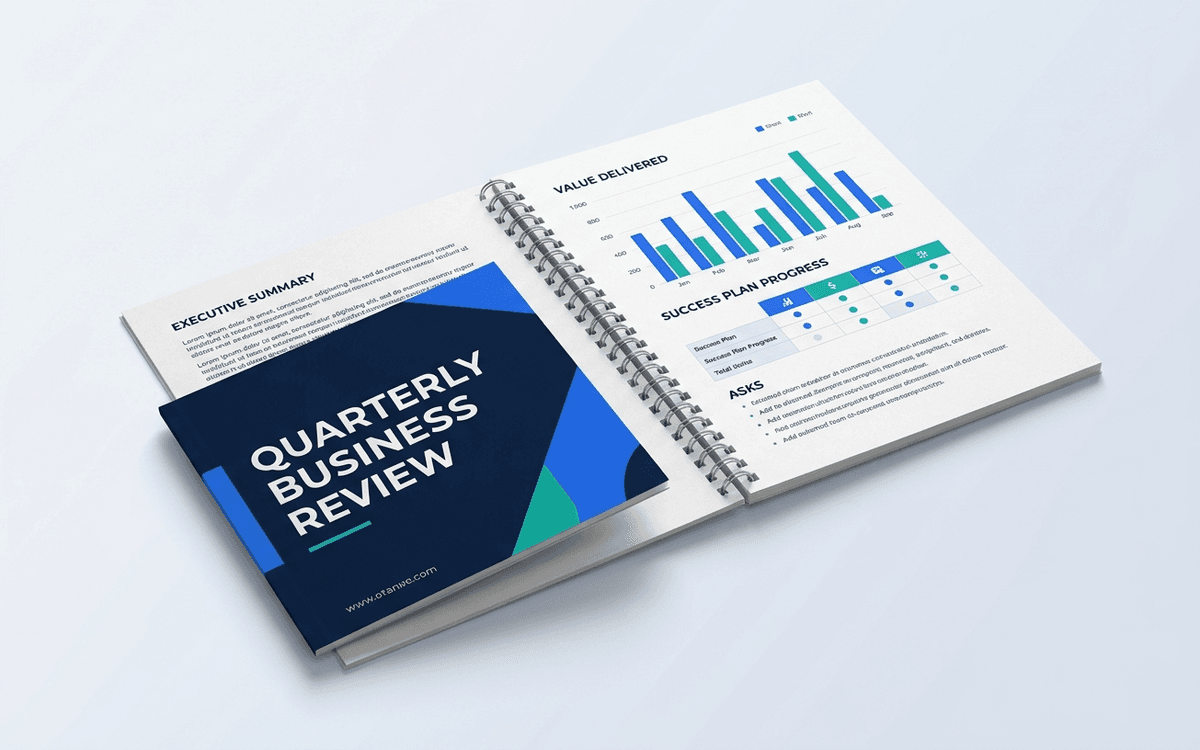
A QBR template structured around the only question that matters to your customer's exec sponsor: "is this investment paying off?" Not a product update — a value review that your champion will paste into their leadership deck.
Customer Health Score Template
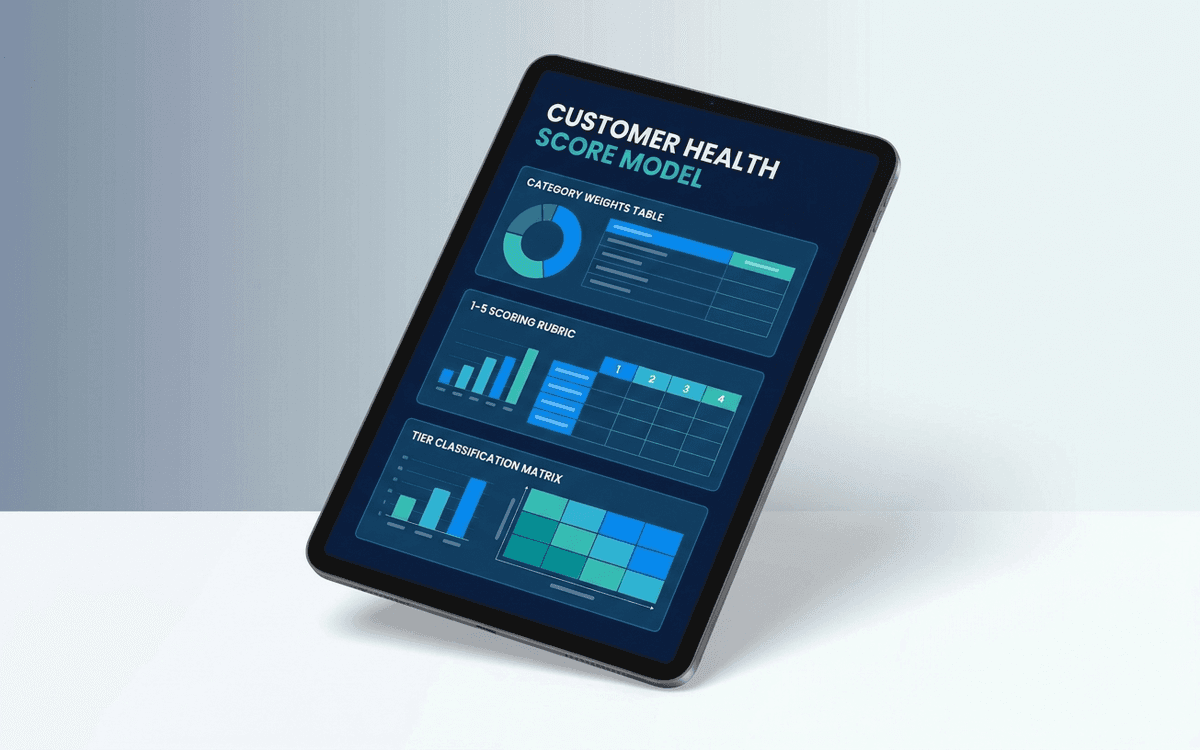
A customer health score template that combines adoption, sentiment, commercial, and engagement signals into a single 1-5 score per account — so renewal-risk shows up in weekly reviews instead of three months before the renewal date.
When the template isn't enough
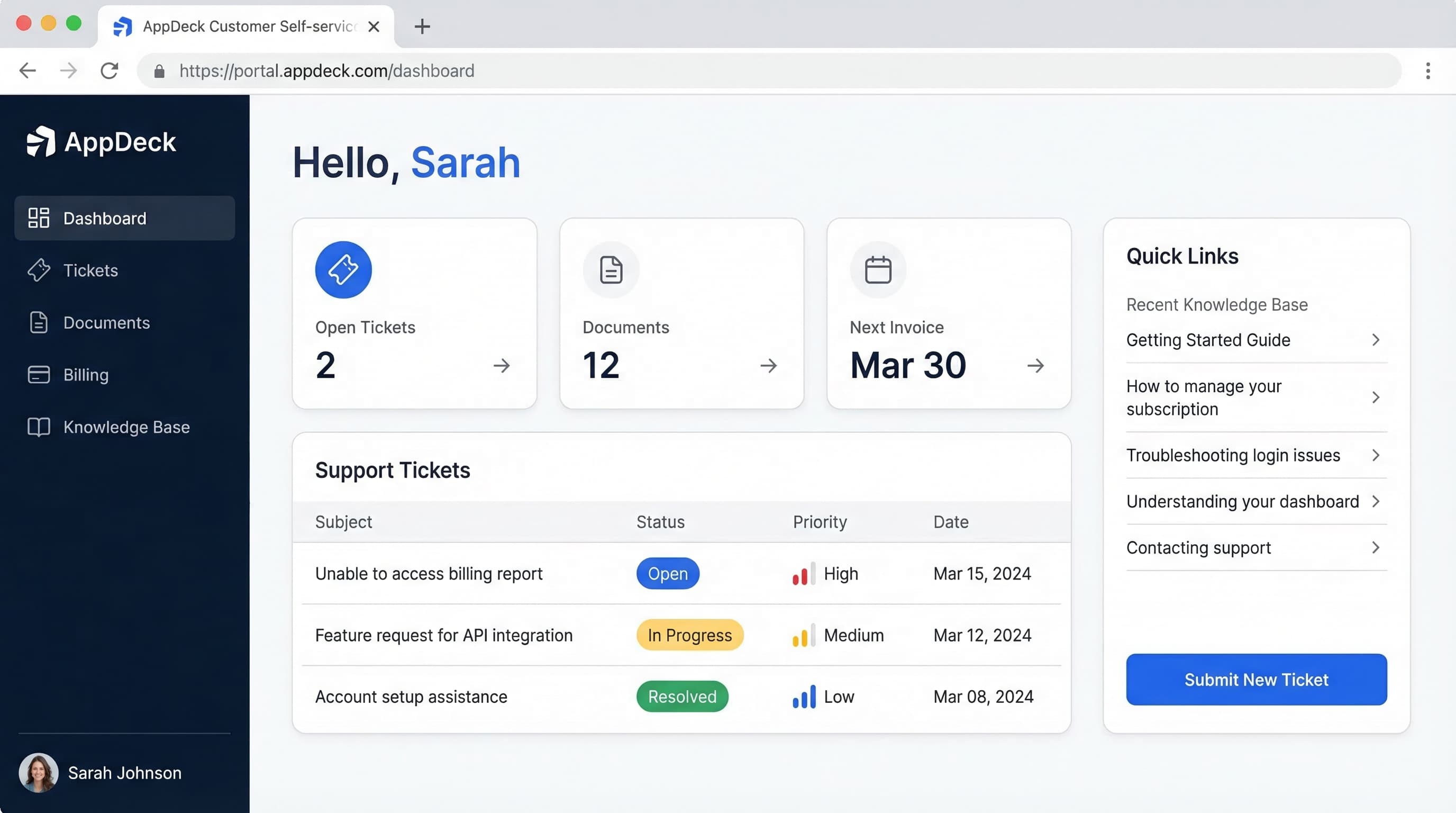
AppDeck's customer success portal turns this template into a live workspace — version control, permissions, signatures, and analytics built in.
Related Articles
Learn more about this topic from our expert guides and resources.
Customer Portal Examples: 15 Real-World Designs That Drive Adoption
15 customer portal examples from SaaS, e-commerce, healthcare, finance, and professional services. See what works, key features, and design patterns that boost self-service adoption.
Read ArticleHow to Reduce Support Tickets by 40% with a Customer Portal
Proven strategies to reduce support ticket volume using self-service customer portals. Knowledge bases, account management, billing portals, and automation tactics.
Read ArticleCustomer Portal Software Comparison 2026: 10 Best Platforms Reviewed
Compare the best customer portal software for 2026. Zendesk, Salesforce, Freshdesk, AppDeck, and 6 others reviewed. Features, pricing, and ratings.
Read Article