
Customer Health Score Template
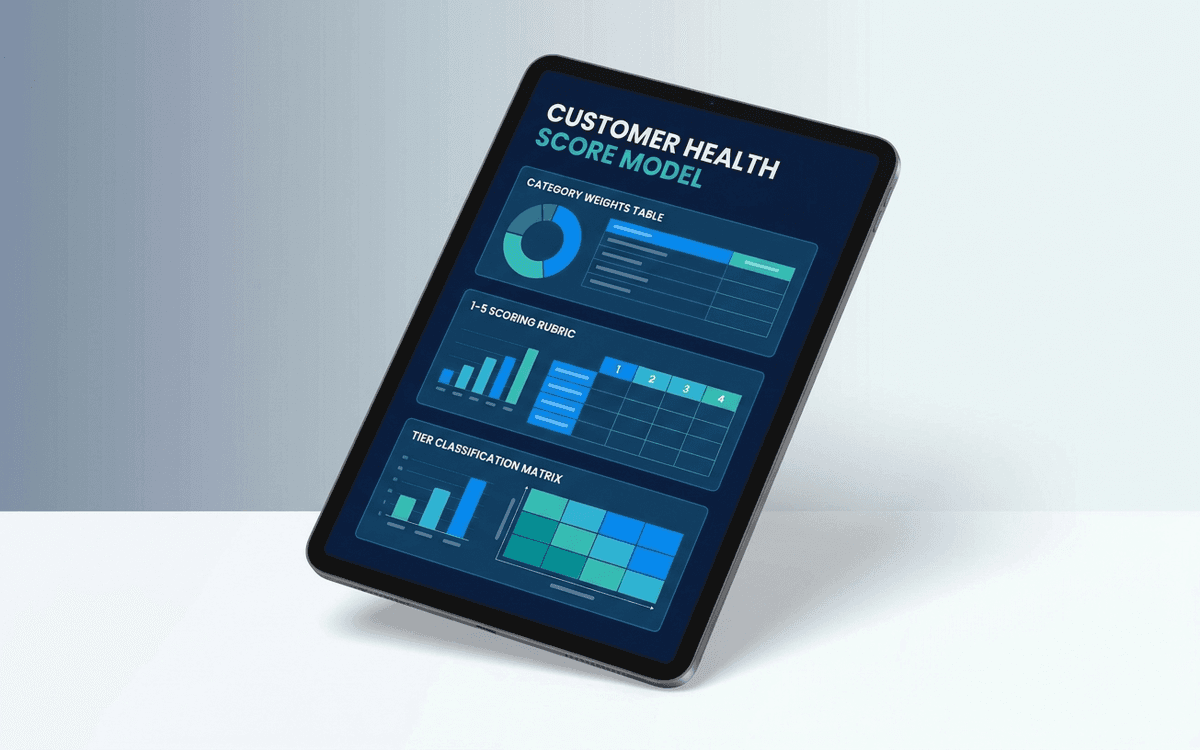
A customer health score template that combines adoption, sentiment, commercial, and engagement signals into a single 1-5 score per account — so renewal-risk shows up in weekly reviews instead of three months before the renewal date.
- Format:
- Word (.docx) (38 KB)
- Price:
- Free, no paywall
- Published May 2026
Download this template — free
Tell us where to send the link. We'll never share your email.
What's included
- Signal categories (adoption, sentiment, commercial, engagement)
- Signals per category with definitions and data sources
- Weighting model (default weights + how to recalibrate)
- 1-5 scoring rubric per signal with anchor definitions
- Composite score calculation
- Tier classification (Green 4.0+, Yellow 2.5-3.9, Red <2.5)
- Account-level score record with trailing 6-month trend
- Save-play triggers per tier
- Recalibration cadence (annual + post-incident)
How to use this template
1. Build the score on signals you ACTUALLY have
The most common health-score failure: scoring on signals you can't measure consistently. If you can't pull adoption data weekly, don't weight adoption 30%. Build the score from the signals you have, then add weights as instrumentation improves.
2. VALIDATE the score against actual churn
A health score is a HYPOTHESIS about what predicts churn. Validate it: look back at customers who churned and check what their health score was 90 days before. If churn happened from green accounts, your weights are wrong. Recalibrate.
3. Score MONTHLY, not weekly
Weekly scoring produces noise. Most signals don't move meaningfully week-over-week. Score monthly; review trends quarterly. The exception is product-usage signals which can move fast — surface those separately as leading indicators.
4. Pair the score with explicit SAVE PLAYS
A red score without a save play is just bad news. Every Red account triggers a documented save play: who owns it, what intervention, by when. Without explicit save plays, the score becomes alerting without action.
5. Recalibrate the model ANNUALLY
Customer base evolves, product evolves, market evolves. Recalibrate weights annually based on what actually predicted churn vs. retention in the prior year. Models that don't evolve become wrong; the recalibration cadence keeps it honest.
Who it's for
- CSMs building or refining their health score
- CS team leads standardizing scoring across CSMs
- RevOps leaders measuring CS team effectiveness
- Founders running founder-led CS at early stage
Frequently asked questions
- What signals should I include in a health score?
- Four common categories: ADOPTION (DAU/MAU, feature breadth, usage trend), SENTIMENT (NPS, CSAT, support-ticket tone), COMMERCIAL (payment history, expansion conversations, contract length), ENGAGEMENT (sponsor activity, exec change, training attendance). Pick 4-6 signals across these categories.
- What weighting should I use?
- A common starting point: Adoption 35%, Sentiment 25%, Commercial 20%, Engagement 20%. Recalibrate based on what actually predicts churn in YOUR customer base. Don't copy industry benchmarks blindly — your customers are different.
- Should the customer see their health score?
- No. Health score is a CSM-side diagnostic, not a customer-facing metric. Sharing it changes behavior in unhealthy ways (gaming, defensiveness). Use it internally to drive save plays; communicate the underlying issues directly to the customer, not the score.
- How is health score different from NPS?
- NPS measures sentiment. Health score combines sentiment with adoption, commercial, and engagement signals. NPS is one INPUT into the health score, not a substitute for it. A customer can be happy (high NPS) but not adopting (low health) — health catches that.
- When should we move from spreadsheet to a real CS platform?
- When the customer base hits ~50+ accounts and manual scoring takes more than 4 hours per month. Gainsight, ChurnZero, Catalyst, Vitally, Totango all replace spreadsheet health scoring at scale. Start with the template; graduate when the math gets unmanageable.
More customer success templates
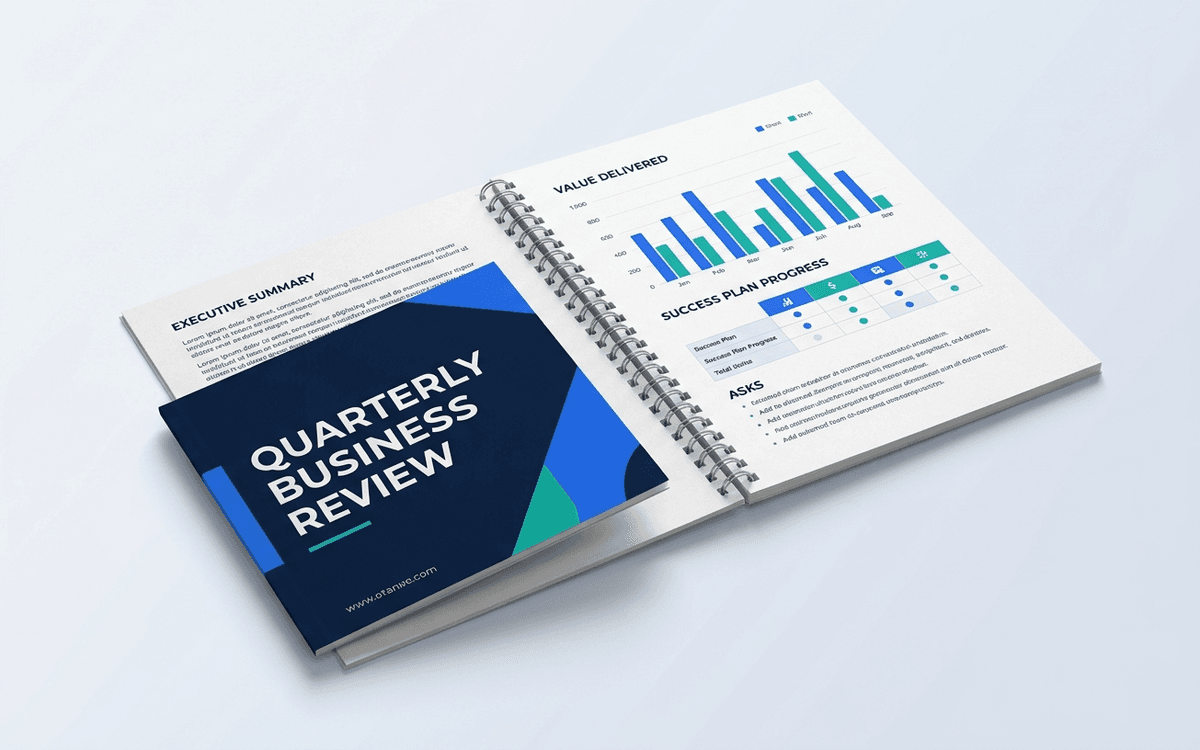
QBR Template
A QBR template structured around the only question that matters to your customer's exec sponsor: "is this investment paying off?" Not a product update — a value review that your champion will paste into their leadership deck.
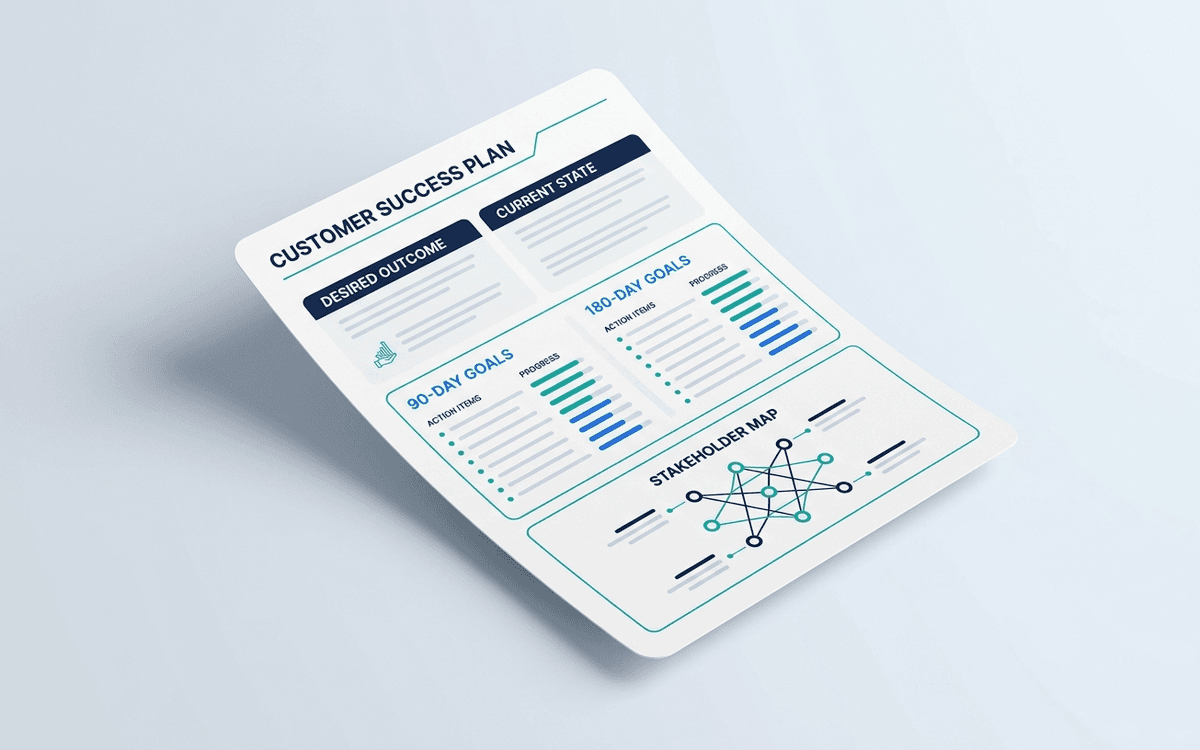
Customer Success Plan Template
A customer success plan template anchored to the customer's desired outcome, not your product roadmap. Six months of goals, milestones, and owners — the document that makes your QBR a value review instead of a status update.
When the template isn't enough
AppDeck's customer success portal turns this template into a live workspace — version control, permissions, signatures, and analytics built in.
Related Articles
Learn more about this topic from our expert guides and resources.
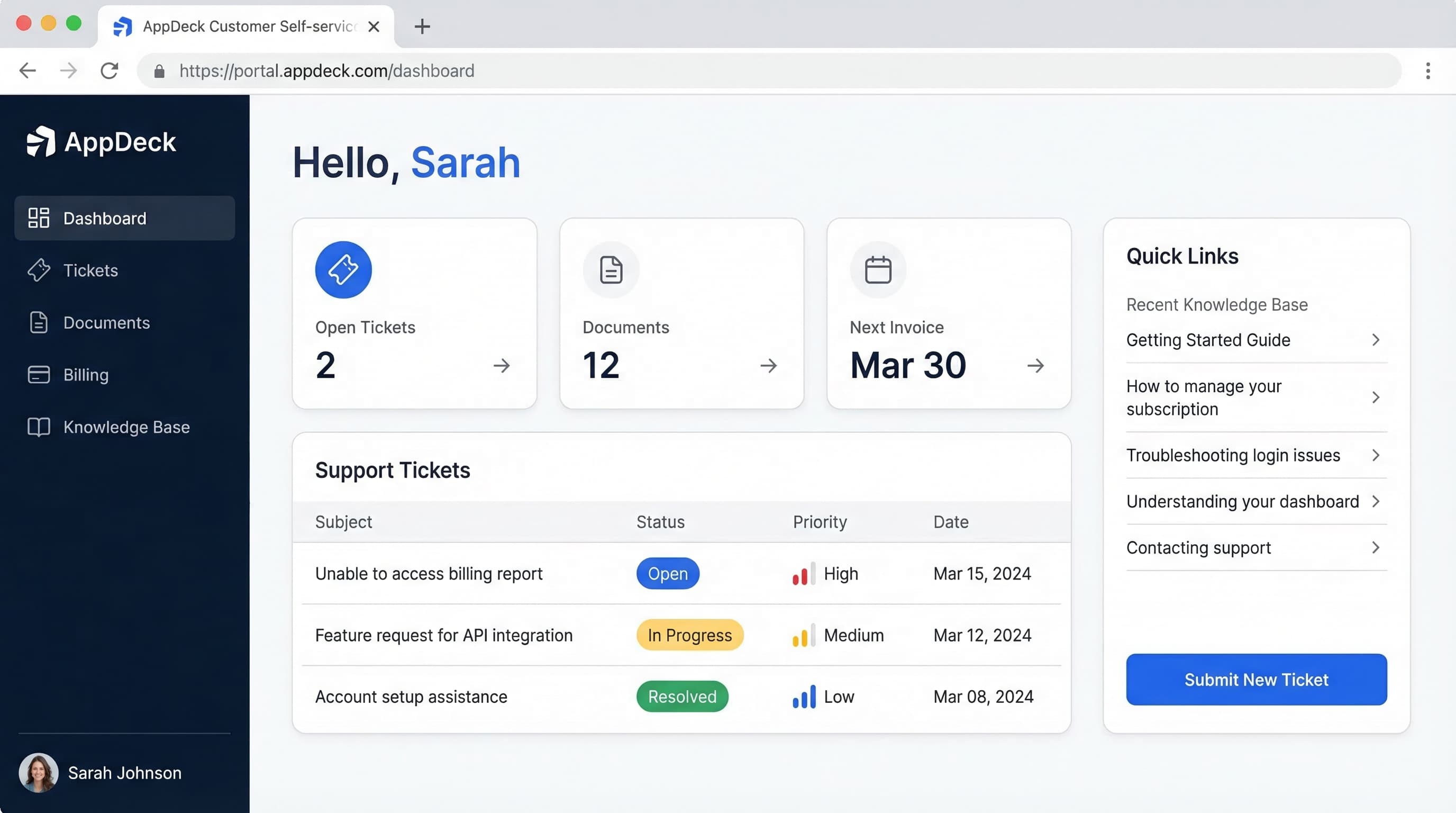
Customer Portal Examples: 15 Real-World Designs That Drive Adoption
15 customer portal examples from SaaS, e-commerce, healthcare, finance, and professional services. See what works, key features, and design patterns that boost self-service adoption.
Read ArticleHow to Reduce Support Tickets by 40% with a Customer Portal
Proven strategies to reduce support ticket volume using self-service customer portals. Knowledge bases, account management, billing portals, and automation tactics.
Read ArticleCustomer Portal Software Comparison 2026: 10 Best Platforms Reviewed
Compare the best customer portal software for 2026. Zendesk, Salesforce, Freshdesk, AppDeck, and 6 others reviewed. Features, pricing, and ratings.
Read Article