
Investor Data Room Checklist
The complete guide to organizing your investor data room for due diligence. Covers every document investors expect from seed through Series C.
Used by founders raising $500K to $50M+. Updated for 2026.
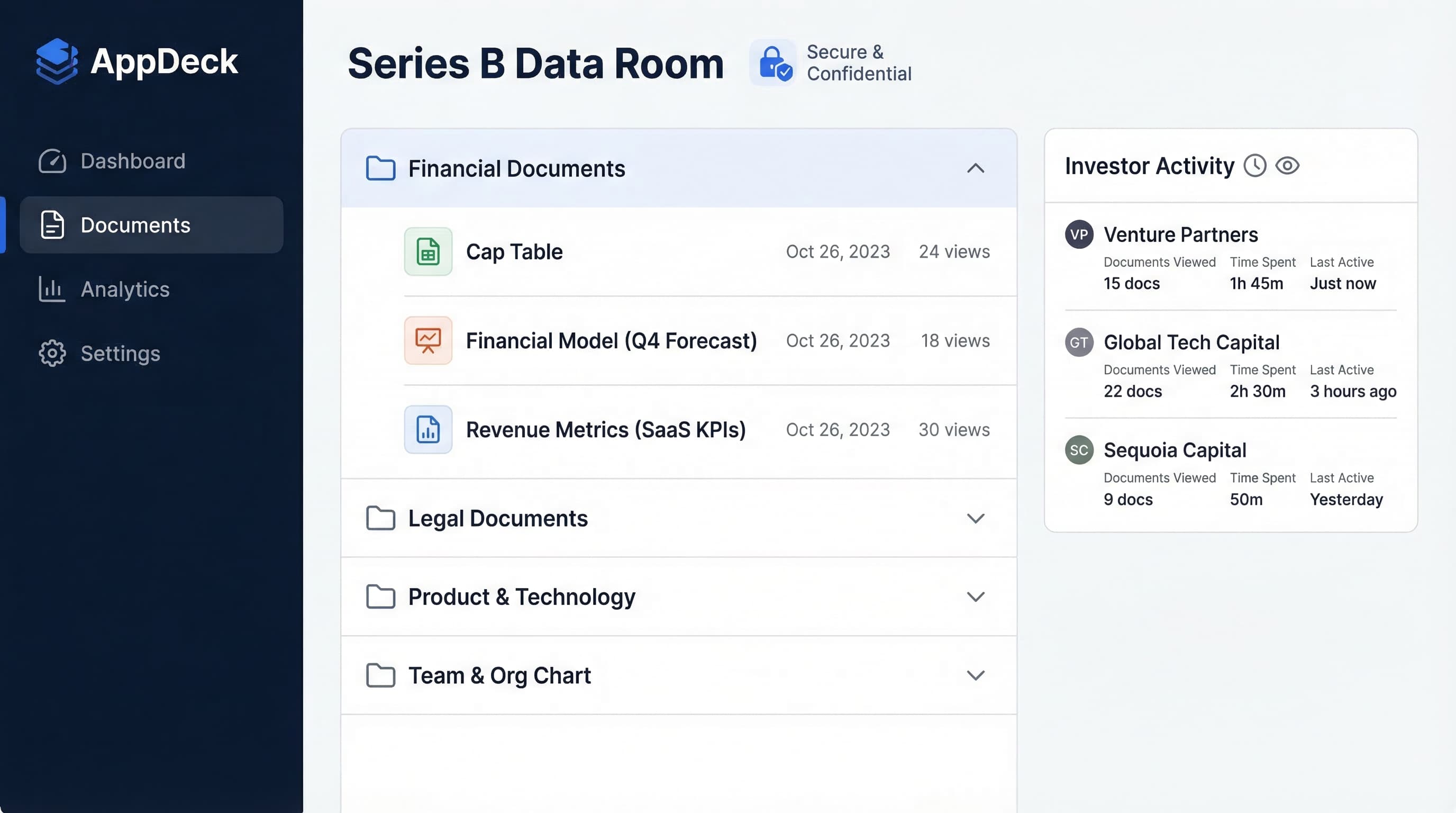
Why This Matters
A well-organized data room is not just about having the right documents. It is a signal of how you run your business.
Founders who prepare complete data rooms close rounds twice as fast as those who scramble to gather documents during diligence.
87% of deals that stall during due diligence do so because of missing or disorganized documents. Do not let paperwork kill your round.
A well-organized data room signals to investors that you run a disciplined operation. First impressions matter in fundraising.
Complete Data Room Checklist
54 essential documents organized across 8 categories. Check off each item as you prepare your data room.
Financial Documents
9 itemsLegal & Corporate
9 itemsBusiness Operations & Metrics
8 itemsTeam & Human Resources
6 itemsCap Table & Equity
5 itemsCustomer & Revenue
6 itemsTechnology & Product
6 itemsCompliance & Insurance
5 itemsWhat You Need by Funding Stage
Not every document is needed at every stage. Here is what investors typically expect based on where you are in your fundraising journey.
Essentials only
- Pitch deck and executive summary
- Basic financial model and projections
- Cap table and founder agreements
- Team bios and org chart
- Certificate of incorporation
All above + detailed metrics
- All Seed documents
- Detailed monthly financials (12-24 months)
- Customer metrics and cohort data
- Product roadmap and architecture
- Employment agreements and option grants
- Previous financing documents
Everything + audited financials
- All Series A documents
- Audited financial statements
- SOC 2 and security compliance
- D&O and cyber liability insurance
- Detailed legal and IP portfolio
- Customer concentration analysis
- Technical debt assessment
Pro Tips for Your Data Room
Lessons from founders who have successfully raised across hundreds of rounds.
Organize by category, not chronologically
Investors scan for specific document types. A well-structured folder hierarchy makes it easy to find what they need without asking you.
Grant access progressively
Start with NDA and basic overview, then grant access to detailed financials and sensitive documents as the investor moves through diligence stages.
Track engagement analytics
Use a data room that shows who viewed what and for how long. High engagement on financial models often signals strong interest.
Update monthly, not just before fundraising
Keeping your data room current means you can respond to inbound interest immediately instead of scrambling to prepare documents.
Use a purpose-built data room, not Google Drive
Shared folders lack access controls, audit trails, and watermarking. A dedicated data room signals professionalism and protects sensitive information.
Set Up Your Data Room in Minutes
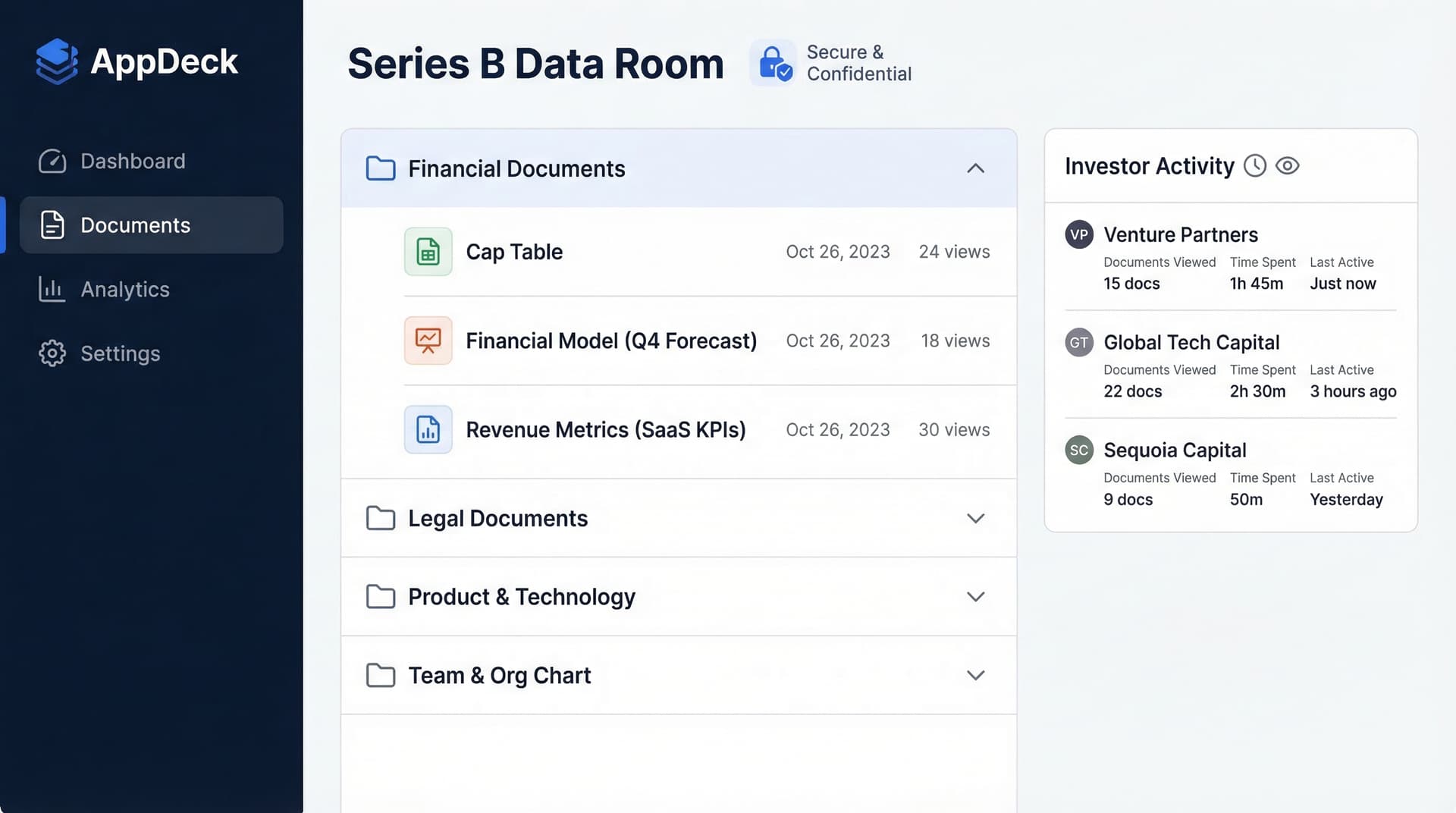
AppDeck's investor data room comes with pre-built folder structures based on this checklist. Upload your documents, invite your investors, and track engagement in real time.
- Pre-organized folder structure matching this checklist
- Granular access controls and document watermarking
- Real-time analytics showing investor engagement
- One-click NDA and permission management
Frequently Asked Questions
What documents should be in an investor data room?
An investor data room should include financial statements, legal and corporate documents, cap table details, business metrics, customer data, team information, technology documentation, and compliance certificates. The exact documents depend on your funding stage, but a comprehensive data room typically contains 60+ documents organized across 8 categories.
When should I start preparing my data room?
Ideally, you should maintain an up-to-date data room at all times, not just when fundraising. Start building your data room at least 2-3 months before you plan to raise. This gives you time to gather documents, identify gaps, and present information professionally. Companies that prepare early close rounds 2x faster on average.
What is the difference between a data room and a shared folder?
A data room provides enterprise-grade security features including granular access controls, document watermarking, audit trails showing who viewed what documents, and the ability to revoke access instantly. Shared folders like Google Drive lack these controls, making them unsuitable for sensitive financial and legal documents during due diligence.
Ready to Create Your Data Room?
Stop sharing sensitive documents through email and shared folders. Use AppDeck to create a professional investor data room with built-in security, analytics, and access controls.
Free 14-day trial · Now in beta · Setup in minutes
Related Resources
Data Room Best Practices
Complete guide to organizing your data room for fundraising success.
Read Article →Data Room Software Comparison
Compare the top investor data room platforms for 2026.
Read Comparison →Investor Data Room
Purpose-built data room with security, analytics, and access controls.
Learn More →Board Portal Guide
Set up board governance after fundraising with a professional portal.
Read Guide →Related Portal Solutions
Explore other portal types that might fit your needs
Related Articles
Learn more about this topic from our expert guides and resources.
Investor Data Room Best Practices: A CFO's Complete Guide for 2026
Learn the essential best practices for creating and managing investor data rooms. Complete guide with checklist, templates, and real-world examples from successful fundraising rounds.
Read Article10 AI Fundraising Tools That Actually Help Startups Raise Capital
The best AI tools for startup fundraising in 2026. Investor matching, pitch deck builders, CRM automation, due diligence prep, and outreach tools.
Read Article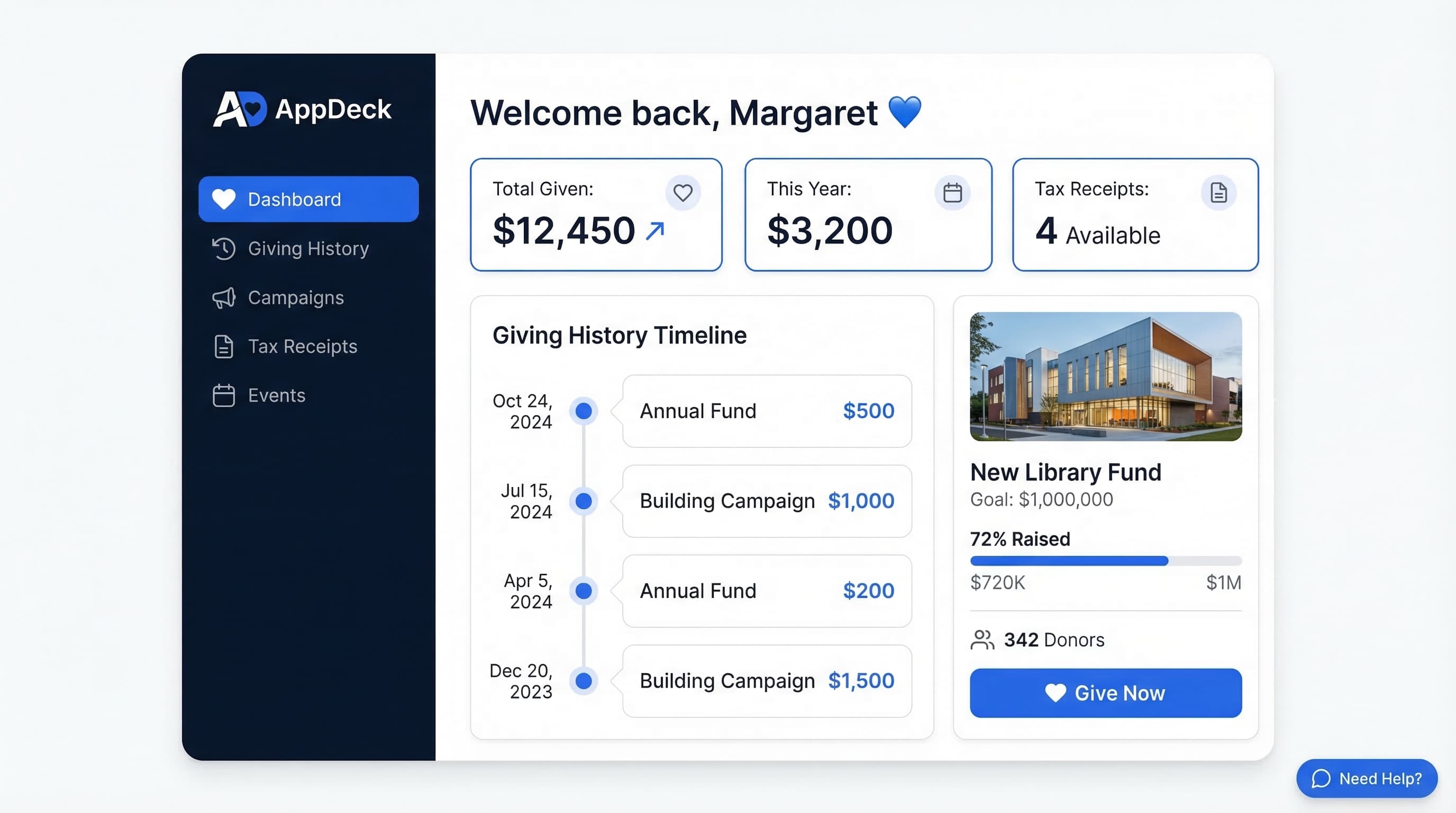
Donor Portal Software: 7 Best Platforms for Nonprofits (2026)
Compare the best donor portal software for nonprofits. Online giving, donation history, tax receipts, communication tools, and volunteer management. Honest reviews and pricing.
Read Article