
Donor Portal Software: 7 Best Platforms for Nonprofits (2026)
Compare the best donor portal software for nonprofits. Online giving, donation history, tax receipts, communication tools, and volunteer management. Honest reviews and pricing.
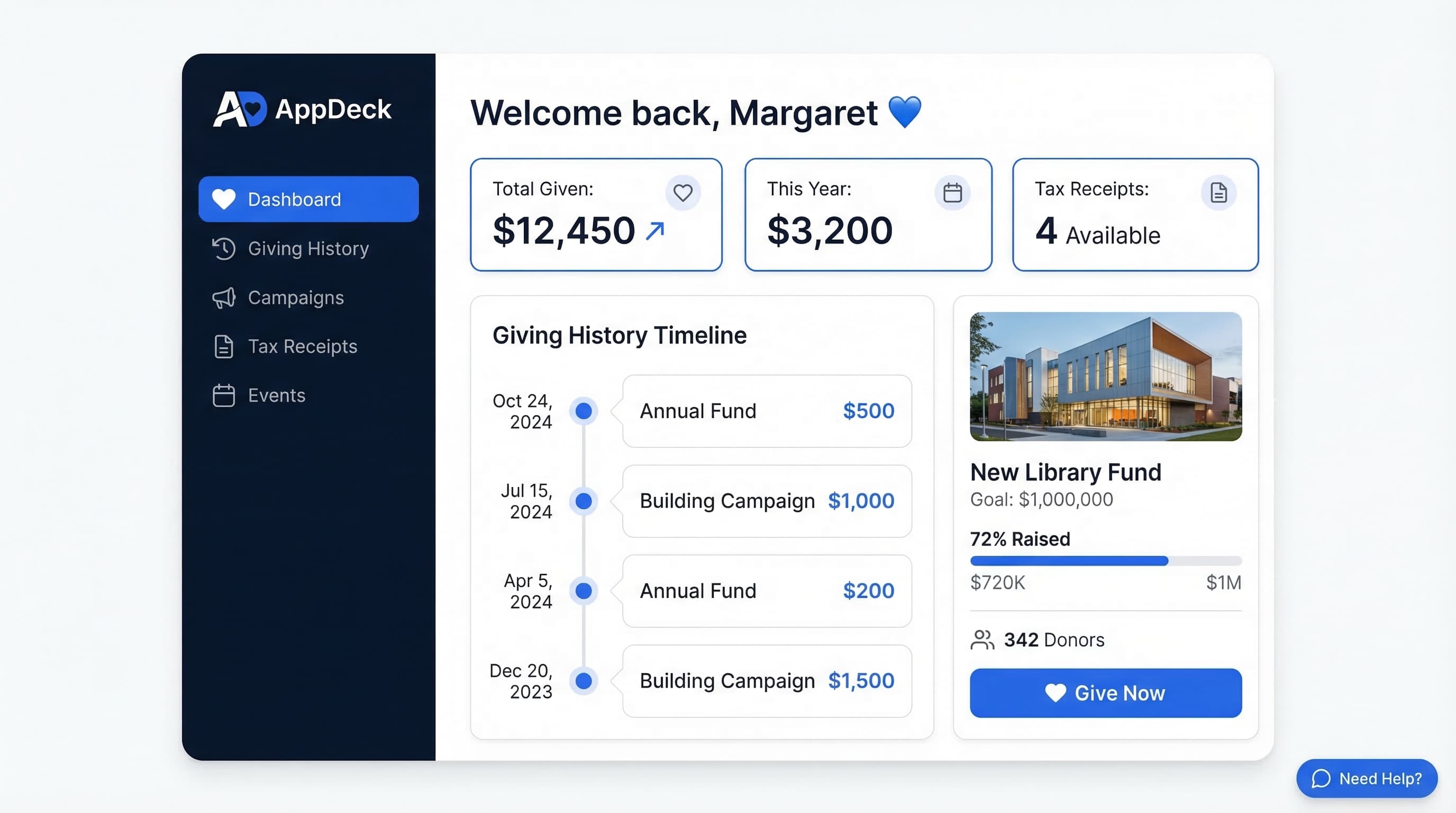
TL;DR: Compare the best donor portal software for nonprofits. Online giving, donation history, tax receipts, communication tools, and volunteer management. Honest reviews and pricing.
Donor retention is the single biggest challenge facing nonprofits today. The numbers tell the story: the average donor retention rate sits around 43%, which means more than half of your donors disappear after their first gift. You spend enormous effort acquiring donors, only to lose the majority of them within a year.
There are a lot of reasons donors lapse — they feel disconnected, they do not see the impact of their gift, or they simply forget about your organization. A donor portal addresses all three of those problems by giving supporters a dedicated, self-service space to stay connected to your mission.
I have spent the last several months evaluating donor portal software and donor management platforms to understand what actually works for nonprofits. This guide covers seven platforms, with honest assessments of each — including my own product, AppDeck, where I will be upfront about what we do well and where we fall short.
What Is a Donor Portal?
A donor portal is a secure, self-service online space where your donors can log in and manage their relationship with your nonprofit. Think of it as the donor-facing side of your organization — the place where supporters go to see their giving history, download tax receipts, update their payment information, and view impact reports that show how their contributions are making a difference.
The best donor portals go beyond basic record-keeping. They create a sense of belonging. When a donor logs in and sees a personalized dashboard showing their cumulative giving, the programs they have supported, upcoming events, and volunteer opportunities, they feel like an insider rather than an ATM.
A donor portal is not the same thing as a donation page. Donation pages are transactional — they collect a gift and send a receipt. A donor portal is relational. It is an ongoing touchpoint that keeps donors engaged between asks.
For nonprofits that rely on recurring giving and major donor stewardship, a well-designed donor portal can be a game-changer for retention. Donors who feel informed and appreciated are far more likely to renew their support year after year.
What Nonprofits Need in a Donor Portal
Before diving into specific platforms, let me outline the six capabilities that matter most. Not every nonprofit needs all six, but understanding the full picture will help you evaluate which platform fits your situation.
1. Online Giving and Recurring Donations
Your donor portal needs to make it effortless for supporters to give — one-time gifts, recurring monthly donations, and campaign-specific contributions. The best platforms offer customizable donation forms, multiple payment methods, and the ability for donors to manage their own recurring gift schedules without calling your office.
2. Donation History and Tax Receipts
Donors want instant access to their complete giving history and the ability to download tax receipts on their own. This is table stakes. If your portal cannot provide year-end giving statements and individual transaction receipts on demand, you are creating unnecessary work for both your donors and your staff.
3. Impact Reporting and Transparency
This is where most nonprofits fall short. Donors want to see what their money accomplished. The best donor portals include dashboards, reports, or content feeds that show program outcomes, beneficiary stories, and progress toward goals. Transparency builds trust, and trust drives retention.
4. Event Management
Many nonprofits run galas, fundraisers, volunteer days, and community events. A donor portal that integrates event registration, ticket management, and event history gives donors a single place to manage their involvement with your organization.
5. Volunteer Coordination
For nonprofits with active volunteer programs, the donor portal can double as a volunteer portal — letting supporters sign up for shifts, track their hours, and see their total contribution of both time and money.
6. Communication and Updates
Email is noisy. A donor portal gives you a direct channel to share updates, newsletters, campaign progress, and personalized messages with supporters who have opted in. Some platforms include messaging features or news feeds that keep donors informed without competing with their inbox.
7 Best Donor Portal Software Platforms
1. AppDeck
Overview: AppDeck is a portal software platform that lets nonprofits create branded, white-labeled donor portals. It is not a fundraising CRM — it is a portal-first tool designed for organizations that want a polished, professional space for donor engagement. You get customizable dashboards, document sharing, role-based access, and a branded experience that looks and feels like your own product.
Key Strengths:
- Fully white-labeled portals with your branding, domain, and color scheme
- Impact dashboards that visualize donor contributions and program outcomes
- Secure document sharing for tax receipts, annual reports, and financial statements
- Role-based access so board members, major donors, and general supporters see different views
- Clean, modern interface that reflects well on your organization
- Donor Portal is on the AppDeck portal-type roadmap; the platform currently ships three GA products (Investor Data Rooms, Board Portals, Executive Dashboards) and adds portal types as customer demand validates them — tell us in your demo request if a Donor Portal is your priority
Limitations:
- No built-in payment processing — you will need to connect your existing donation tools (Stripe, PayPal, or your fundraising CRM)
- No peer-to-peer fundraising capabilities
- No grant management features
- Not a donor CRM — does not replace Bloomerang, Salesforce, or DonorPerfect for core fundraising workflows
Pricing: Starts at $99/month. Custom plans available for larger organizations.
Best For: Nonprofits that already have a fundraising CRM and want a premium, branded portal experience for donor engagement, stewardship, and transparency. If you care deeply about how your donor-facing experience looks and want full control over branding, AppDeck is a strong choice. If you need an all-in-one fundraising platform, look at the other options below.
2. Bloomerang
Overview: Bloomerang is built specifically around donor retention. The platform combines a donor CRM with engagement tracking, giving you a clear picture of which donors are at risk of lapsing. Their donor portal allows supporters to view their giving history, update their information, and manage recurring gifts. Bloomerang has earned a strong reputation among small to mid-sized nonprofits for being easy to use and laser-focused on keeping donors engaged.
Key Strengths:
- Donor retention scoring and engagement metrics built into the dashboard
- Interactive timeline showing every touchpoint with each donor
- Built-in email marketing with templates designed for nonprofits
- Generous data import assistance during onboarding
- Integrates with QuickBooks, Mailchimp, and dozens of other tools
- Strong reporting for year-end giving summaries and campaign performance
Limitations:
- Portal features for donors are more limited than dedicated portal platforms — donors can manage basics but the self-service experience is not deeply customizable
- Event management is basic compared to platforms like Givebutter
- Pricing can climb as your contact database grows
- No built-in peer-to-peer fundraising (though they acquired Kindful, which has some of this)
Pricing: Starts at $125/month for up to 1,000 records. Scales based on database size.
Best For: Small to mid-sized nonprofits (under 50,000 donors) that want a CRM built specifically for retention. If donor engagement scoring and simplicity are your top priorities, Bloomerang is hard to beat.
3. Little Green Light
Overview: Little Green Light is a budget-friendly donor management platform that punches above its weight. It offers solid donor profiles, gift tracking, receipt generation, and basic portal capabilities. The interface is not the most modern, but the functionality is there, and the price point makes it accessible to grassroots nonprofits and small organizations that cannot justify spending hundreds of dollars per month on software.
Key Strengths:
- Very affordable pricing that scales gradually with your database
- Comprehensive gift tracking with support for pledges, recurring gifts, and in-kind donations
- Automated tax receipt generation and year-end statements
- Mail merge and letter generation for personalized donor communications
- Integrates with Constant Contact, Mailchimp, and QuickBooks
- Strong data import tools — easy to migrate from spreadsheets or other systems
Limitations:
- The donor-facing portal experience is minimal — donors do not get a rich self-service dashboard
- User interface feels dated compared to newer platforms
- Limited event management capabilities
- Reporting is functional but not as visual or flexible as competitors
- No built-in online donation forms (you will need a separate tool like GiveWP or Donorbox)
Pricing: Starts at $45/month for up to 2,500 records. One of the most affordable options on this list.
Best For: Small nonprofits and grassroots organizations on a tight budget that need solid donor management without the overhead of a full-featured platform. If you are migrating from spreadsheets and want a proper database without breaking the bank, Little Green Light is a smart starting point.
4. DonorPerfect
Overview: DonorPerfect is one of the more established names in nonprofit software, and it has evolved significantly over the years. The platform covers donor management, online fundraising, event management, and reporting. Their donor portal — called DPConnect — gives supporters a login where they can view their giving history, update contact information, and manage recurring donations. DonorPerfect serves organizations of all sizes, from small community nonprofits to large institutions.
Key Strengths:
- Mature, feature-rich platform with decades of nonprofit-specific development
- DPConnect donor portal with self-service giving history and profile management
- Built-in online donation forms with customization options
- Strong event and auction management tools
- Comprehensive reporting with custom report builder
- Large integration ecosystem including QuickBooks, Constant Contact, and many others
- Dedicated support team with deep nonprofit expertise
Limitations:
- Interface can feel complex — there is a learning curve for new users
- Pricing is less transparent than competitors and can escalate with add-ons
- The donor portal (DPConnect) is functional but not especially visually polished
- Some features require additional modules at extra cost
- Mobile experience could be stronger
Pricing: Starts at $99/month. Pricing varies based on features and database size — contact their sales team for a specific quote.
Best For: Mid-sized to large nonprofits that want a full-featured fundraising platform with a long track record. If your organization runs events, manages auctions, and needs deep reporting alongside a donor portal, DonorPerfect covers a lot of ground.
5. Kindful (by Bloomerang)
Overview: Kindful was acquired by Bloomerang in 2021, and it continues to operate as a separate product focused on donor management with strong integrations. Kindful's strength is its ability to connect with a wide ecosystem of tools — payment processors, email platforms, event management software — and centralize everything in one donor database. The donor-facing experience allows supporters to manage their giving online, and the platform is known for clean donation pages.
Key Strengths:
- Extensive integration library with over 40 native connections (Stripe, PayPal, Eventbrite, Mailchimp, and more)
- Clean, modern donation pages that convert well
- Visual donor dashboard showing giving trends and engagement
- Automated thank-you emails and receipt generation
- Household and relationship tracking for family giving
- Easy-to-use interface with minimal training required
Limitations:
- Future roadmap is uncertain since the Bloomerang acquisition — some features may merge or be retired
- Donor portal self-service options are limited compared to dedicated portal platforms
- Reporting is adequate but not as powerful as DonorPerfect or Salesforce
- Peer-to-peer fundraising is basic
- Limited offline gift tracking compared to more traditional CRMs
Pricing: Starts at $119/month for up to 1,000 contacts. Scales with database size.
Best For: Nonprofits that use a lot of different tools and need a donor management hub that integrates with everything. If you are already using Stripe, Eventbrite, and Mailchimp and want a central place to track donor relationships, Kindful makes that easy.
6. Network for Good
Overview: Network for Good positions itself as an all-in-one fundraising platform for small nonprofits. The platform combines donor management, online fundraising, email marketing, and coaching into a single package. Their donor portal lets supporters manage recurring gifts and view their giving history. What sets Network for Good apart is their emphasis on fundraising coaching — they pair you with an advisor who helps you plan campaigns and improve your fundraising strategy.
Key Strengths:
- All-in-one platform that covers CRM, fundraising, and email in one subscription
- Personal fundraising coaching included with every plan
- Peer-to-peer fundraising pages that supporters can create and share
- Automated donor communications with drip campaigns
- Built-in donation forms optimized for conversion
- Simple interface designed for nonprofits without dedicated tech staff
Limitations:
- Pricing is on the higher side for what you get, especially for very small organizations
- Reporting and analytics are less sophisticated than DonorPerfect or Bloomerang
- Customization options for the donor portal are limited
- Event management is minimal
- Integration options are narrower than Kindful or DonorPerfect
- Can feel constraining as your organization grows and needs become more complex
Pricing: Starts at $100/month. Includes fundraising coaching.
Best For: Small nonprofits (under 5,000 donors) that want an all-in-one solution with hands-on guidance. If your team is small and you value having a fundraising coach in your corner, Network for Good delivers on that promise.
7. Givebutter
Overview: Givebutter has quickly become one of the most popular fundraising platforms for nonprofits, and for good reason. The platform is modern, intuitive, and offers a generous free tier that makes it accessible to organizations of any size. Givebutter combines donation forms, event ticketing, peer-to-peer fundraising, and a donor CRM into a single platform. The donor-facing experience is clean and mobile-friendly, letting supporters manage their giving, view their history, and engage with campaigns.
Key Strengths:
- Free tier available — Givebutter takes an optional platform tip from donors instead of charging the nonprofit directly
- Excellent peer-to-peer and crowdfunding tools
- Modern, mobile-first donation pages that convert well
- Built-in event ticketing and management
- Livestream fundraising integration (unique in this space)
- Clean donor CRM with giving history and communication tools
- Very easy to set up — most organizations can launch in a day
Limitations:
- The "tip" model means donors may pay more than they expect (this can cause friction)
- CRM capabilities are lighter than Bloomerang or DonorPerfect — better for fundraising than deep relationship management
- Reporting is improving but still behind more established platforms
- Not ideal for complex major gift management or planned giving
- Fewer integrations than Kindful or DonorPerfect
- Donor portal self-service features are functional but not deeply customizable
Pricing: Free tier available. Paid plans start at $99/month for additional features and no donor-facing tips.
Best For: Nonprofits that want a modern, affordable fundraising platform with strong peer-to-peer and event capabilities. If you run a lot of campaigns, events, and crowdfunding initiatives, Givebutter is one of the best options available in 2026.
Donor Portal Software Comparison
| Feature | AppDeck | Bloomerang | Little Green Light | DonorPerfect | Kindful | Network for Good | Givebutter |
|---|---|---|---|---|---|---|---|
| Donor Self-Service Portal | Yes (fully branded) | Basic | Minimal | Yes (DPConnect) | Basic | Basic | Basic |
| Online Donation Forms | No (integrate your own) | Yes | No (use third-party) | Yes | Yes | Yes | Yes |
| Recurring Gift Management | Via integration | Yes | Yes | Yes | Yes | Yes | Yes |
| Tax Receipt Generation | Document sharing | Automated | Automated | Automated | Automated | Automated | Automated |
| Impact Dashboards | Yes | No | No | Limited | No | No | No |
| White-Label Branding | Yes | No | No | Limited | No | No | No |
| Event Management | No | Basic | Limited | Yes | Via integration | Minimal | Yes |
| Peer-to-Peer Fundraising | No | No | No | Via add-on | Basic | Yes | Yes |
| Email Marketing | No | Yes | Via integration | Via integration | Via integration | Yes | Yes |
| Volunteer Management | Via portal roles | No | No | No | No | No | No |
| Starting Price | $99/mo | $125/mo | $45/mo | $99/mo | $119/mo | $100/mo | Free |
How to Choose the Right Donor Portal Software
Choosing donor portal software comes down to understanding where your organization is today and where you are headed. Here is a simple decision framework.
Choose a dedicated portal platform (AppDeck) if you already have a fundraising CRM you love and want a premium branded experience for your donors. You care about how your donor-facing touchpoints look and feel, and you want full control over the portal design, dashboards, and document sharing. This approach works best when you want to complement your existing tools rather than replace them.
Choose a donor-focused CRM (Bloomerang, Little Green Light) if donor retention metrics and engagement tracking are your top priorities. These platforms are built around the donor lifecycle and give you the tools to identify at-risk donors before they lapse. Little Green Light is the budget option; Bloomerang is the more feature-rich choice.
Choose a full-featured fundraising platform (DonorPerfect, Kindful) if you need a comprehensive system that handles donations, events, reporting, and integrations under one roof. DonorPerfect is the enterprise-grade choice with decades of experience. Kindful is the integration-friendly option that plays well with your existing tech stack.
Choose a modern fundraising-first platform (Givebutter, Network for Good) if you run a lot of campaigns, events, and peer-to-peer fundraisers. Givebutter is the best choice for organizations that want modern tools at an accessible price. Network for Good adds fundraising coaching, which is valuable for small teams without dedicated development staff.
One more thing to consider: many nonprofits end up using two platforms — a fundraising CRM for donation processing and donor management, plus a portal platform for the branded donor-facing experience. That combination gives you the best of both worlds. If your donors interact with your organization regularly and you want that experience to feel polished and professional, pairing a CRM with a dedicated portal is worth exploring.
Frequently Asked Questions
What is donor portal software?
Donor portal software is a secure, self-service web application where supporters of a nonprofit log in to view their giving history, download tax receipts, manage recurring gifts, update payment information, and see how their contributions have been used. It sits on top of (or inside) a fundraising CRM and replaces the manual back-and-forth where donors email the office asking for receipts or change requests. The best donor portals are branded to match the nonprofit, mobile-friendly, and accessible 24/7 — turning every donor interaction from a staff task into a self-service experience.
Is a donor portal different from a donor management CRM?
Yes. A donor management CRM (Bloomerang, DonorPerfect, Kindful, Little Green Light) is an internal tool your development team uses to track relationships, segment donors, manage campaigns, and run reports. A donor portal is the donor-facing layer — what supporters see when they log in. Some platforms include both, often with a basic portal bolted onto a strong CRM. Dedicated portal platforms like AppDeck focus exclusively on the donor experience and integrate with your CRM rather than replacing it. For most nonprofits past $500K in annual giving, having both — a strong CRM and a polished portal — outperforms either alone.
How much does donor portal software cost in 2026?
Pricing ranges from free (Givebutter, which monetizes through optional donor tips) to $45/month (Little Green Light) to $99-$125/month for mid-tier platforms like AppDeck, DonorPerfect, and Bloomerang. Enterprise donor management systems for organizations over $10M in revenue can run $500-$2,000/month. Add 20-40 hours of setup time for data import, branding, and integration with your payment processor. The biggest hidden cost is staff time on data migration if you're moving from another platform — budget at least one week of focused work for any switch involving more than 1,000 donor records.
Which nonprofits benefit most from a donor portal?
Mid-sized nonprofits ($500K-$10M in annual revenue) with 500-50,000 donors, recurring giving programs, and a development team of 2-10 people see the biggest impact. The portal eliminates 30-50% of administrative requests (receipt requests, history lookups, recurring gift changes) and meaningfully improves first-year donor retention. Smaller all-volunteer organizations under 200 donors often don't need a dedicated portal — a simple donation page plus emailed receipts is enough. Very large national nonprofits typically need custom solutions or enterprise platforms beyond the seven covered in this guide.
When should we skip the portal and prioritize something else first?
If your retention rate is below 30%, your thank-you and stewardship process is broken regardless of what software you buy. Fix that first: 48-hour acknowledgments, quarterly impact reports, segmented appeals. A portal amplifies a good stewardship program but can't replace one. Also skip portal investment if your donor database is in disarray — duplicate records, wrong emails, missing addresses. Clean the data, document a stewardship calendar, then add the portal. Trying to launch a portal on top of bad data and inconsistent stewardship produces a polished-looking system that no donor logs into twice.
Final Thoughts
The difference between a nonprofit that retains 43% of its donors and one that retains 60% or more often comes down to the donor experience between gifts. A donor portal is not a magic solution, but it is one of the most effective tools for keeping supporters connected, informed, and motivated to give again.
Start by auditing your current donor experience. Can your donors log in and see their giving history? Can they download a tax receipt without emailing your office? Do they know what their last donation accomplished? If the answer to any of these questions is no, a donor portal should be near the top of your priority list.
Every platform on this list can help you improve the donor experience. The right choice depends on your budget, your existing tools, and how much control you want over the donor-facing experience. Take advantage of free trials and demos — most of these platforms offer them — and involve your development team and a few trusted donors in the evaluation process.
Related reading:

Founder & CEO, AppDeck
Serial entrepreneur with 20+ years building B2B software companies. Former executive managing 2,800+ employees across three continents. Vik reviews all AppDeck content for accuracy and practical relevance.
Share this article
Explore Related Solutions
Related Articles
Donor Management Best Practices: 12 Strategies to Boost Retention & Giving
Proven donor management strategies for nonprofits. Covers donor portals, stewardship, tax receipts, recurring giving, and impact reporting.
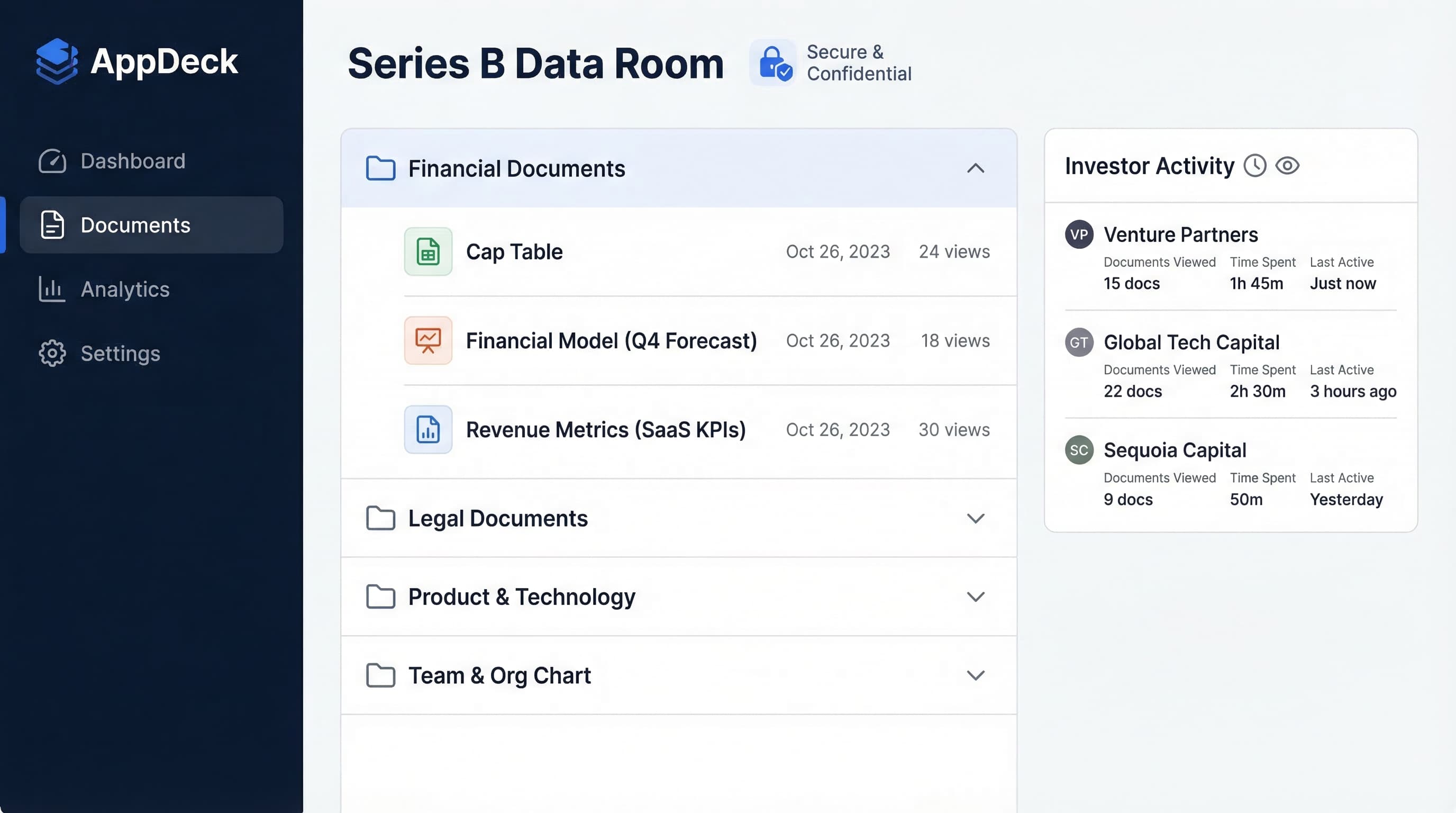
Investor Data Room Software Comparison 2026: 8 Best Platforms Reviewed
Compare the best virtual data room software for 2026. Intralinks, Datasite, Box, AppDeck, and 4 others. Features, pricing, and user reviews.

Best Board Portal Software 2026: 12 Platforms Compared (Real Pricing, Pros & Cons)
12 board portals compared side-by-side with the real 2026 pricing vendors hide, from $79/mo to $30K+/yr. Diligent, OnBoard, Boardable, BoardPro, Aprio, Ansarada, AppDeck & more, with honest pros, cons, and reviews.