
Donor Management Best Practices: 12 Strategies to Boost Retention & Giving
Proven donor management strategies for nonprofits. Covers donor portals, stewardship, tax receipts, recurring giving, and impact reporting.
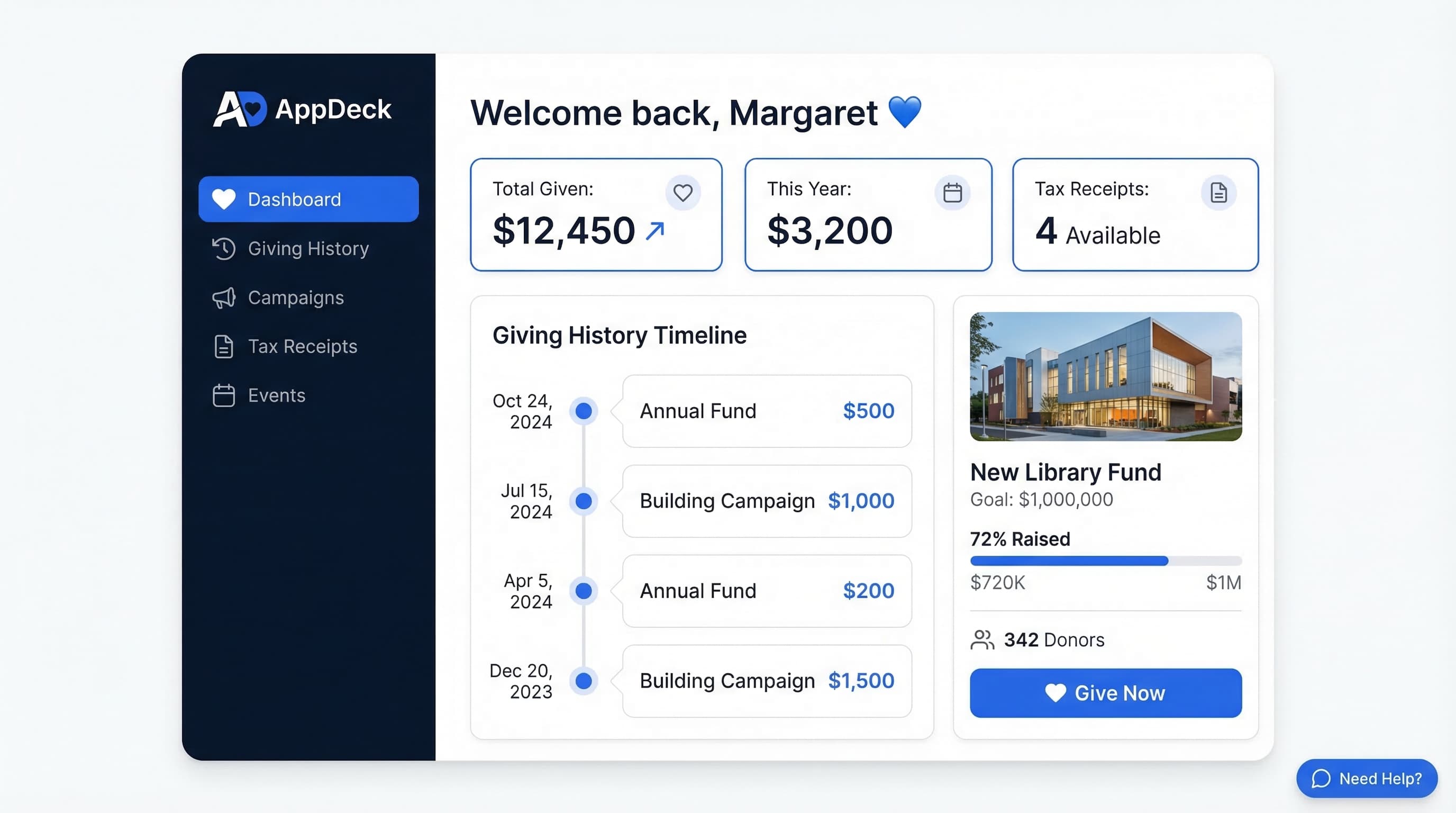
TL;DR: Proven donor management strategies for nonprofits. Covers donor portals, stewardship, tax receipts, recurring giving, and impact reporting.
Introduction
The average nonprofit loses 60% of first-time donors after their initial gift. That's not a fundraising problem — it's a donor management problem. Organizations pour resources into acquisition campaigns, then fail to steward the relationships that would generate sustained, growing support over years and decades.
After 14+ years helping nonprofits build donor engagement programs, I've seen this pattern consistently: organizations that invest in systematic donor management double their lifetime giving compared to those that rely on year-end appeals and hope. The difference isn't bigger budgets or better events — it's intentional, data-driven relationship management.
In this guide, I'll walk through 12 donor management best practices that nonprofit fundraising teams should implement in 2026 to improve retention, increase giving, and build the kind of donor relationships that sustain missions for the long term.
What you'll learn:
- How to structure donor management for maximum retention
- Technology and portal strategies that reduce admin work and increase engagement
- Stewardship frameworks that keep donors connected year-round
- Metrics to track and benchmarks to target
- Common mistakes that drive donors away (and how to fix them)
What Is Donor Management?
Donor management is the systematic process of building, maintaining, and deepening relationships with the people who financially support your organization. It covers every interaction from first gift to legacy commitment — and everything in between.
The Donor Lifecycle
Effective donor management follows a lifecycle framework. Each stage requires different strategies, communication, and touchpoints.
1. Acquisition
- First contact with your organization
- Initial gift or commitment
- Key question: How did they find you, and what motivated their first gift?
2. Cultivation
- Building the relationship beyond the transaction
- Sharing impact, inviting engagement, learning donor interests
- Key question: What does this donor care about most?
3. Solicitation
- Asking for continued or increased support
- Tailored asks based on capacity, interest, and giving history
- Key question: What's the right ask, at the right time, through the right channel?
4. Stewardship
- Thanking, reporting, and demonstrating impact
- Making donors feel valued and connected to outcomes
- Key question: Does this donor know the difference their gift made?
5. Renewal
- Securing the next gift and deepening commitment
- Upgrading giving levels, transitioning to recurring, planned giving conversations
- Key question: Is this donor more engaged today than they were a year ago?
The critical insight: Most nonprofits spend 80% of their effort on acquisition and solicitation, and 20% on cultivation, stewardship, and renewal. The organizations with the best retention rates flip that ratio. Keeping a donor costs a fraction of acquiring a new one — and retained donors give more over time.
Why Donor Management Matters: The Numbers
Retention economics:
- Acquiring a new donor costs 5-7x more than retaining an existing one
- A 10% improvement in donor retention can increase lifetime giving by 200%
- Recurring donors give 42% more annually than one-time donors
- Donors retained for 5+ years give 5x their first-year amount on average
The cost of poor donor management:
- ❌ 60% of first-time donors never give again
- ❌ Average nonprofit donor retention rate is just 43%
- ❌ Organizations lose an estimated $1.5 billion annually to preventable donor attrition
- ❌ Most nonprofits don't know why donors leave — they never ask
The upside of getting it right:
- ✅ Top-performing nonprofits achieve 60-70% overall retention rates
- ✅ Monthly giving programs retain donors at 80-90% annually
- ✅ Personalized stewardship increases upgrade rates by 30-40%
- ✅ Donor portals reduce admin time by 50% while increasing engagement
12 Donor Management Best Practices
1. Build a Donor Portal
The problem: Donors have no visibility into their giving history, tax receipts, or the impact of their contributions. They email your team for receipts at tax time, can't remember what they gave last year, and have no way to update their payment information for recurring gifts. Your team spends hours fielding these requests instead of building relationships.
The solution: Give donors 24/7 self-service access to everything they need through a dedicated donor portal.
What donors can do through a portal:
- ✅ View complete giving history and download tax receipts
- ✅ Update payment methods and contact information
- ✅ Manage recurring gift amounts and frequency
- ✅ Access campaign updates and impact reports
- ✅ View personalized dashboards showing their total impact
- ✅ RSVP for events and track involvement
- ✅ Download year-end giving summaries for tax filing
- ✅ Communicate directly with your development team
Impact of donor self-service:
- 60% reduction in receipt and history request emails
- 40% fewer failed recurring payments (donors update their own card info)
- 25% increase in donor engagement (portal users give more frequently)
- Faster tax season — donors download their own summaries instead of calling your office
What to look for in a donor portal:
- Intuitive interface that donors of all ages can navigate
- Branded experience (your organization's look and feel, not generic software)
- Secure document sharing for receipts and reports
- Recurring gift management with self-service changes
- Mobile-friendly (donors access from phones and tablets)
- Real-time giving dashboards
AppDeck Donor Portal provides all of these capabilities with setup in under an hour. Your donors get a professional, branded experience — and your team gets hours back every week.
2. Segment Your Donors
The problem: You send the same year-end appeal to every donor on your list — the $25 first-time giver, the $5,000 annual supporter, the monthly donor giving $100/month, and the board member who gave $50,000 last year. The message resonates with none of them because it was written for all of them.
The solution: Segment your donor base and tailor your strategy, communication, and asks to each segment.
Core donor segments:
Major donors (top 1-5% by giving level)
- Personalized, high-touch relationship management
- Dedicated relationship manager or executive contact
- Custom impact reports and behind-the-scenes access
- In-person meetings and exclusive events
- Planned giving conversations
Mid-level donors (next 10-15%)
- Semi-personalized communication with segment-specific messaging
- Quarterly impact updates and invitations to special events
- Upgrade cultivation — targeted asks to move to major donor level
- Phone calls from leadership on key occasions (gift anniversary, birthday)
Recurring donors (monthly/quarterly givers)
- Stewardship focused on retention and upgrade
- Monthly impact snapshots showing what their ongoing support enables
- Annual upgrade asks timed to giving anniversary
- Easy self-service management through your donor portal
First-time donors
- Intensive welcome sequence (first 90 days are critical)
- Focus on connection and gratitude, not additional asks
- Share specific impact of their first gift
- Invite to a low-barrier engagement opportunity (tour, volunteer day, webinar)
Lapsed donors (12+ months since last gift)
- Re-engagement campaigns with personalized messaging
- "We miss you" outreach acknowledging their past support
- Updated impact information showing what's happened since they last gave
- Survey to understand why they stopped giving
Why segmentation matters: A $50 donor who feels like a number will lapse. A $50 donor who feels seen and valued will become a $500 donor. Segmentation is how you make every donor feel like they matter — because they do.
3. Automate Tax Receipts
The problem: Donors make a gift and then wait days or weeks for a receipt. At year-end, your team scrambles to compile giving summaries. Donors who can't find their receipts at tax time get frustrated — and some stop giving because the administrative hassle isn't worth it.
The solution: Automate instant tax receipts after every donation and provide year-end summaries through your donor portal.
Automated receipt workflow:
- Immediate acknowledgment — Donor receives a branded, IRS-compliant receipt within minutes of their gift
- Monthly summary — Recurring donors get a monthly giving summary (optional, but appreciated)
- Year-end statement — Comprehensive annual giving summary generated automatically on January 1
- Portal access — All receipts and summaries available for download anytime through the donor portal
What every tax receipt should include:
- ✅ Organization name, address, and EIN
- ✅ Donor name and address
- ✅ Date and amount of contribution
- ✅ Description of any goods or services provided in exchange (or statement that none were)
- ✅ Statement that the organization is a 501(c)(3) tax-exempt entity
- ✅ A genuine thank-you message (not just a form letter)
IRS compliance note: For gifts of $250 or more, the IRS requires a written acknowledgment from the organization. Automating this ensures you never miss one — and donors appreciate the speed and professionalism.
Impact:
- Zero receipt requests during tax season (donors self-serve through the portal)
- 100% IRS compliance with automatic acknowledgment for qualifying gifts
- Improved donor confidence — professionalism signals organizational competence
- Hours saved per week for your development team during peak periods
4. Enable Recurring Giving
The problem: Most nonprofits focus on one-time gifts — annual appeals, event fundraising, end-of-year campaigns. This creates a revenue rollercoaster: big spikes around campaigns and events, then long dry periods. Your budget depends on whether this year's gala does better than last year's.
The solution: Build a monthly giving program that creates predictable, growing revenue and dramatically improves donor retention.
Why monthly giving is transformative:
- Monthly donors retain at 80-90% annually (vs. 43% for one-time donors)
- Monthly donors give 42% more per year on average than one-time donors
- Monthly giving creates predictable cash flow for program planning
- Monthly donors are 5x more likely to include your organization in their estate plans
Building a successful monthly giving program:
1. Make it easy to start:
- One-click enrollment from your donation page
- Suggested monthly amounts with impact statements ("$25/month provides school supplies for one child all year")
- Option to choose giving date (aligns with paydays)
2. Make it easy to manage:
- Self-service portal for updating payment info, changing amounts, and adjusting frequency
- Automatic notifications before failed payments with easy update links
- Option to pause (not cancel) during financial hardship
3. Make it rewarding:
- Name your monthly giving program (creates identity and community)
- Exclusive updates and content for monthly supporters
- Annual impact report personalized to their total annual contribution
- Recognition at appropriate giving levels
4. Grow it over time:
- Annual upgrade asks timed to giving anniversary ("You've been giving $25/month for a year — would you consider $30/month?")
- Impact-driven upgrade messaging ("An additional $10/month would provide...")
- Make upgrade self-service through the donor portal
Key metric: If monthly giving isn't at least 20% of your individual giving revenue, you have significant growth opportunity. Top-performing nonprofits get 30-50% of individual revenue from recurring donors.
5. Share Impact Reports
The problem: Donors give money and hear nothing until the next ask. They don't know if their gift made a difference, whether the program they funded is working, or what their money actually did. This is the single biggest driver of donor attrition — donors stop giving because they don't feel connected to outcomes.
The solution: Proactively share impact reports that show donors exactly how their gifts are making a difference.
What effective impact reporting looks like:
Stories + metrics = connection. Don't just share numbers. Don't just share stories. Combine both.
- ❌ "We served 5,000 meals this quarter." (Numbers without human connection)
- ❌ "Meet Maria, who came to our shelter last month." (Story without scale)
- ✅ "We served 5,000 meals this quarter — including Maria, a single mother of three who found her way to our shelter after losing her job. Thanks to donors like you, Maria's family has had warm meals every evening while she completes our job training program. She starts her new position next month." (Story + numbers + donor connection)
Impact report framework:
| Component | What to Include | Frequency |
|---|---|---|
| Quick updates | 1-2 stats + a photo or quote | Monthly |
| Program reports | Outcomes data + beneficiary stories | Quarterly |
| Annual impact report | Comprehensive year-in-review with financials | Annually |
| Personalized statements | "Your $X helped accomplish Y" | Annually or per campaign |
Delivery channels:
- Email updates with visual impact snapshots
- Donor portal with dedicated impact section
- Physical mail for major donors (quarterly or annual)
- Video updates (2-3 minutes, featuring beneficiaries and staff)
- Social media highlights that donors can share
Key principle: Impact reporting isn't a marketing exercise — it's stewardship. The goal isn't to impress donors with your programs. It's to make donors feel that their specific contribution matters. "Because of you" is the most powerful phrase in fundraising.
6. Personalize Communication
The problem: Donors receive generic mass emails that feel like they were written for everyone and no one. "Dear Friend" salutations. Campaign updates about programs they don't care about. Asks for amounts that don't match their giving capacity. The result: low open rates, declining engagement, and donors who feel like ATMs.
The solution: Use donor data to personalize every touchpoint — not just the name, but the content, channel, timing, and ask.
Levels of personalization:
Level 1: Basic (minimum standard)
- Use the donor's name (first name in emails, title + last name in formal correspondence)
- Reference their most recent gift ("Thank you for your generous $250 gift in September")
- Acknowledge their giving history ("As a supporter since 2019...")
Level 2: Behavioral (significant impact)
- Tailor content to their interests (if they gave to the scholarship fund, send scholarship updates)
- Adjust ask amounts based on giving history and capacity indicators
- Match communication channel to their preference (email, mail, phone, portal)
- Time outreach based on their giving patterns (annual givers get asked at their typical giving time)
Level 3: Relationship (major donor standard)
- Personal notes from leadership or program staff
- Custom impact reports tied to their specific gifts
- Invitations to site visits and behind-the-scenes experiences
- Phone calls on gift anniversaries and birthdays
- Handwritten thank-you notes
Personalization data to capture and use:
- ✅ Giving history (amounts, frequency, campaigns, payment methods)
- ✅ Communication preferences (channel, frequency)
- ✅ Interest areas (which programs they support or ask about)
- ✅ Engagement history (events attended, volunteer activity, portal logins)
- ✅ Connection to the organization (alumni, patient, parent, community member)
- ✅ Capacity indicators (for appropriate ask amounts)
Key principle: Personalization at scale requires technology. You can't manually track preferences and behaviors for 5,000 donors. A donor portal and CRM system capture this data automatically through donor interactions — every login, every click, every gift tells you something about what that donor cares about.
7. Thank Donors Within 48 Hours
The problem: A donor makes a gift and doesn't hear anything for two weeks. Or they get a form letter that feels automated and impersonal. The moment after a gift is the peak of a donor's emotional connection to your organization — and most nonprofits waste it.
The solution: Acknowledge every gift within 48 hours with a genuine, personalized thank-you.
The 48-hour rule and why it matters:
- Donors thanked within 48 hours are 4x more likely to give again
- Speed of acknowledgment is the #1 predictor of first-time donor retention
- Delayed thanks signal that the gift wasn't important or noticed
Thank-you framework by donor segment:
First-time donors (highest priority):
- Automated thank-you email within minutes (with tax receipt)
- Personal phone call or handwritten note within 48 hours
- Welcome packet within one week
- First impact update within 30 days
Recurring donors:
- Automated acknowledgment after each monthly gift
- Personal thank-you at enrollment and on annual giving anniversary
- Quarterly impact summary
Mid-level donors:
- Automated receipt + personal email from development officer within 24 hours
- Handwritten note from executive director within one week
- Phone call for first gift at this level
Major donors:
- Immediate phone call from executive director or board chair
- Handwritten note within 48 hours
- Personal visit within 30 days (when appropriate)
- Custom impact report within 90 days
What makes a great thank-you:
- ✅ Specific — Reference the gift amount, date, and campaign
- ✅ Genuine — Not a form letter; sounds like a real person wrote it
- ✅ Impact-focused — Connect the gift to a specific outcome ("Your $500 will provide...")
- ✅ No additional ask — The thank-you is not a solicitation in disguise
- ✅ Signed by a real person — Not "The Development Team"
Common mistake: Using the thank-you as an opportunity to ask for more. Nothing undermines gratitude faster than "Thank you for your gift. Would you also consider..." Save the next ask for another touchpoint.
8. Track Engagement Metrics
The problem: Your team measures success by dollars raised. That's an outcome metric, not a leading indicator. By the time you notice revenue declining, the engagement problems that caused it happened months ago. You're always reacting to problems you could have predicted.
The solution: Track engagement metrics that predict giving behavior before it changes.
Key engagement metrics to monitor:
| Metric | What It Tells You | Target |
|---|---|---|
| Email open rate | Are donors reading your communications? | 25-35% |
| Email click rate | Are donors engaging with content? | 3-7% |
| Portal login frequency | Are donors using self-service tools? | Monthly for recurring donors |
| Event attendance rate | Are donors connected to your community? | 30-50% of invited |
| Volunteer participation | Are donors engaged beyond giving? | Track trend over time |
| Giving frequency | Is giving becoming more or less regular? | Stable or increasing |
| Average gift size trend | Is individual giving growing or shrinking? | 3-5% annual increase |
| Communication preference response | Are donors engaging on their preferred channel? | Higher than other channels |
Engagement scoring model:
Assign points for engagement activities and flag donors whose scores are declining.
- 5 points: Made a gift
- 3 points: Attended an event
- 3 points: Logged into donor portal
- 2 points: Opened an email
- 2 points: Volunteered
- 1 point: Clicked a link in an email
- 1 point: Downloaded a report from the portal
Risk flags:
- ❌ Engagement score declining for 3+ months
- ❌ No email opens in 90 days
- ❌ Missed usual giving period
- ❌ Stopped attending events they previously attended
- ❌ No portal login in 6+ months
Action triggers: When a donor's engagement score drops below a threshold, trigger a personalized re-engagement touchpoint. A phone call from their relationship manager, a personal note, or an invitation to a special event. Don't wait until they lapse — intervene while they're still connected.
9. Create a Stewardship Calendar
The problem: Donor communication is reactive and campaign-driven. Donors hear from you when you need money (year-end appeal, spring gala, emergency campaign) and go silent the rest of the year. This trains donors to associate your organization with asking — not impact, gratitude, or connection.
The solution: Build a stewardship calendar with planned touchpoints throughout the year that balance gratitude, impact, engagement, and solicitation.
Sample annual stewardship calendar:
January
- Year-end giving summaries distributed (automated through portal)
- Annual impact report mailed to mid-level and major donors
- New year welcome message to all donors
February
- Donor appreciation week — personal calls to top 50 donors
- "Year in Review" video shared via email and portal
March
- Spring newsletter with program updates and stories
- Donor survey distributed (annual satisfaction survey)
April
- Donor survey results shared (transparency builds trust)
- Spring site visit or virtual tour for interested donors
May
- Donor appreciation event (in-person or virtual)
- Personalized impact statements for major and mid-level donors
June
- Mid-year impact update (email + portal)
- Monthly giving program promotion
July
- Summer story — beneficiary spotlight shared via email
- Board member thank-you calls to lapsed donors (re-engagement)
August
- Back-to-school or program launch updates (mission-relevant)
- Volunteer opportunity invitations to donors
September
- Fall newsletter with upcoming opportunities
- Annual giving anniversary acknowledgments (personalized)
October
- Behind-the-scenes program visits for major donors
- Planned giving information shared with long-term donors
November
- Giving Tuesday campaign
- Year-end appeal preview for major donors (early access)
December
- Year-end appeal to full donor base
- Holiday gratitude message (no ask — just thanks)
- Personal calls from leadership to top donors
The ratio that matters: For every solicitation, donors should receive at least 3-4 non-ask touchpoints. If donors only hear from you when you want money, they'll tune out. The stewardship calendar ensures consistent, balanced communication year-round.
10. Offer Multiple Giving Channels
The problem: You make it easy to give online through your website, but a significant portion of your donor base prefers other channels. Some donors want to give through a portal. Others prefer events. Some want to mail a check. Older donors may want to give via phone. If you only optimize for one channel, you're leaving gifts on the table.
The solution: Meet donors where they are by offering multiple, convenient giving channels — and make the experience seamless across all of them.
Essential giving channels:
Online giving (website)
- Mobile-optimized donation forms
- Multiple payment options (credit card, ACH, digital wallets)
- Suggested amounts with impact descriptions
- Option to make gift recurring with one click
Donor portal
- Integrated giving within the portal experience
- One-click repeat gifts based on giving history
- Recurring gift management (change amount, frequency, payment method)
- Campaign-specific giving tied to impact tracking
Events
- In-person giving at galas, fundraisers, and community events
- Mobile bidding for auctions
- Text-to-give for live events
- QR codes linking to campaign-specific donation pages
- Reply envelopes in all printed communications
- Clear instructions for check gifts
- Return address and campaign coding for accurate tracking
Planned giving
- Information about bequests, trusts, and beneficiary designations
- Legacy society recognition for planned gift commitments
- Easy inquiry process through portal or direct contact
Corporate matching
- Easy-to-find information about matching gift programs
- Links to employer matching databases
- Follow-up to ensure matches are submitted and processed
Key principle: Every giving channel should feed into the same donor record. Whether someone gives online, at an event, through the portal, or by mail, the data should be centralized. Fragmented data leads to fragmented relationships — you thank a donor for their online gift but miss their event auction purchase.
11. Run Matching Gift Campaigns
The problem: An estimated $4-7 billion in matching gift funds goes unclaimed every year. Many donors don't know their employer offers matching. Many who do know don't follow through because the process is confusing or time-consuming. This is literally free money that nonprofits leave on the table.
The solution: Proactively promote matching gifts and make the process as easy as possible for donors.
Matching gift strategy:
1. Educate donors:
- Include matching gift information on every donation confirmation and receipt
- Add a matching gift search tool to your donation page and donor portal
- Mention matching gifts in your thank-you sequence
- Feature matching gift success stories in communications
2. Identify match-eligible donors:
- Ask for employer information during the donation process
- Cross-reference your donor list against matching gift databases
- Flag eligible donors in your CRM for targeted follow-up
3. Simplify the process:
- Provide step-by-step instructions for top matching companies
- Include direct links to employer matching gift portals
- Offer to help donors complete matching gift paperwork
- Send reminders to donors who are eligible but haven't submitted
4. Promote during campaigns:
- "Double Your Impact" messaging during campaigns
- Matching gift challenges ("If we unlock $50K in matches this month, a board member will add $25K")
- Real-time match tracking displayed on campaign pages
Impact potential:
- 65% of Fortune 500 companies offer matching gift programs
- The average matching gift is $962
- Some companies match 2:1 or even 3:1
- Donors who learn about matching give 22% more on average
Key metric: Track your matching gift conversion rate. If fewer than 10% of match-eligible donors submit their match, you have a process or awareness problem.
12. Survey Donors Annually
The problem: You don't really know why donors give, what they think of your communication, whether they feel appreciated, or what would make them give more. You're guessing. And when donors lapse, you don't know why — so you can't fix it.
The solution: Conduct an annual donor satisfaction survey and act on what you learn.
What to ask in a donor survey:
Satisfaction and experience:
- How satisfied are you with your overall experience as a donor? (1-10)
- Do you feel adequately thanked for your contributions?
- Do you feel informed about how your gifts are used?
- How would you rate the ease of giving to our organization?
Communication preferences:
- How often would you like to hear from us? (Weekly, monthly, quarterly)
- What's your preferred communication channel? (Email, mail, phone, portal)
- What type of content interests you most? (Impact stories, financial reports, event invitations, program updates)
Motivation and connection:
- What initially motivated you to support our organization?
- Which programs or initiatives are you most passionate about?
- How connected do you feel to our mission? (1-10)
Improvement opportunities:
- What could we do better as an organization?
- Is there anything that frustrates you about your donor experience?
- What would make you more likely to increase your giving?
Open feedback:
- Is there anything else you'd like us to know?
Survey best practices:
- Keep it short (10-15 questions, 5-7 minutes to complete)
- Mix scaled questions (1-10) with open-ended questions
- Send via email with a portal link for completion
- Offer anonymity option (some donors are more honest anonymously)
- Share results with donors (transparency builds trust)
- Most importantly: act on the feedback. Nothing destroys trust faster than asking for feedback and ignoring it.
Response rate target: 15-25% is typical for nonprofit donor surveys. Incentives (donation to a partner charity, exclusive content access) can boost response rates.
Donor Retention Metrics to Track
You can't improve what you don't measure. These are the metrics that tell you whether your donor management program is working.
Core Retention Metrics
| Metric | Definition | Good | Great | Concerning |
|---|---|---|---|---|
| Overall donor retention rate | % of donors who gave last year and gave again this year | 45-50% | 55-70% | Below 40% |
| First-time donor retention rate | % of new donors who give a second gift | 25-30% | 35-45% | Below 20% |
| Repeat donor retention rate | % of multi-year donors who give again | 60-65% | 70-80% | Below 55% |
| Monthly donor retention rate | % of recurring donors still active after 12 months | 80-85% | 85-95% | Below 75% |
Giving Metrics
| Metric | Definition | What to Watch |
|---|---|---|
| Average gift size | Total giving / number of gifts | Stable or growing year-over-year |
| Donor lifetime value (LTV) | Total giving from acquisition to final gift | Increasing as retention improves |
| Upgrade rate | % of donors who increased their giving | Target 10-15% annual upgrade rate |
| Downgrade rate | % of donors who decreased their giving | Keep below 5% |
| Lapse rate | % of active donors who stopped giving | Declining trend year-over-year |
Engagement Metrics
| Metric | Definition | Target |
|---|---|---|
| Email engagement rate | Combined open + click rate | 25%+ open, 3%+ click |
| Portal adoption rate | % of donors with active portal accounts | 30-50% of active donors |
| Event participation rate | % of invited donors who attend | 30-50% |
| Matching gift conversion | % of eligible donors who submit matches | 15-25% |
| Survey response rate | % of surveyed donors who respond | 15-25% |
How to use these metrics: Review monthly and quarterly. Look for trends, not snapshots. A retention rate of 45% isn't the problem — a retention rate that's declining from 50% to 45% to 40% is the problem. Catch negative trends early and investigate the cause before they become crises.
How Technology Transforms Donor Management
The biggest barrier to effective donor management isn't strategy — it's execution. Development teams know they should thank donors faster, personalize communication, and track engagement. They just don't have the tools to do it efficiently when managing hundreds or thousands of donor relationships.
From Manual Processes to Scalable Systems
Centralized donor data:
- ❌ Before: Donor information scattered across spreadsheets, email inboxes, event platforms, and accounting software
- ✅ After: Single donor record with complete giving history, communication log, engagement data, and preferences
Automated receipts and acknowledgments:
- ❌ Before: Staff manually generates receipts, mails year-end statements, and fields hundreds of receipt requests during tax season
- ✅ After: Instant automated receipts after every gift, year-end summaries auto-generated, donors self-serve through portal
Self-service donor portals:
- ❌ Before: Donors email or call for receipts, giving history, and recurring gift changes. Staff spends hours on routine requests
- ✅ After: Donors access everything themselves — receipts, history, payment updates, impact reports — 24/7 through a branded portal
Real-time giving dashboards:
- ❌ Before: Quarterly reports compiled manually, always outdated by the time they're ready
- ✅ After: Real-time dashboards showing giving trends, campaign progress, retention rates, and engagement scores
Personalized communication at scale:
- ❌ Before: One-size-fits-all emails and appeals. Personalization limited to "Dear [First Name]"
- ✅ After: Segmented, behavior-driven communication based on giving history, interests, and engagement data
The ROI of Donor Management Technology
Organizations that implement donor management technology typically see:
- 15-25% improvement in donor retention rates
- 50% reduction in administrative time for development staff
- 30% increase in recurring giving enrollment
- 40% faster gift acknowledgment (automated vs. manual)
- 20% increase in average gift size through better segmentation and personalization
- ROI within 4-6 months for most organizations
What to Look For
Must-have capabilities:
- Donor portal with self-service giving history and receipts
- Automated acknowledgment and receipt generation
- Recurring gift management with self-service updates
- Donor segmentation and communication tools
- Engagement tracking and reporting dashboards
- Secure document sharing for impact reports
- Mobile-friendly experience for donors
Nice-to-have capabilities:
- Matching gift integration
- Event management and ticketing
- Planned giving tracking
- Custom branding (white-label portal)
- Integration with accounting and email platforms
- AI-powered engagement scoring
AppDeck Donor Portal covers all the must-haves with a modern, intuitive interface that donors of all ages can use. Setup takes under an hour, and your team will see immediate time savings from automated receipts and donor self-service. See also our membership portal comparison for organizations that blend donor management with membership programs.
Common Donor Management Mistakes
After working with dozens of nonprofit development teams, these are the mistakes I see most frequently. If any of these sound familiar, you know where to start improving.
Mistake #1: Not Thanking Quickly Enough
What happens: A donor makes a heartfelt gift on Giving Tuesday. They don't receive an acknowledgment for 10 days. By then, the emotional connection to the gift has faded. They feel like their contribution didn't matter. When your year-end appeal arrives three weeks later, they ignore it.
The fix: Automated acknowledgment within minutes of every gift (see Best Practice #7). Personal follow-up within 48 hours for first-time and major gifts. Speed is stewardship.
Mistake #2: Only Contacting Donors When Asking for Money
What happens: Donors hear from you three times a year — spring appeal, fall appeal, year-end appeal. Every communication is an ask. Donors feel used, not valued. They associate your organization's name in their inbox with "they want something from me again."
The fix: Build a stewardship calendar (see Best Practice #9) with a 4:1 ratio of non-ask to ask touchpoints. Share impact, express gratitude, invite engagement, and provide updates between solicitations. When you do ask, it feels natural instead of transactional.
Mistake #3: Generic Communication
What happens: Every donor gets the same email. The $25 donor gets the same appeal as the $25,000 donor. The animal welfare supporter gets the same update as the education program supporter. Nobody feels like the communication was meant for them.
The fix: Segment your donors (see Best Practice #2) and personalize communication (see Best Practice #6). At minimum, segment by giving level and interest area. Even basic personalization dramatically improves engagement and retention.
Mistake #4: No Impact Reporting
What happens: Donors give and wonder: "Did my money actually do anything?" They never find out. They see your social media posts about programs, but nothing connects their specific gift to specific outcomes. Eventually, they give to an organization that does show them their impact.
The fix: Proactive impact reporting (see Best Practice #5) at least quarterly. Combine stories with metrics. Make it personal: "Because of donors like you, we were able to..." is good. "Your $500 gift provided scholarships for three students this semester" is better.
Mistake #5: Making It Hard to Give Again
What happens: A donor wants to give again but can't find their giving page. Or the donation form requires them to re-enter all their information. Or they want to set up monthly giving but can't figure out how. Or they want to increase their recurring gift but have to call your office. Every friction point reduces the chance they'll follow through.
The fix: Offer multiple giving channels (see Best Practice #10) and provide self-service management through your donor portal (see Best Practice #1). One-click repeat gifts, easy recurring setup, and self-service management eliminate friction.
Mistake #6: Not Tracking Engagement
What happens: A long-time donor gradually disengages — stops opening emails, doesn't attend the annual gala, skips their usual spring gift. Nobody notices until they've been lapsed for a year. By then, re-engagement is much harder.
The fix: Implement engagement scoring (see Best Practice #8) and set up alerts for declining engagement. Intervene when engagement drops — a personal call, a handwritten note, an invitation — not after the donor has already left.
Frequently Asked Questions
What is donor management and how is it different from fundraising?
Donor management is the systematic practice of tracking, communicating with, and stewarding individual donors across their entire relationship with your organization — from first gift through major donor cultivation, lapsed re-engagement, and planned giving. Fundraising is the act of asking for and receiving gifts. Donor management is everything in between: thank-you sequences, impact reports, engagement scoring, segmentation, and the operational infrastructure that turns one-time donors into lifetime supporters. Organizations that treat the two as separate activities tend to acquire well but lose 60-70% of first-time donors. Organizations that integrate them retain 45-65% of new donors year over year.
Is a donor management system better than spreadsheets?
For any nonprofit with more than 100 active donors, yes. Spreadsheets break down once you need automated tax receipts, recurring gift management, engagement scoring across multiple channels, or segmentation for personalized communication. They also create compliance risks: missed tax acknowledgments, lost donor data, and no audit trail when a development director leaves. A purpose-built donor management system or donor portal eliminates 50%+ of admin time and reduces donor data errors by an order of magnitude. Sub-100-donor organizations can survive on spreadsheets temporarily, but plan to upgrade before your next year-end campaign.
How much should a small nonprofit spend on donor management software?
Small nonprofits (under $1M revenue) typically spend $50-$300/month on donor management software, including donor portal access. Mid-sized organizations ($1M-$10M) usually invest $300-$1,500/month for platforms with deeper CRM, segmentation, and major donor features. Industry-standard tools like Bloomerang, Little Green Light, and DonorPerfect cluster in the $100-$500/month range. Add 30-60 hours of staff time for setup, data migration from spreadsheets, and template configuration. The biggest hidden cost is staff time spent retraining if you pick the wrong system, so prioritize trials and demos over feature checklists.
Which donor management practices deliver the biggest impact for development teams under five people?
Three practices consistently move the needle for small teams: automated thank-you sequences within 48 hours of every gift, a donor portal where supporters can manage their own giving and download tax receipts, and quarterly impact reports tied to specific gift amounts. Together these eliminate 60-70% of administrative work and demonstrably improve retention. If you can only do one thing, set up automated tax receipts and acknowledgments — that single change typically saves 5-10 hours per week and dramatically improves donor experience, especially during year-end giving surges when your team is stretched thin.
When does sophisticated donor management not pay off?
If your annual donor count is under 50, your team is one person, and giving is concentrated in a few major donors who require entirely high-touch relationship management, expensive donor management software adds overhead without proportional returns. Use a basic spreadsheet, a free email tool like Mailchimp, and disciplined personal stewardship. Sophisticated platforms also underperform when leadership won't commit to consistent data hygiene — the best system on the market is worthless if half your records have wrong emails. Before investing in software, audit whether your team has the discipline and capacity to maintain it; if not, fix the operating rhythm first.
Conclusion
Donor management is too important to leave to annual appeals and hope. The 12 best practices in this guide provide a framework that improves retention, increases giving, and builds the kind of donor relationships that sustain your mission for decades.
Key takeaways:
- Build a donor portal — Give donors 24/7 self-service access and reduce your team's admin burden
- Segment and personalize — Every donor should feel seen, valued, and communicated with appropriately
- Automate the basics — Tax receipts, acknowledgments, and recurring gift management should run on autopilot
- Share impact relentlessly — Donors who see their impact keep giving. Donors who don't, stop.
- Thank fast and often — 48-hour acknowledgment, 4:1 stewardship ratio
- Track engagement — Don't wait for donors to lapse; intervene when engagement declines
- Use technology — A donor portal eliminates 50% of admin work and increases donor satisfaction
Where to start: If you're doing none of these today, start with practices #1 (donor portal), #3 (automated receipts), and #7 (48-hour thank-you). These three deliver the highest immediate impact on both donor experience and staff efficiency.
If you're ready to move beyond spreadsheets and manual processes, AppDeck Donor Portal gives your development team a centralized platform for giving management, automated receipts, impact reporting, and donor self-service — with setup in under an hour.
Related reading:
- Donor Portal Software: 7 Best Platforms for Nonprofits
- AppDeck Donor Portal
- How to Build a Membership Portal

Founder & CEO, AppDeck
Serial entrepreneur with 20+ years building B2B software companies. Former executive managing 2,800+ employees across three continents. Vik reviews all AppDeck content for accuracy and practical relevance.
Share this article
Explore Related Solutions
Related Articles
Donor Portal Software: 7 Best Platforms for Nonprofits (2026)
Compare the best donor portal software for nonprofits. Online giving, donation history, tax receipts, communication tools, and volunteer management. Honest reviews and pricing.
Best Board Portal Software for Nonprofits: 2026 Comparison & Buyer's Guide
Compare the best board management software for nonprofits in 2026. Features, pricing, and honest reviews of 9 platforms designed for volunteer boards, compliance, and limited budgets.
Due Diligence Checklist: Complete Guide for M&A, Fundraising & Investors
The definitive due diligence checklist for fundraising, M&A, and investor review. 100+ items organized by category with templates and data room setup tips.