
Board Report Template: 6 Free Templates for Effective Board Reporting
Download free board report templates for CEOs, CFOs, and committee chairs. Financial reports, operational updates, and strategic review formats.
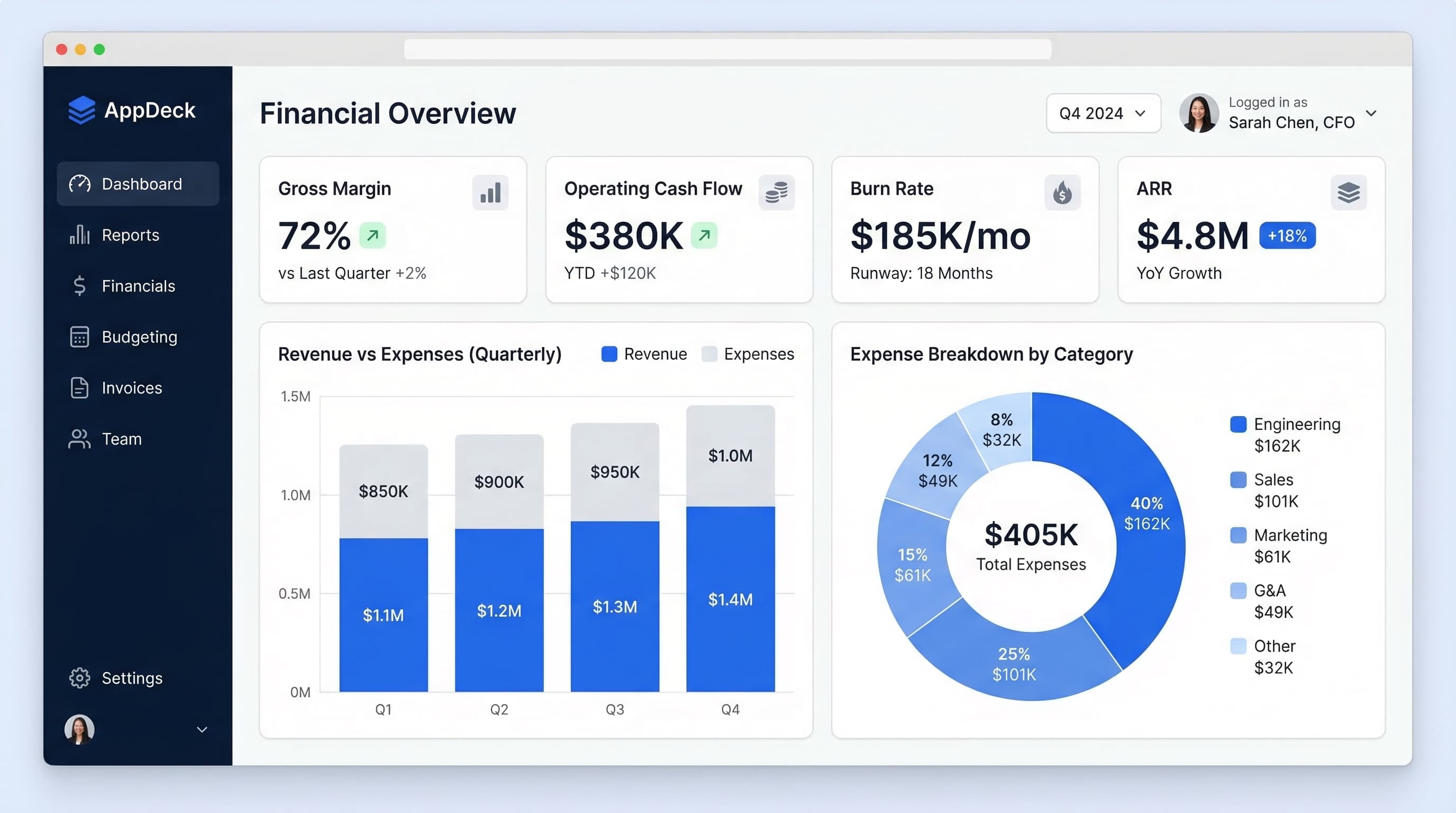
Download the template: Get the report as a free Word doc — Board Report Template (.docx) — CEO summary, headline metrics, function updates, lowlights, asks of the board, and forward-look. No paywall.
Introduction
Board reports are the bridge between management and the board of directors. They translate the complexity of running a business — financial performance, operational metrics, strategic progress, risks — into a format that enables informed decision-making in a two-hour meeting.
The problem? Most board reports are either too long, too short, or structured in a way that buries the information directors actually need. I've reviewed hundreds of board packets over 19+ years of governance consulting, and the pattern is always the same: the organizations with the best governance outcomes are the ones with the best reporting.
In this guide, I'll share 6 free board report templates designed for different reporting needs:
- CEO Quarterly Report — the flagship report for full board meetings
- CFO Financial Report — detailed financial performance and forecasts
- Committee Report — adaptable for audit, compensation, and governance committees
- Operational Dashboard Report — metrics-heavy format for data-driven boards
- Strategic Review Report — for annual and semi-annual strategic discussions
- Startup Board Report — lean format for venture-backed companies
Plus, I'll cover best practices for effective board reporting, common mistakes to avoid, and how to automate the entire process.
What Is a Board Report?
A board report is a structured document prepared by management (typically the CEO, CFO, or committee chairs) that provides the board of directors with the information they need to fulfill their oversight responsibilities.
Key characteristics of board reports:
- Purpose: To inform, enable decisions, and maintain oversight — not to impress or overwhelm
- Audience: Non-executive directors who are deeply experienced but not involved in day-to-day operations
- Frequency: Typically quarterly for full board meetings, monthly for some metrics, and annually for strategic reviews
- Scope: Financial performance, operational progress, strategic alignment, risk management, and compliance
Who Prepares Board Reports?
Different reports come from different authors:
- CEO — overall company performance, strategic progress, key highlights and challenges
- CFO — financial statements, budget variance, cash position, forecasts
- Committee chairs — audit findings, compensation recommendations, governance updates
- COO / department heads — operational metrics, project updates, customer data
- Corporate secretary — governance compliance, board calendar, regulatory filings
How Often Are Board Reports Produced?
- Quarterly: Full board report package (most common for board meetings)
- Monthly: Financial summary, key metrics dashboard (often distributed between meetings)
- Annually: Strategic review, annual budget, governance assessment, board self-evaluation
- Ad hoc: Special reports for M&A transactions, crisis situations, or major strategic decisions
What Makes a Great Board Report?
After reviewing hundreds of board packets across public companies, private companies, and nonprofits, I've identified five principles that separate great board reports from mediocre ones.
1. Executive Summary First
Directors are busy. They serve on multiple boards, run their own organizations, and have limited time to prepare for each meeting. Your report should lead with a one-page executive summary that answers: What do you need to know, and what do you need to decide?
If a director reads nothing else, the executive summary should give them enough context to participate meaningfully in the meeting.
2. Data With Context
A number without context is meaningless. "Revenue was $4.2M" tells me nothing. "Revenue was $4.2M, 8% above budget and 12% ahead of the same quarter last year, driven by strong enterprise sales" tells me everything.
Every key metric should include:
- Actual vs. target/budget — are we on track?
- Actual vs. prior period — are we improving?
- Trend — where are we heading?
- Narrative — why did this happen?
3. Forward-Looking, Not Just Backward
Most board reports are a rearview mirror — here's what happened last quarter. Great board reports also look through the windshield: here's what we expect next quarter, here are the risks on the horizon, and here's what we're doing about them.
Directors can't change the past. Give them the information they need to help shape the future.
4. Clear Recommendations for Decision Items
Don't make directors guess what you want. If you need a decision, say so explicitly. Frame it clearly:
- Background: Why is this decision needed?
- Options: What are the alternatives?
- Recommendation: What does management recommend and why?
- Ask: What specific action do you want the board to take?
5. Concise (10-15 Pages Max for the Full Packet)
The ideal board report packet is 10-15 pages for the core content, with an appendix for supporting data. If your board packet regularly exceeds 50 pages, directors will stop reading it — and you'll spend the meeting presenting information they should have absorbed beforehand.
The rule of thumb: If it takes more than 45 minutes to read the entire board packet, it's too long.
Essential Elements of Every Board Report
Use this as your master checklist. Not every report needs every element, but every board packet should cover these areas across its component reports.
Must-Have Elements
- ✅ Executive summary (1 page max) — key takeaways, highlights, lowlights, decisions needed
- ✅ Key metrics with RAG status — red/amber/green indicators for quick scanning
- ✅ Financial snapshot — revenue, expenses, cash position, budget variance
- ✅ Strategic progress update — status of strategic initiatives against the plan
- ✅ Risks and mitigation — top risks with likelihood, impact, and mitigation actions
- ✅ Decisions required — clearly flagged items that need board approval or input
- ✅ Appendix — detailed data tables, supporting documents, supplementary analysis
Recommended Additions
- 📋 Customer and market insights (win/loss analysis, NPS trends, competitive intelligence)
- 📋 People and culture update (headcount, key hires, attrition, engagement scores)
- 📋 Regulatory and compliance update (upcoming regulations, audit findings, filing status)
- 📋 ESG/sustainability update (increasingly expected by institutional investors)
- 📋 Questions for the board (specific topics where management wants director input)
6 Board Report Templates
Template 1: CEO Quarterly Report
Best for: Full board meetings, quarterly reporting cycles, and providing the board with a comprehensive view of company performance and direction.
This is the flagship report — the one every director reads first. It should paint a complete picture in 4-6 pages, with enough detail to inform discussion but not so much that it overwhelms.
CEO QUARTERLY REPORT
[COMPANY NAME]
Quarter Ending: [Month Day, Year]
Prepared by: [CEO Name]
Date: [Month Day, Year]
Classification: Board Confidential
1. EXECUTIVE SUMMARY
This section should be no longer than one page. It's the most important page in the entire board packet.
Quarter in review: [2-3 sentence summary of overall performance — were targets met? What were the key themes?]
Highlights:
- [Key win #1 — e.g., "Closed largest enterprise deal in company history ($X ARR)"]
- [Key win #2 — e.g., "Launched new product line ahead of schedule"]
- [Key win #3 — e.g., "Customer retention improved to X%, up from X%"]
Lowlights:
- [Challenge #1 — e.g., "Sales pipeline softened in mid-market segment"]
- [Challenge #2 — e.g., "Key engineering hire fell through, delaying roadmap"]
Decisions needed from the board this meeting:
- [Decision #1 — e.g., "Approval of revised FY2026 budget"]
- [Decision #2 — e.g., "Authorization for acquisition due diligence"]
2. FINANCIAL OVERVIEW (HIGH-LEVEL)
Detailed financials are covered in the CFO report. This section provides the CEO's narrative on financial performance.
Metric Actual Budget Variance Prior Year Revenue $[Amount] $[Amount] [+/- X%] $[Amount] Gross Margin [X]% [X]% [+/- X pp] [X]% EBITDA $[Amount] $[Amount] [+/- X%] $[Amount] Cash Position $[Amount] — — $[Amount] CEO commentary: [2-3 sentences providing context on financial performance — what drove the results, are they sustainable, what's the outlook.]
3. STRATEGIC PRIORITIES STATUS
Priority Status Progress Notes [Strategic initiative #1] 🟢 On Track [X]% complete [Brief update] [Strategic initiative #2] 🟡 At Risk [X]% complete [Brief update — why at risk, what's being done] [Strategic initiative #3] 🟢 On Track [X]% complete [Brief update] [Strategic initiative #4] 🔴 Off Track [X]% complete [Brief update — root cause, recovery plan] [Strategic initiative #5] 🟢 On Track [X]% complete [Brief update] Strategic commentary: [2-3 sentences on overall strategic progress. Are we executing against the plan? Any pivots needed?]
4. PRODUCT / SERVICE UPDATE
- Launched this quarter: [Product/feature releases, service expansions]
- In development: [Key items in the pipeline with expected delivery dates]
- Roadmap changes: [Any significant additions, removals, or reprioritizations]
- Market response: [Customer feedback, adoption metrics, competitive positioning]
5. CUSTOMER HIGHLIGHTS
- Total customers: [Number] (net change: [+/- X] this quarter)
- Key wins: [Notable new customers or contract expansions]
- Key losses: [Notable churn with brief explanation]
- Net Promoter Score: [Score] (prior quarter: [Score])
- Customer concentration: Top 10 customers represent [X]% of revenue
6. TEAM UPDATE
- Headcount: [Number] (plan: [Number], net change: [+/- X] this quarter)
- Key hires: [Notable additions with role and start date]
- Open positions: [Number of open roles, critical gaps]
- Attrition: [X]% annualized (target: [X]%)
- Culture/engagement: [Summary of any engagement survey results or notable developments]
7. KEY RISKS
Risk Likelihood Impact Mitigation Status [Risk #1] [High/Med/Low] [High/Med/Low] [What we're doing about it] [New/Unchanged/Improving] [Risk #2] [High/Med/Low] [High/Med/Low] [What we're doing about it] [New/Unchanged/Improving] [Risk #3] [High/Med/Low] [High/Med/Low] [What we're doing about it] [New/Unchanged/Improving]
8. DECISIONS REQUESTED
Decision #1: [Title]
- Background: [2-3 sentences on why this decision is needed]
- Options considered: [Brief summary of alternatives]
- Management recommendation: [What management recommends and why]
- Board action requested: [Specific motion or approval needed]
Decision #2: [Title]
- Background: [2-3 sentences]
- Options considered: [Brief summary]
- Management recommendation: [Recommendation]
- Board action requested: [Specific action]
9. OUTLOOK
Next quarter priorities:
- [Priority #1]
- [Priority #2]
- [Priority #3]
Expectations: [2-3 sentences on what the CEO expects for the coming quarter — revenue trajectory, key milestones, potential headwinds.]
Prepared by [CEO Name], [Title]
[Company Name] — Board Confidential
Template 2: CFO Financial Report
Best for: Detailed financial reporting to the board, budget reviews, and financial planning discussions. This report complements the CEO's high-level financial overview with the depth that directors need for proper financial oversight.
CFO FINANCIAL REPORT
[COMPANY NAME]
Period: [Quarter/Month] Ending [Date]
Prepared by: [CFO Name]
Date: [Date]
Classification: Board Confidential
1. FINANCIAL SUMMARY
Overall assessment: [2-3 sentences — are we ahead, behind, or on plan? What's the headline?]
Metric Q[X] Actual Q[X] Budget Variance YTD Actual YTD Budget Variance Total Revenue $[Amount] $[Amount] [+/- X%] $[Amount] $[Amount] [+/- X%] Cost of Revenue $[Amount] $[Amount] [+/- X%] $[Amount] $[Amount] [+/- X%] Gross Profit $[Amount] $[Amount] [+/- X%] $[Amount] $[Amount] [+/- X%] Gross Margin [X]% [X]% [+/- X pp] [X]% [X]% [+/- X pp] Operating Expenses $[Amount] $[Amount] [+/- X%] $[Amount] $[Amount] [+/- X%] EBITDA $[Amount] $[Amount] [+/- X%] $[Amount] $[Amount] [+/- X%] Net Income $[Amount] $[Amount] [+/- X%] $[Amount] $[Amount] [+/- X%]
2. PROFIT & LOSS VS. BUDGET
Line Item Q[X] Actual Q[X] Budget Var ($) Var (%) Commentary Revenue Product Revenue $[Amount] $[Amount] $[Amount] [X]% [Brief note] Service Revenue $[Amount] $[Amount] $[Amount] [X]% [Brief note] Recurring Revenue $[Amount] $[Amount] $[Amount] [X]% [Brief note] Other Revenue $[Amount] $[Amount] $[Amount] [X]% [Brief note] Total Revenue $[Amount] $[Amount] $[Amount] [X]% Expenses Cost of Goods Sold $[Amount] $[Amount] $[Amount] [X]% [Brief note] Sales & Marketing $[Amount] $[Amount] $[Amount] [X]% [Brief note] Research & Development $[Amount] $[Amount] $[Amount] [X]% [Brief note] General & Administrative $[Amount] $[Amount] $[Amount] [X]% [Brief note] Total Expenses $[Amount] $[Amount] $[Amount] [X]% Net Income $[Amount] $[Amount] $[Amount] [X]% Key variances: [3-5 bullet points explaining the most significant budget variances and their causes.]
3. CASH POSITION & RUNWAY
Metric Current Prior Quarter Change Cash & Cash Equivalents $[Amount] $[Amount] [+/- $Amount] Short-Term Investments $[Amount] $[Amount] [+/- $Amount] Total Liquidity $[Amount] $[Amount] [+/- $Amount] Monthly Burn Rate $[Amount] $[Amount] [+/- $Amount] Runway (Months) [X] months [X] months [+/- X months] Cash flow highlights:
- Operating cash flow: $[Amount] (vs. $[Amount] prior quarter)
- Investing cash flow: $[Amount]
- Financing cash flow: $[Amount]
- Free cash flow: $[Amount]
Commentary: [2-3 sentences on cash position, any concerns, and planned capital activities.]
4. REVENUE ANALYSIS
Revenue by segment/product:
Segment Q[X] Actual Q[X-1] Actual QoQ Growth YoY Growth % of Total [Segment 1] $[Amount] $[Amount] [X]% [X]% [X]% [Segment 2] $[Amount] $[Amount] [X]% [X]% [X]% [Segment 3] $[Amount] $[Amount] [X]% [X]% [X]% Total $[Amount] $[Amount] [X]% [X]% 100% Revenue by geography:
Region Q[X] Actual % of Total YoY Growth [Region 1] $[Amount] [X]% [X]% [Region 2] $[Amount] [X]% [X]% [Region 3] $[Amount] [X]% [X]% Revenue quality metrics:
- Recurring revenue as % of total: [X]%
- Net revenue retention: [X]%
- Average contract value: $[Amount]
- Pipeline coverage ratio: [X]x
5. EXPENSE ANALYSIS
Department Q[X] Actual Q[X] Budget Variance % of Revenue Notes Cost of Revenue $[Amount] $[Amount] [X]% [X]% [Note] Sales & Marketing $[Amount] $[Amount] [X]% [X]% [Note] R&D / Engineering $[Amount] $[Amount] [X]% [X]% [Note] G&A $[Amount] $[Amount] [X]% [X]% [Note] Total OpEx $[Amount] $[Amount] [X]% [X]% Key expense commentary: [Bullet points on significant variances, one-time costs, planned investments.]
6. CAPITAL EXPENDITURE
Project/Category Budget Spent to Date Remaining Status [CapEx item #1] $[Amount] $[Amount] $[Amount] [On Track/Over/Under] [CapEx item #2] $[Amount] $[Amount] $[Amount] [On Track/Over/Under] [CapEx item #3] $[Amount] $[Amount] $[Amount] [On Track/Over/Under] Total CapEx $[Amount] $[Amount] $[Amount]
7. FINANCIAL FORECASTS
Updated full-year forecast:
Metric Original Budget Current Forecast Variance Commentary Revenue $[Amount] $[Amount] [+/- X%] [Brief note] Gross Margin [X]% [X]% [+/- X pp] [Brief note] EBITDA $[Amount] $[Amount] [+/- X%] [Brief note] Net Income $[Amount] $[Amount] [+/- X%] [Brief note] Year-End Cash $[Amount] $[Amount] [+/- $Amount] [Brief note] Forecast assumptions: [Key assumptions underlying the forecast — growth rate, pricing, headcount plan, major projects.]
Risks to forecast: [Top 2-3 risks that could cause actuals to deviate from forecast.]
8. KEY FINANCIAL RISKS
Risk Potential Impact Likelihood Mitigation [Financial risk #1 — e.g., customer concentration] $[Amount] / [X]% of revenue [High/Med/Low] [Mitigation action] [Financial risk #2 — e.g., foreign exchange exposure] $[Amount] potential impact [High/Med/Low] [Mitigation action] [Financial risk #3 — e.g., debt covenant compliance] [Description of impact] [High/Med/Low] [Mitigation action]
9. ITEMS FOR BOARD APPROVAL
- [Item #1 — e.g., "Approval of revised FY2026 budget per attached schedule"]
- [Item #2 — e.g., "Authorization of $X credit facility with [Bank Name]"]
- [Item #3 — e.g., "Approval of write-off of $X uncollectible receivable"]
Prepared by [CFO Name], Chief Financial Officer
[Company Name] — Board Confidential
Template 3: Committee Report (Audit / Compensation / Governance)
Best for: Any board committee reporting back to the full board. This generic template can be adapted for audit committees, compensation committees, governance/nominating committees, risk committees, or any other standing committee.
[COMMITTEE NAME] REPORT TO THE BOARD
[COMPANY NAME]
Reporting Period: [Quarter/Date Range]
Prepared by: [Committee Chair Name], Committee Chair
Date: [Date]
1. COMMITTEE OVERVIEW
Members: [Name] (Chair), [Name], [Name], [Name]
Meetings held this quarter: [Number] ([Dates])
Attendance: [All members attended all meetings / Attendance details if notable absences]
Charter compliance: [Confirm the committee operated within its charter / Note any deviations]
2. ACTIVITIES THIS QUARTER
The [Committee Name] undertook the following activities during the reporting period:
Regular activities:
- [Activity #1 — e.g., "Reviewed Q3 financial statements with external auditors"]
- [Activity #2 — e.g., "Assessed internal control effectiveness"]
- [Activity #3 — e.g., "Reviewed and approved updated expense policy"]
Special activities:
- [Activity #1 — e.g., "Conducted annual risk assessment with management"]
- [Activity #2 — e.g., "Evaluated and selected new external audit firm"]
3. KEY FINDINGS
Finding #1: [Title]
- Description: [What was found]
- Significance: [Why it matters]
- Management response: [What management is doing about it]
- Committee assessment: [Committee's view on adequacy of response]
Finding #2: [Title]
- Description: [What was found]
- Significance: [Why it matters]
- Management response: [What management is doing about it]
- Committee assessment: [Committee's view]
Finding #3: [Title]
- Description: [What was found]
- Significance: [Why it matters]
- Management response: [What management is doing about it]
- Committee assessment: [Committee's view]
4. RECOMMENDATIONS TO THE BOARD
Based on its activities and findings, the committee recommends the following:
Recommendation #1: [Clear statement of what the committee recommends — e.g., "The committee recommends the board approve the appointment of [Firm Name] as external auditors for FY2026 at a fee of $[Amount]."]
Recommendation #2: [Clear statement — e.g., "The committee recommends management implement the revised internal control framework by Q2 2026."]
Recommendation #3: [Clear statement — e.g., "The committee recommends the board approve the updated executive compensation structure as detailed in Appendix A."]
5. UPCOMING ACTIVITIES
The committee plans to focus on the following in the next quarter:
- [Planned activity #1 — e.g., "Annual review of committee charter"]
- [Planned activity #2 — e.g., "Deep dive on cybersecurity risk with CISO"]
- [Planned activity #3 — e.g., "Begin FY2027 audit planning with external auditors"]
Next committee meeting: [Date]
6. ITEMS FOR BOARD APPROVAL
The committee requests board approval for the following:
- [Item #1 — e.g., "Appointment of [Firm Name] as external auditors"]
- [Item #2 — e.g., "Revised executive compensation benchmarks"]
- [Item #3 — e.g., "Updated whistleblower policy"]
Respectfully submitted,
[Committee Chair Name] Chair, [Committee Name]
Template 4: Operational Dashboard Report
Best for: Boards that prefer a data-driven, metrics-heavy format for monitoring operational performance. This template is designed for quick scanning — heavy on tables and RAG status indicators, light on narrative.
OPERATIONAL DASHBOARD
[COMPANY NAME]
Period: [Quarter/Month] Ending [Date]
Prepared by: [COO/CEO Name]
Date: [Date]
1. KPI SCORECARD
Category Metric Actual Target Prior Period Trend Status Revenue Total Revenue $[Amount] $[Amount] $[Amount] [↑/↓/→] [🟢/🟡/🔴] MRR/ARR $[Amount] $[Amount] $[Amount] [↑/↓/→] [🟢/🟡/🔴] Revenue Growth (QoQ) [X]% [X]% [X]% [↑/↓/→] [🟢/🟡/🔴] Profitability Gross Margin [X]% [X]% [X]% [↑/↓/→] [🟢/🟡/🔴] EBITDA Margin [X]% [X]% [X]% [↑/↓/→] [🟢/🟡/🔴] Customers Total Customers [Number] [Number] [Number] [↑/↓/→] [🟢/🟡/🔴] Churn Rate [X]% [X]% [X]% [↑/↓/→] [🟢/🟡/🔴] NPS Score [Score] [Score] [Score] [↑/↓/→] [🟢/🟡/🔴] Operations On-Time Delivery [X]% [X]% [X]% [↑/↓/→] [🟢/🟡/🔴] Support Response Time [X] hrs [X] hrs [X] hrs [↑/↓/→] [🟢/🟡/🔴] People Headcount [Number] [Number] [Number] [↑/↓/→] [🟢/🟡/🔴] Voluntary Attrition [X]% [X]% [X]% [↑/↓/→] [🟢/🟡/🔴] Status key: 🟢 On/above target | 🟡 Within 10% of target | 🔴 More than 10% below target
2. DEPARTMENT SUMMARIES
Sales & Marketing:
Metric Actual Target Status New Bookings $[Amount] $[Amount] [🟢/🟡/🔴] Pipeline Value $[Amount] $[Amount] [🟢/🟡/🔴] Win Rate [X]% [X]% [🟢/🟡/🔴] CAC $[Amount] $[Amount] [🟢/🟡/🔴] Marketing Qualified Leads [Number] [Number] [🟢/🟡/🔴] Key commentary: [2-3 bullets on notable developments]
Product / Engineering:
Metric Actual Target Status Features Shipped [Number] [Number] [🟢/🟡/🔴] Sprint Velocity [Number] [Number] [🟢/🟡/🔴] Uptime [X]% [X]% [🟢/🟡/🔴] Bug Backlog [Number] [Number] [🟢/🟡/🔴] Release On-Time Rate [X]% [X]% [🟢/🟡/🔴] Key commentary: [2-3 bullets on notable developments]
Customer Success / Support:
Metric Actual Target Status CSAT Score [X]/5 [X]/5 [🟢/🟡/🔴] First Response Time [X] hrs [X] hrs [🟢/🟡/🔴] Resolution Time [X] hrs [X] hrs [🟢/🟡/🔴] Tickets This Quarter [Number] — — Net Revenue Retention [X]% [X]% [🟢/🟡/🔴] Key commentary: [2-3 bullets on notable developments]
3. PROJECT STATUS
Project Owner Due Date % Complete Status Notes [Project #1] [Name] [Date] [X]% [🟢/🟡/🔴] [Brief note] [Project #2] [Name] [Date] [X]% [🟢/🟡/🔴] [Brief note] [Project #3] [Name] [Date] [X]% [🟢/🟡/🔴] [Brief note] [Project #4] [Name] [Date] [X]% [🟢/🟡/🔴] [Brief note] [Project #5] [Name] [Date] [X]% [🟢/🟡/🔴] [Brief note]
4. CUSTOMER METRICS
Metric Q[X] Q[X-1] Q[X-2] Q[X-3] Trend New Customers [Number] [Number] [Number] [Number] [↑/↓/→] Churned Customers [Number] [Number] [Number] [Number] [↑/↓/→] Net Customer Growth [Number] [Number] [Number] [Number] [↑/↓/→] Average Revenue Per Customer $[Amount] $[Amount] $[Amount] $[Amount] [↑/↓/→] Customer Lifetime Value $[Amount] $[Amount] $[Amount] $[Amount] [↑/↓/→]
5. TEAM METRICS
Metric Q[X] Q[X-1] Target Status Total Headcount [Number] [Number] [Number] [🟢/🟡/🔴] New Hires [Number] [Number] [Number] [🟢/🟡/🔴] Voluntary Departures [Number] [Number] — — Open Positions [Number] [Number] — — Time to Fill (avg days) [Number] [Number] [Number] [🟢/🟡/🔴] Employee Engagement Score [X]/10 [X]/10 [X]/10 [🟢/🟡/🔴]
Prepared by [Name], [Title]
[Company Name] — Board Confidential
Template 5: Strategic Review Report
Best for: Annual or semi-annual strategic planning sessions, board retreats, and any meeting dedicated to long-term strategy rather than operational performance. This report provides the foundation for strategic discussion and decision-making.
STRATEGIC REVIEW REPORT
[COMPANY NAME]
Review Period: [Year / Half-Year]
Prepared by: [CEO Name] and [Strategy Lead Name]
Date: [Date]
Classification: Board Confidential
1. STRATEGIC PLAN PROGRESS
Plan period: [Start Year] — [End Year]
Overall assessment: [On Track / Needs Adjustment / Significant Revision Required]
Strategic Goal Target (End of Plan) Current Status % Achieved On Track? [Goal #1 — e.g., "Reach $50M ARR"] [Target metric] [Current metric] [X]% [Yes/No/Partially] [Goal #2 — e.g., "Expand to 3 new markets"] [Target metric] [Current metric] [X]% [Yes/No/Partially] [Goal #3 — e.g., "Achieve 20% EBITDA margin"] [Target metric] [Current metric] [X]% [Yes/No/Partially] [Goal #4 — e.g., "Launch platform product"] [Target metric] [Current metric] [X]% [Yes/No/Partially] [Goal #5 — e.g., "Build leadership team"] [Target metric] [Current metric] [X]% [Yes/No/Partially] Commentary: [What's working, what isn't, and why. 3-5 sentences.]
2. MARKET ANALYSIS UPDATE
Market size and growth:
- Total addressable market (TAM): $[Amount] (updated from $[Amount])
- Serviceable addressable market (SAM): $[Amount]
- Current market share: [X]%
- Market growth rate: [X]% CAGR
Key market trends:
- [Trend #1 — e.g., "Shift to cloud-native solutions accelerating, on-premise declining X% annually"]
- [Trend #2 — e.g., "AI integration becoming table stakes, no longer a differentiator"]
- [Trend #3 — e.g., "Consolidation among mid-market competitors creating opportunity"]
- [Trend #4 — e.g., "Regulatory changes in [region] opening new market segment"]
Customer and buyer trends:
- [Trend #1 — e.g., "Decision-making shifting from IT to business units"]
- [Trend #2 — e.g., "Increasing demand for self-service and API-first platforms"]
3. COMPETITIVE LANDSCAPE
Competitor Est. Revenue Market Share Recent Moves Threat Level [Competitor #1] $[Amount] [X]% [Recent development] [High/Med/Low] [Competitor #2] $[Amount] [X]% [Recent development] [High/Med/Low] [Competitor #3] $[Amount] [X]% [Recent development] [High/Med/Low] [Competitor #4] $[Amount] [X]% [Recent development] [High/Med/Low] Our competitive positioning:
- Strengths: [Where we win — e.g., product depth, customer service, pricing]
- Weaknesses: [Where we're vulnerable — e.g., brand awareness, feature gaps, geographic coverage]
- Opportunities: [Market gaps we can exploit]
- Threats: [External threats to our position]
4. STRATEGIC OPTIONS
Based on the market analysis and competitive landscape, management has identified the following strategic options for board discussion:
Option A: [Title — e.g., "Accelerate Growth Through Acquisition"]
- Description: [2-3 sentences on what this option entails]
- Expected outcome: [Revenue/market share/capability impact]
- Investment required: $[Amount] over [timeframe]
- Key risks: [Top 2-3 risks]
- Management assessment: [Favorable / Neutral / Unfavorable]
Option B: [Title — e.g., "Organic Growth With Product Expansion"]
- Description: [2-3 sentences]
- Expected outcome: [Revenue/market share/capability impact]
- Investment required: $[Amount] over [timeframe]
- Key risks: [Top 2-3 risks]
- Management assessment: [Favorable / Neutral / Unfavorable]
Option C: [Title — e.g., "Market Consolidation and Margin Expansion"]
- Description: [2-3 sentences]
- Expected outcome: [Revenue/market share/capability impact]
- Investment required: $[Amount] over [timeframe]
- Key risks: [Top 2-3 risks]
- Management assessment: [Favorable / Neutral / Unfavorable]
5. RESOURCE REQUIREMENTS
Resource Category Current Required (Option A) Required (Option B) Required (Option C) Headcount [Number] [Number] [Number] [Number] Annual OpEx $[Amount] $[Amount] $[Amount] $[Amount] Capital Investment — $[Amount] $[Amount] $[Amount] Financing Needed — $[Amount] $[Amount] $[Amount]
6. TIMELINE
Milestone Option A Option B Option C Board approval [Date] [Date] [Date] Initial investment [Date] [Date] [Date] First measurable results [Date] [Date] [Date] Break-even on investment [Date] [Date] [Date] Full impact realized [Date] [Date] [Date]
7. MANAGEMENT RECOMMENDATION
Management recommends [Option X] for the following reasons:
- [Reason #1 — alignment with strategic goals]
- [Reason #2 — market timing and competitive positioning]
- [Reason #3 — risk-adjusted return on investment]
- [Reason #4 — organizational readiness and capability]
Board action requested: [Specific ask — e.g., "Management seeks board endorsement of Option B and authorization to develop a detailed implementation plan for review at the next board meeting."]
8. QUESTIONS FOR THE BOARD
Management would value the board's input on the following:
- [Question #1 — e.g., "Does the board agree with management's assessment of the competitive landscape?"]
- [Question #2 — e.g., "Are there strategic options the board believes we should explore that aren't listed here?"]
- [Question #3 — e.g., "What is the board's appetite for the level of investment required under Option A?"]
Prepared by [CEO Name] and [Strategy Lead Name]
[Company Name] — Board Confidential
Template 6: Startup Board Report
Best for: Seed through Series C startups, venture-backed companies, and early-stage businesses. This lean format covers everything investors and board members need in 2-3 pages — no filler, no fluff.
BOARD UPDATE
[Company Name]
Period: [Month / Quarter]
Prepared by: [CEO Name]
Date: [Date]
1. TL;DR
[3-4 sentences maximum. What happened, how we're doing, what we need. This is the section investors read on their phone between meetings.]
- [Headline #1 — e.g., "Hit $1.2M MRR, ahead of plan by 8%"]
- [Headline #2 — e.g., "Burn rate reduced to $180K/mo, extending runway to 14 months"]
- [Headline #3 — e.g., "Lost VP Engineering to competitor, backfill in progress"]
- [Ask — e.g., "Need intro to [Company X] for partnership discussion"]
2. KEY METRICS
Metric Current Last Month 3 Months Ago Target Status MRR $[Amount] $[Amount] $[Amount] $[Amount] [🟢/🟡/🔴] MRR Growth (MoM) [X]% [X]% [X]% [X]% [🟢/🟡/🔴] ARR (Annualized) $[Amount] $[Amount] $[Amount] $[Amount] [🟢/🟡/🔴] Burn Rate (Monthly) $[Amount] $[Amount] $[Amount] $[Amount] [🟢/🟡/🔴] Cash in Bank $[Amount] $[Amount] $[Amount] — — Runway (Months) [X] [X] [X] 12+ [🟢/🟡/🔴] Total Customers [Number] [Number] [Number] [Number] [🟢/🟡/🔴] CAC $[Amount] $[Amount] $[Amount] $[Amount] [🟢/🟡/🔴] LTV $[Amount] $[Amount] $[Amount] — — LTV:CAC Ratio [X]:1 [X]:1 [X]:1 3:1+ [🟢/🟡/🔴] Logo Churn (Monthly) [X]% [X]% [X]% Under [X]% [🟢/🟡/🔴] Net Revenue Retention [X]% [X]% [X]% >100% [🟢/🟡/🔴]
3. PRODUCT UPDATE
Shipped this month/quarter:
- [Feature/release #1 — one line description and impact]
- [Feature/release #2]
- [Feature/release #3]
In progress:
- [Feature #1 — expected ship date]
- [Feature #2 — expected ship date]
Key product decisions made:
- [Decision — e.g., "Decided to sunset legacy API in favor of v3, migration support through Q3"]
4. CUSTOMER WINS & LOSSES
New customers:
Customer ARR Source Notable [Customer #1] $[Amount] [Channel] [e.g., "First Fortune 500 logo"] [Customer #2] $[Amount] [Channel] [e.g., "Competitive displacement of [Competitor]"] [Customer #3] $[Amount] [Channel] Churned customers:
Customer Lost ARR Reason Preventable? [Customer #1] $[Amount] [e.g., "Acquired, new parent uses competitor"] No [Customer #2] $[Amount] [e.g., "Feature gap — needed [capability]"] Yes — on roadmap for Q3 Expansion revenue: $[Amount] from [Number] accounts
5. TEAM UPDATE
- Headcount: [Number] (last month: [Number])
- Key hires: [Name, Role — impact on company]
- Key departures: [Name, Role — reason if appropriate, backfill plan]
- Critical open roles: [Role #1], [Role #2]
- Team health: [Brief note on morale, culture, any concerns]
6. FUNDRAISING STATUS
[Include this section if actively fundraising or planning to fundraise within 6 months.]
- Current round: [Not yet started / In progress / Closing]
- Target raise: $[Amount] at $[Valuation] ([pre/post]-money)
- Investors contacted: [Number]
- Term sheets received: [Number]
- Expected close: [Date]
- Use of funds: [Top 3 priorities for the capital]
[If not fundraising: "No active fundraise. Current runway of [X] months is sufficient through [Date]. We plan to begin Series [X] process in [Quarter/Year]."]
7. ASKS FROM THE BOARD
This is the most important section for getting value from your board. Be specific.
- Intro request: [e.g., "Can anyone connect us with [Person Name] at [Company]? We're pursuing an enterprise partnership."]
- Advice needed: [e.g., "We're evaluating [decision]. Would appreciate 15 minutes with anyone who has experience with [topic]."]
- Hiring help: [e.g., "Searching for VP Engineering — please share the job spec with your network."]
- Decision needed: [e.g., "Need board approval for [specific item] — will discuss live."]
[CEO Name], CEO & Co-Founder
[Company Name]
Board Report Best Practices
After years of reviewing board packets and advising organizations on governance, these are the ten practices that consistently produce the most effective board reports.
1. Start With the "So What"
Your executive summary should answer three questions in the first paragraph: How did we perform? What are the key issues? What decisions are needed? If a director reads only the first page, they should walk away with a clear picture of where the company stands.
2. Use Consistent Formatting Quarter to Quarter
Directors develop pattern recognition over time. When your report follows the same structure every quarter, they can quickly find the information they need and spot changes from the prior period. Resist the urge to redesign your report format every quarter — consistency beats creativity in board reporting.
3. Include RAG Status Indicators for Quick Scanning
Red/amber/green indicators let directors scan a page of metrics in seconds and immediately focus on what needs attention. Define clear thresholds for each status level so they're objective, not subjective:
- 🟢 Green: On or above target
- 🟡 Amber: Within 10% of target, needs monitoring
- 🔴 Red: More than 10% below target, requires action
4. Show Trends, Not Just Snapshots
A single quarter's data point tells you very little. Show 3-6 months (or quarters) of data so directors can see the trajectory. Is revenue accelerating or decelerating? Is churn improving or worsening? Trends reveal the story behind the numbers.
5. Separate "For Information" From "For Decision"
Not every item in a board report requires action. Clearly distinguish between items that are informational (no action needed) and items that require a board decision or approval. Flag decision items prominently — in the executive summary, in the relevant section, and in a consolidated "Decisions Required" section.
6. Keep Reports to 10-15 Pages
The core board report should be 10-15 pages. Everything beyond that goes in an appendix. Directors will read a focused 12-page report. They won't read a 60-page data dump — and if they do, they'll miss the important parts because everything looks equally important.
7. Send 5-7 Days Before the Meeting
Directors need time to read, digest, and prepare questions. Sending the board packet the day before the meeting guarantees a less productive meeting — directors will spend the meeting reading instead of discussing. The gold standard is 5-7 business days before the meeting.
8. Use a Board Portal for Distribution and Version Control
Email attachments are the worst way to distribute board reports. Version control is nonexistent, access can't be revoked, and you have no idea if anyone actually read the materials. A board portal like AppDeck solves all of these problems:
- Secure distribution — encrypted access, no email attachments floating around
- Version control — update a report and everyone sees the latest version
- Read tracking — know who opened the materials and when
- Access controls — restrict access to current board members only
- Audit trail — complete record of who accessed what
9. Include Management Recommendations
Don't present a decision to the board without a recommendation. Directors expect management to have a point of view. Frame it clearly: "Management recommends Option B because..." This doesn't limit the board's ability to choose differently — it gives them a starting point and demonstrates that management has thought through the issue.
10. Add a "Questions for the Board" Section
Most board meetings spend too much time on presentations and not enough on discussion. A "Questions for the Board" section signals to directors what you want to discuss and gives them time to think about their answers before the meeting. This transforms passive information consumption into active strategic dialogue.
How to Automate Board Reporting
Manual board report creation is one of the biggest time sinks in corporate governance. CFOs and their teams regularly spend 20-40 hours per quarter assembling, formatting, reviewing, and distributing board reports. Here's how to reduce that dramatically.
Connect Data Sources to Real-Time Dashboards
Instead of manually pulling data from multiple systems each quarter, connect your financial, CRM, and operational systems to an executive dashboard that updates automatically. When it's time to create the board report, the data is already there — you just need to add context and narrative.
Use a Board Portal for Version-Controlled Distribution
Stop emailing PDF attachments. A board portal provides a single, secure location for all board materials. Upload the report once, and every director has instant access. Update a number? The change is reflected immediately — no need to send a corrected version with "REVISED" in the subject line.
Template-Based Report Generation
Start each quarter with a pre-formatted template (like the ones in this guide). Pre-populate recurring sections — attendees, agenda items, prior period comparisons. This cuts preparation time by 30-50% and ensures consistency from quarter to quarter.
Engagement Analytics
How many directors actually read the board packet before the meeting? With email distribution, you have no idea. With a board portal, you can see exactly who opened the materials, which sections they viewed, and how much time they spent. This lets you follow up with directors who haven't reviewed the materials and tailor your meeting presentation accordingly.
The Impact
Organizations using board portal software for report management consistently report:
- 50-70% reduction in time spent on report preparation and distribution
- Higher director engagement with pre-meeting materials
- More productive meetings focused on discussion rather than presentation
- Complete audit trail for regulatory and compliance purposes
Common Board Report Mistakes
1. Too Long (The 50-Page Data Dump)
The mistake: Including every data point, chart, and analysis in the main report because "the board might want to see it."
Why it fails: Directors get overwhelmed, stop reading, and either come to the meeting unprepared or spend the meeting asking questions that were answered on page 47.
The fix: Main report stays at 10-15 pages. Everything else goes in a clearly labeled appendix. Direct directors to specific appendix sections only when needed.
2. All Backward-Looking, No Forward View
The mistake: Reporting exclusively on what happened — last quarter's revenue, last quarter's metrics, last quarter's projects.
Why it fails: Directors can't change the past. They need forward-looking information to fulfill their oversight role: forecasts, risks, strategic options, market outlook.
The fix: Follow the 60/40 rule — 60% of the report covers past performance, 40% covers outlook, forecasts, and forward-looking analysis.
3. No Executive Summary
The mistake: Jumping straight into detailed financial statements without providing a high-level overview.
Why it fails: Directors have to read the entire report to understand whether the company is doing well or poorly. There's no frame of reference for the detailed data that follows.
The fix: Always start with a one-page executive summary. Key takeaways, highlights, lowlights, decisions needed. This is the most important page in the entire board packet.
4. Burying the Bad News
The mistake: Leading with positive results and hiding challenges, misses, and risks deep in the report — or omitting them entirely.
Why it fails: Directors will find out eventually. When they do, they'll lose trust in management's reporting. Worse, they can't help address problems they don't know about.
The fix: Address bad news head-on in the executive summary. Frame it constructively: what happened, why, and what management is doing about it. Directors respect transparency far more than spin.
5. No Clear "Ask" From the Board
The mistake: Presenting information without telling the board what you need from them — approval, guidance, feedback, a decision.
Why it fails: The meeting drifts into unfocused discussion. Directors aren't sure what's informational and what requires action. Decisions get deferred to the next meeting because no one realized a decision was needed.
The fix: Every board report should have a clear "Decisions Required" section. Every decision item should specify the background, options, management recommendation, and specific action requested.
6. Sending Too Late
The mistake: Distributing the board packet the day before (or the morning of) the meeting.
Why it fails: Directors don't have time to read 15 pages of material, let alone formulate thoughtful questions. The meeting becomes a presentation rather than a discussion.
The fix: Send the board packet 5-7 business days before the meeting. Use a board portal with read tracking so you know who has reviewed the materials.
Frequently Asked Questions
How long should a board report be?
10-15 pages for the main board report, plus appendices for supporting detail. The 50-page data dump is the single most common mistake in board reporting -- directors stop reading, arrive unprepared, and waste meeting time asking questions buried on page 47. Keep the main report focused on what requires board attention: executive summary (1 page), financials (3-4 pages), strategic update (2-3 pages), risks (1-2 pages), and decisions required (1 page). Everything else -- detailed financial schedules, departmental reports, market research -- goes in clearly labeled appendices that directors can access if they want depth.
Is a CEO report different from a CFO report?
Yes, they serve different purposes and should not be combined into one document. The CEO report covers strategy, market, competitive dynamics, key initiatives, organizational health, and forward outlook -- it is qualitative and forward-looking. The CFO report covers detailed financial performance, variance analysis, cash and runway, forecasts, and capital structure -- it is quantitative and structured. A full board packet typically includes both, plus committee reports. Trying to compress everything into one CEO report leads to either a financial deep-dive that buries strategy or a strategy narrative that lacks financial rigor.
How far in advance should the board report be distributed?
5-7 business days before the meeting -- never the day before, never at the meeting. Directors need time to read 15+ pages of materials, cross-reference appendices, and formulate thoughtful questions. Distributing late guarantees an unprepared board and turns the meeting into a presentation instead of a discussion. Use a board portal with read tracking so you can see who has actually opened the materials and follow up with directors who have not. For annual or strategic meetings with longer reports, distribute 10 days out.
Which directors actually read the full board report?
Independent and outside directors typically read most or all of it -- they have a fiduciary duty to come prepared and no other source of operational visibility. Inside directors (executives) often skim because they have lived the quarter. Investor directors usually read the financials carefully and skim the rest. The right design assumption is that 50-70% of the report will be read by 50-70% of the board, which is why the executive summary is the most important page: every director will read it, even when they skip everything else. Make it count.
When should I automate board reporting versus keep it manual?
Automate the moment you find yourself spending more than 15 hours per quarter assembling the same metrics from the same systems. The trigger is repetition, not size. A small private company that reports the same 12 KPIs every quarter benefits from a real-time dashboard layer just as much as a large company does -- the time savings compound. Keep manual the strategic narrative, the risks section, and the decisions required. Those require judgment and cannot be templated. The win is automating the data and freeing time for the analysis.
Conclusion
Effective board reporting is the foundation of good governance. It enables directors to fulfill their oversight responsibilities, make informed decisions, and provide meaningful strategic guidance. The difference between a productive board meeting and a wasted two hours almost always traces back to the quality of the board report.
The six templates in this guide cover the most common reporting needs:
- CEO Quarterly Report — comprehensive company overview for full board meetings
- CFO Financial Report — detailed financial performance and forecasts
- Committee Report — adaptable format for any board committee
- Operational Dashboard — metrics-heavy format for data-driven boards
- Strategic Review — deep-dive format for strategic planning discussions
- Startup Board Report — lean format for venture-backed companies
Pick the templates that match your needs, customize them to your organization, and use them consistently. And if you're still assembling board packets in PowerPoint and distributing them via email, consider upgrading to a board portal that handles secure distribution, version control, and engagement tracking automatically.
Related reading:
- The Complete Guide to Board Portals
- Board Meeting Minutes Template: 5 Free Templates for 2026
- Board Meeting Agenda Template
- Board Resolution Template
- Board Reporting Software: 7 Tools CFOs Actually Use
- Board Portal Software Comparison 2026
- KPI Dashboard Examples
- CFO Executive Dashboard: Essential Metrics

Founder & CEO, AppDeck
Serial entrepreneur with 20+ years building B2B software companies. Former executive managing 2,800+ employees across three continents. Vik reviews all AppDeck content for accuracy and practical relevance.
Share this article
Explore Related Solutions
Related Articles
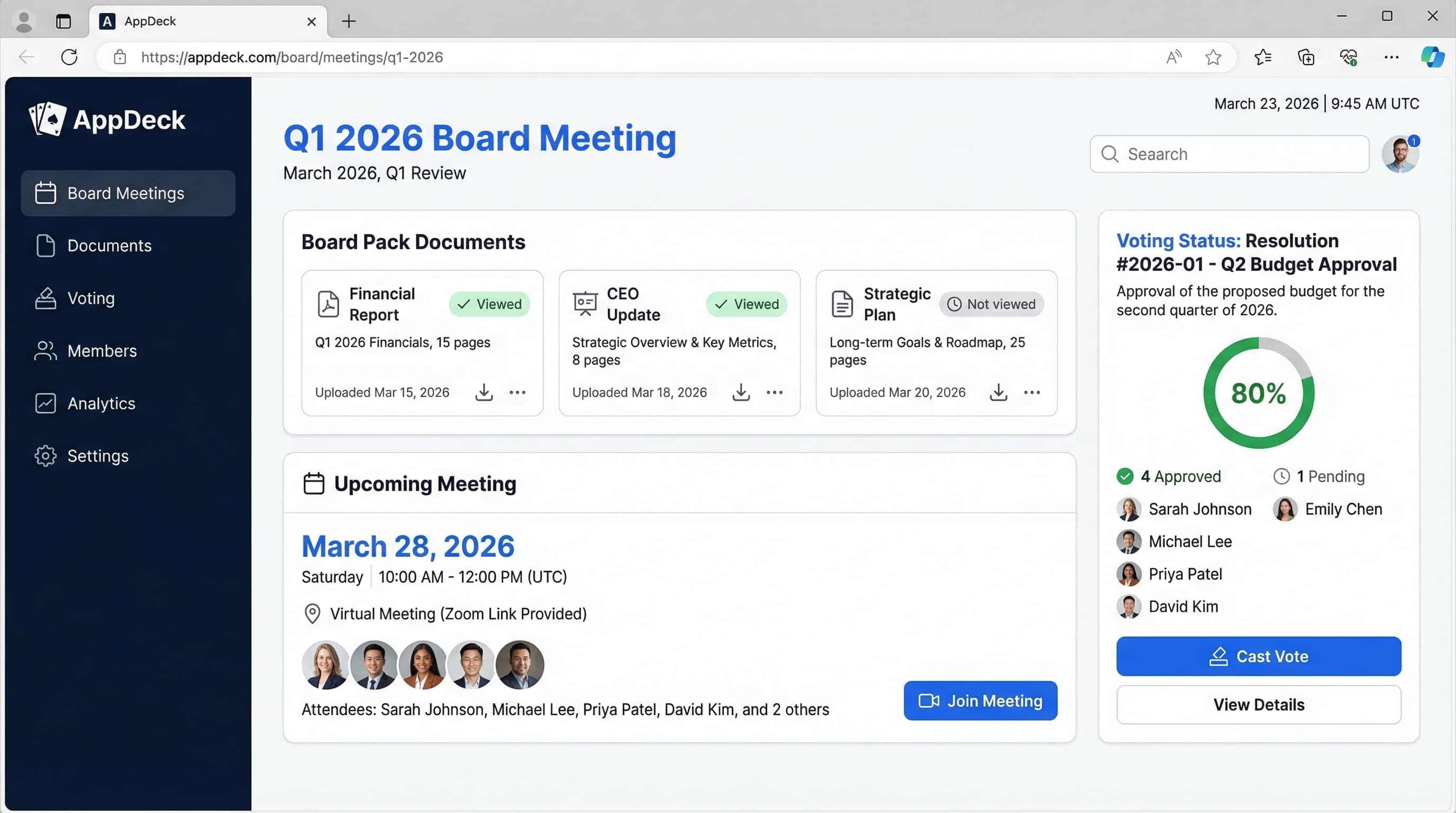
Board Meeting Agenda Template: 7 Free Templates for Every Board Type
Download free board meeting agenda templates for corporate boards, nonprofits, startups, and advisory boards. Includes time allocations, best practices, and examples.
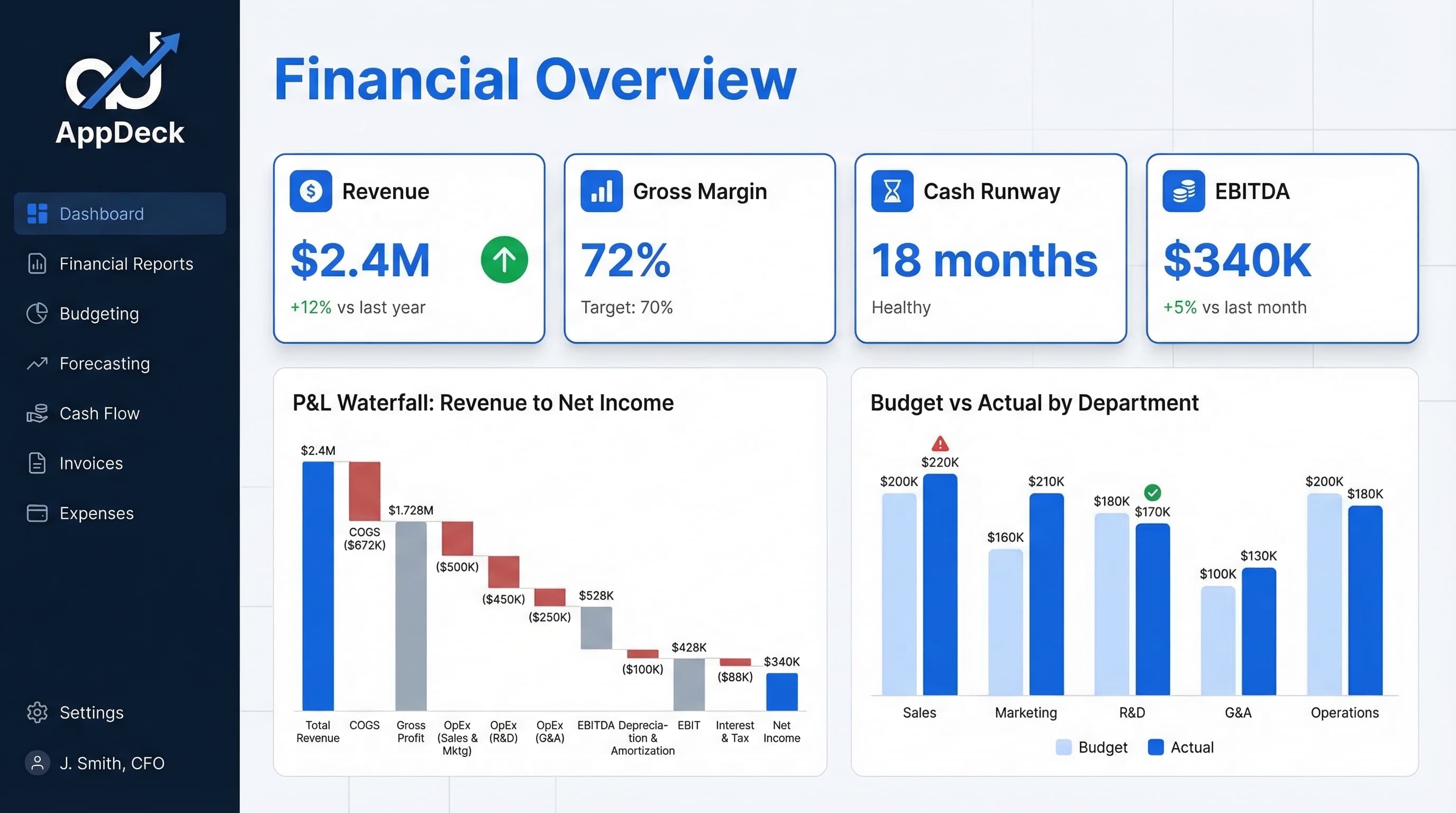
Board Meeting Minutes Template: 5 Free Templates for 2026
Download free board meeting minutes templates for corporations, nonprofits, and startups. Includes formal, informal, and action-focused formats with examples.
Board Resolution Template: 8 Free Templates with Examples
Download free board resolution templates for corporate actions, officer appointments, banking, dividends, and more. Proper formatting and examples.