
Project Kickoff Template
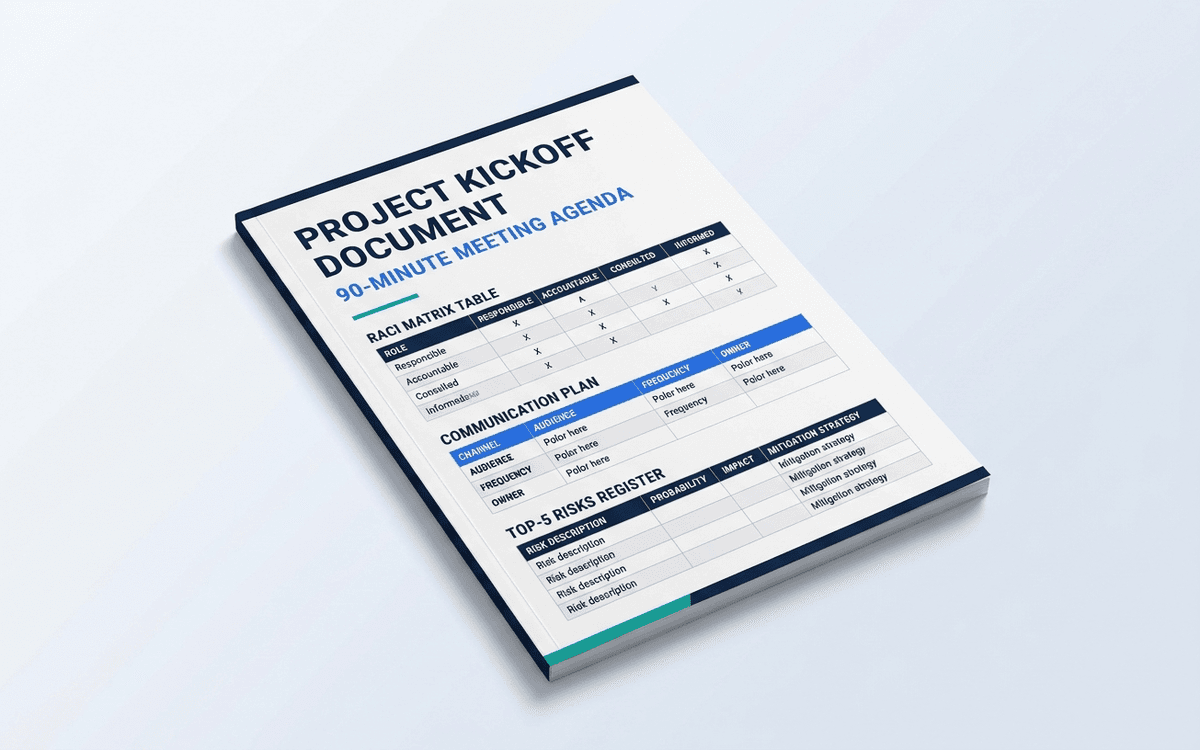
A project kickoff template that turns the first meeting into the one that prevents the most common project failures — unclear scope, missing stakeholders, ambiguous decision rights — instead of just a calendar item that gets through introductions.
- Format:
- Word (.docx) (38 KB)
- Price:
- Free, no paywall
- Published May 2026
Download this template — free
Tell us where to send the link. We'll never share your email.
What's included
- Kickoff meeting agenda (90 minutes)
- Project context block (background, business driver)
- Scope reaffirmation — pulled from the SOW
- Success criteria with who decides "done"
- RACI matrix (Responsible, Accountable, Consulted, Informed)
- Stakeholder map with decision authority
- Communication plan (cadence, format, channels)
- Risk register starter (top 5 risks named at kickoff)
- Next-30-days plan with milestones
- Logistics block (tools, access, credentials)
How to use this template
1. Don't kick off until the SOW is signed
Kickoff meetings before signed SOWs are how scope creep starts. Hold the meeting at the SOW signature, not before. If the customer pushes for kickoff before signing, that's a yellow flag worth understanding before the meeting happens.
2. Map ALL stakeholders, including invisible ones
The stakeholders in the kickoff meeting aren't the only stakeholders. There's the procurement person who signed the contract, the security person who reviewed your vendor risk assessment, the exec sponsor who isn't in the kickoff. Surface them all and assign owners for each.
3. Name the top 5 risks AT kickoff
Pretending risks emerge over time is wrong — most of them are visible at kickoff if you ask. Force the conversation: "what could derail this project?" Capture 5 in the risk register. Revisit them at every status meeting.
4. Lock the communication cadence in the meeting
Weekly status calls? Daily standups? Slack updates? Email recap on Fridays? Don't leave the kickoff without an explicit communication plan with named channels and frequencies. "We'll figure it out" turns into client friction in week 3.
5. Set up the project workspace BEFORE the meeting
Don't spend kickoff time creating folders and provisioning access. Pre-create the workspace (Slack channel, shared drive, project doc), invite the client, hand over access in the first 5 minutes. Then the meeting is about decisions, not logistics.
Who it's for
- Agency account leads kicking off new engagements
- Consulting project managers starting client work
- Internal PMs running cross-functional initiatives
- Implementation leads at SaaS companies starting customer onboarding
Frequently asked questions
- How long should a project kickoff be?
- 60-90 minutes for most engagements. Longer for complex multi-stakeholder enterprise projects (sometimes a full-day workshop). Shorter and you're skipping substance; longer and energy fades. The agenda in this template is calibrated to 90 minutes.
- Who should attend the kickoff?
- Project sponsor (or delegated approver), day-to-day client owner, your account lead, your delivery lead, anyone else with decision authority. Optional: the wider team if it helps social cohesion. Don't invite people who don't need to make decisions — meeting quality drops with attendee count.
- Should we present a slide deck at kickoff?
- Light deck is fine for context (5-10 slides). Most of the meeting should be a working session reviewing the agenda items in a doc. Deck-heavy kickoffs feel like sales presentations; doc-heavy kickoffs feel like work starting. Tilt toward doc.
- What's a RACI matrix and do we need one?
- RACI = Responsible (does the work), Accountable (owns the outcome), Consulted (input solicited), Informed (kept aware). One person Accountable per activity, multiple can be Responsible/Consulted/Informed. RACI prevents the most common project pathology: ambiguous ownership.
- When should the kickoff happen?
- Within 5 business days of SOW signature. Earlier and the team isn't ready; later and momentum dies. Some engagements warrant a "kickoff call" within 24 hours and a "kickoff workshop" within 5 days — call lays out logistics, workshop does the substance.
More agency / client templates
Statement of Work Template
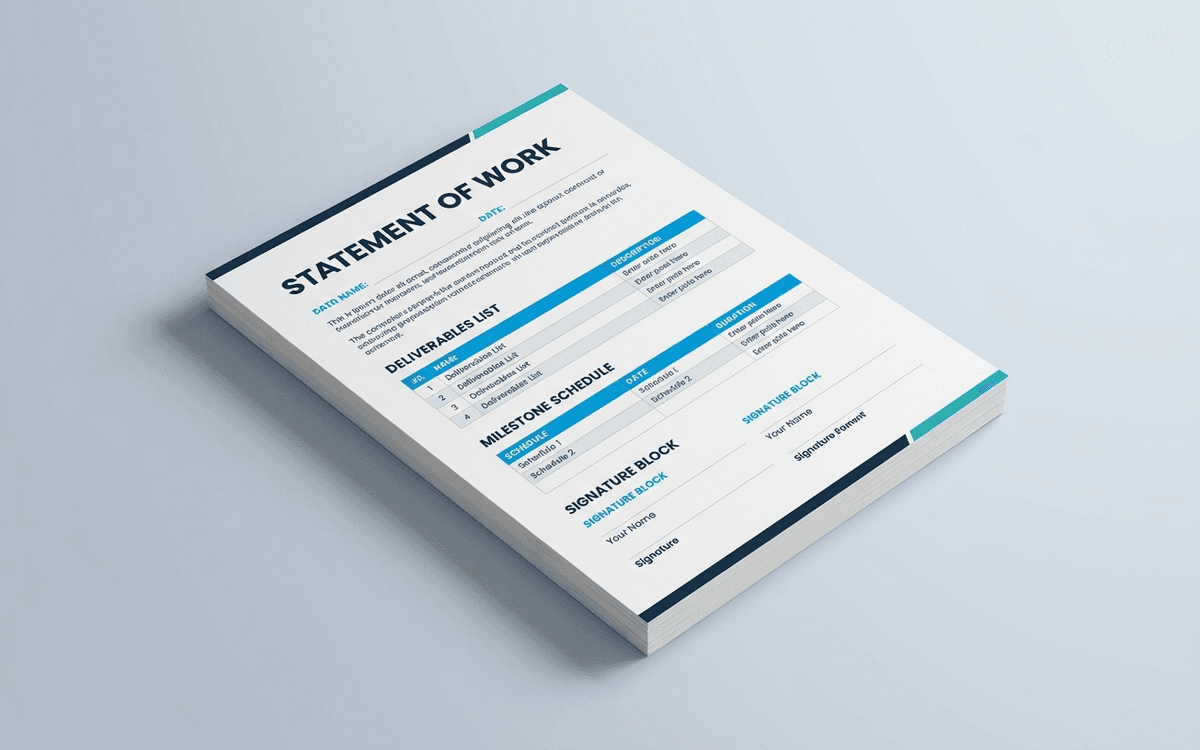
A Statement of Work template locks scope without scaring the client — clear deliverables, milestones tied to payment, acceptance criteria, and the change-order language you need when scope inevitably moves.
Creative Brief Template
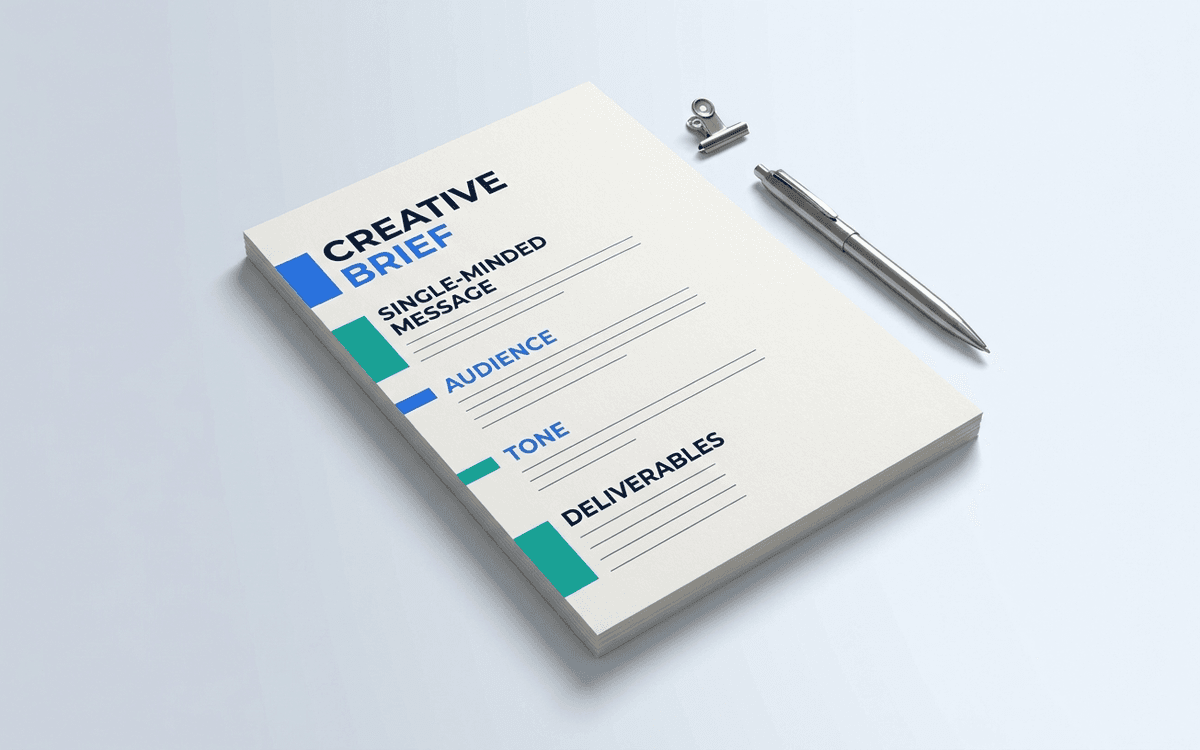
A creative brief template aligns the client, the strategist, and the creative team on the one or two things that have to be true for the work to be successful — before anyone starts designing.
Client Onboarding Checklist Template
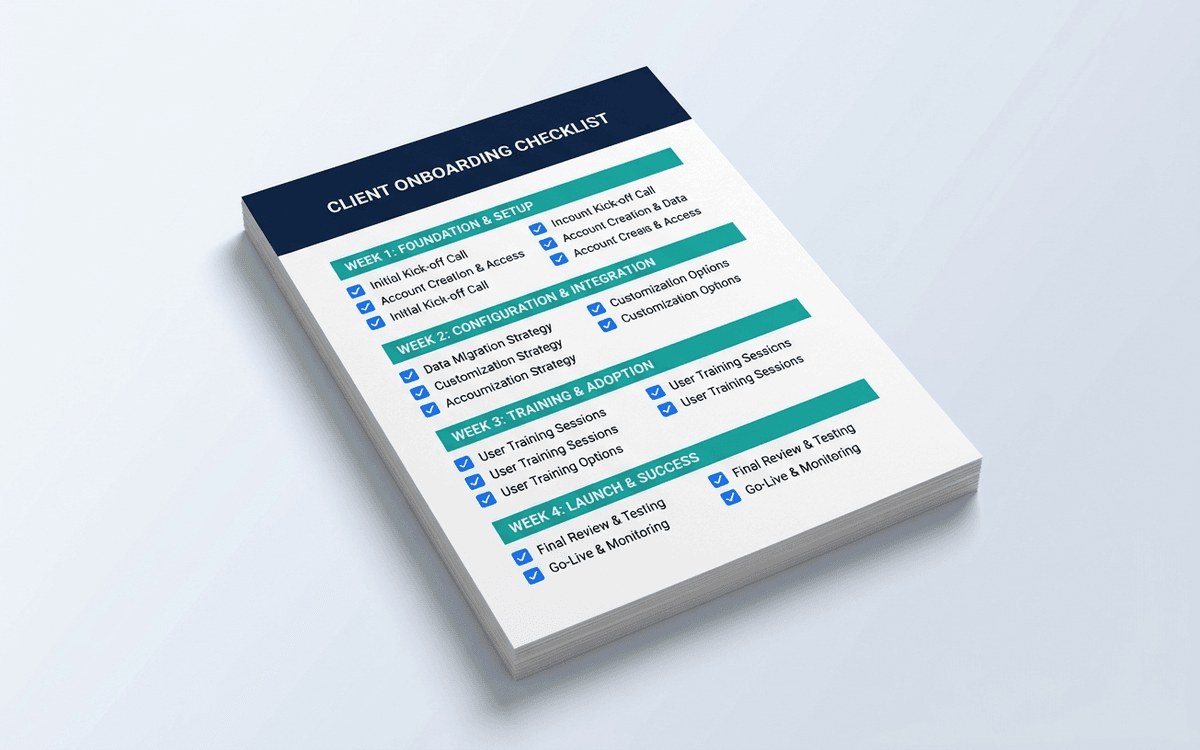
A client onboarding checklist covering the first 30 days of every engagement — contract execution, kickoff prep, system access, communication setup, and the first-deliverable review that sets quality expectations. The most-skipped, highest-leverage 30 days in any client relationship.
When the template isn't enough
AppDeck's agency / client portal turns this template into a live workspace — version control, permissions, signatures, and analytics built in.