
Creative Brief Template
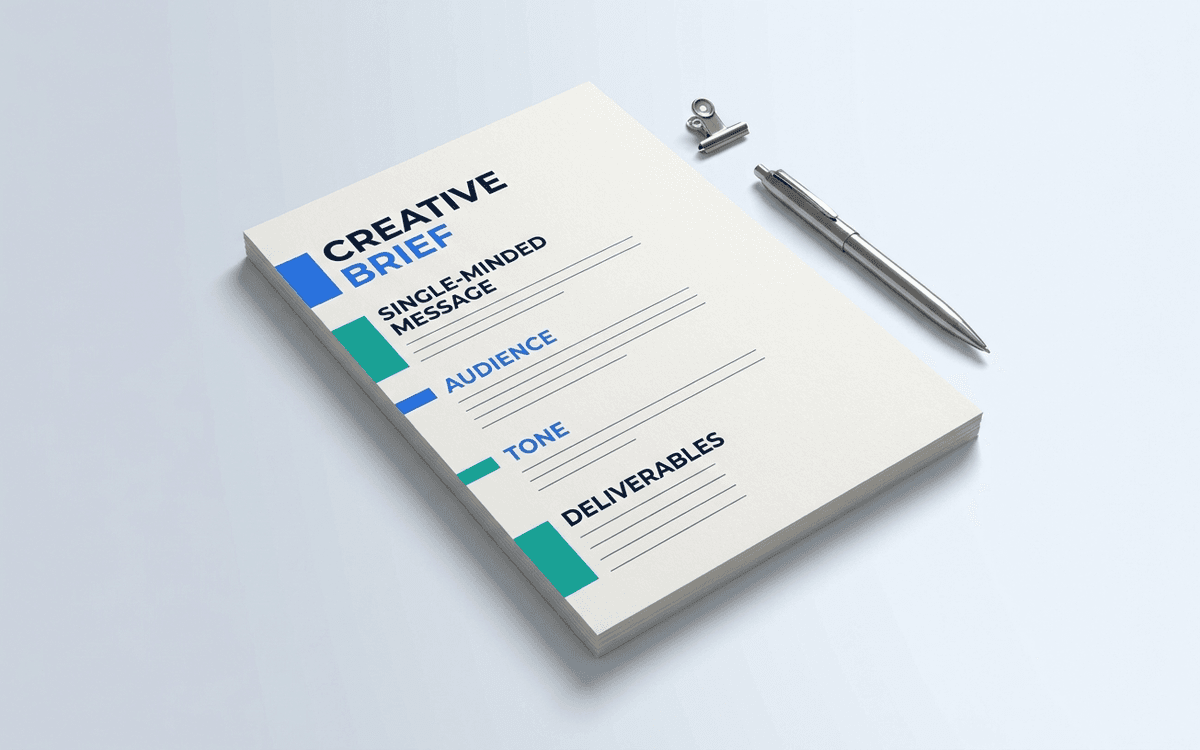
A creative brief template aligns the client, the strategist, and the creative team on the one or two things that have to be true for the work to be successful — before anyone starts designing.
- Format:
- Word (.docx) (34 KB)
- Price:
- Free, no paywall
- Published May 2026
Download this template — free
Tell us where to send the link. We'll never share your email.
What's included
- Project background and business context
- Objective: what this work needs to achieve
- Target audience with motivations and barriers
- Single-minded message (the one thing)
- Tone and personality guidance
- Mandatories (logos, legal, regulatory)
- Channels and deliverables list
- Reference examples (what good looks like)
- Success criteria — how we'll know it worked
- Timeline and key approval gates
- Budget and scope guardrails
How to use this template
1. Distill the message to ONE thing
If you can't write the single-minded message in a single sentence, you don't have one yet. "Our software is fast, beautiful, and easy" is three messages. Pick the one your audience needs to hear most. The creative will be twice as strong.
2. Define the audience by motivation, not demographics
Demographics are a starting point, not the brief. What does this person believe today? What's blocking them from believing the thing we want them to believe? That's the audience definition that produces strong creative.
3. Include reference examples
Show 2–3 pieces of creative work (yours or others') that capture the right ballpark. Words like "clean" and "modern" mean different things to different people. Pictures don't.
4. Get sign-off on the brief before any creative work
The biggest source of wasted creative work is changing the brief mid-project. Get the brief signed off — by the actual decision-maker, not just the project manager — before designers spend an hour on concepts. This is non-negotiable.
5. Define success criteria
How will we know the work succeeded? Sales lift, brand metric, qualitative response, click-through rate? Put it in the brief. This forces upstream conversation about what "good" means and prevents subjective debates later.
Who it's for
- Agencies briefing creative teams on new work
- In-house brand and marketing teams briefing vendors
- Freelance designers and copywriters intaking projects
- Product marketers briefing launch creative
Frequently asked questions
- How long should a creative brief be?
- One to two pages. A great brief is a compression exercise — if the brief is 5 pages, the creative team won't internalize it, and the work will diffuse across all five pages. Shorter is harder to write and stronger to receive.
- Who writes the creative brief?
- Typically the account or strategy lead at an agency, or the brand/marketing manager in-house. The creative team should review and challenge the brief before it's signed off — they're the ones who have to execute against it. A brief written without creative input usually misses something operationally critical.
- What's a single-minded proposition?
- The one thing you want the audience to take away. It's the message after you've made every painful tradeoff between competing things you also want to say. Most great campaigns are built on a single-minded proposition the brand was nervous to commit to.
- Should the brief include the format/medium?
- Yes, but at a minimum level — "social posts + a landing page" not "a 1200×628 Instagram in-feed image with..." Spec-level format detail belongs in a deliverables doc, not the brief. The brief should be tight enough to allow creative latitude.
- Can the brief change mid-project?
- Only if everyone re-signs it. Brief drift is the most common reason creative work gets thrown out. If a major insight changes the brief, pause, rewrite, re-align — don't patch it onto the current draft and hope nobody notices. The team will notice.
More agency / client templates
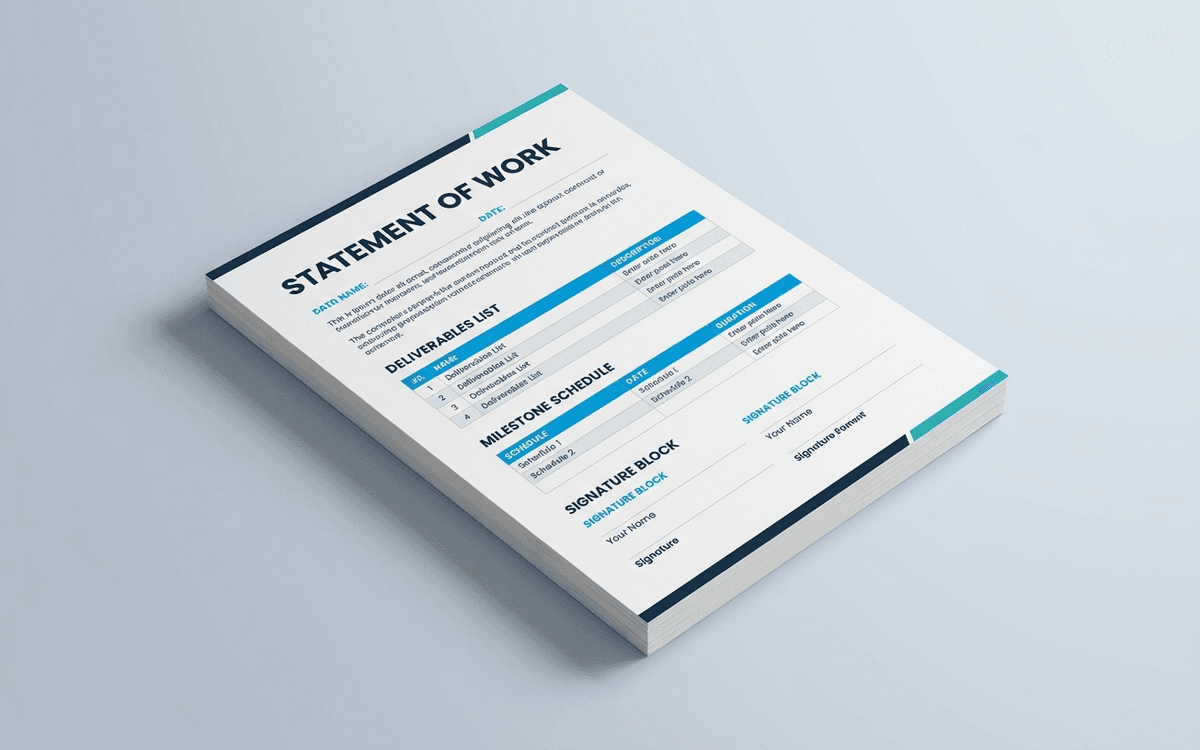
When the template isn't enough
AppDeck's agency / client portal turns this template into a live workspace — version control, permissions, signatures, and analytics built in.