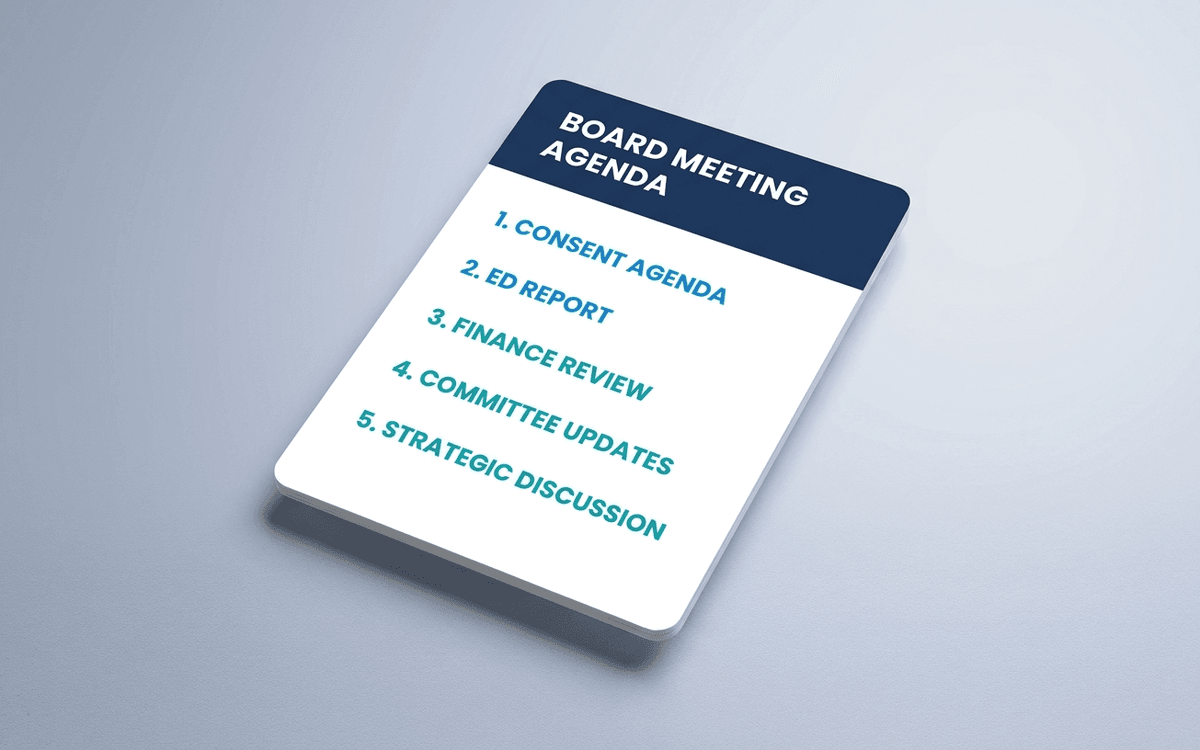
Nonprofit Board Meeting Agenda Template
A nonprofit board meeting agenda template built around the actual cadence of nonprofit governance — ED report, finance review, committee updates, strategic discussion — with a consent agenda that gets routine items out of the way in one vote.
- Format:
- Word (.docx) (37 KB)
- Price:
- Free, no paywall
- Published May 2026
Download this template — free
Tell us where to send the link. We'll never share your email.
What's included
- Meeting metadata (date, location, quorum, attendees)
- Pre-read checklist
- Consent agenda (prior minutes, routine reports, standard approvals)
- ED report — programmatic and operational
- Finance review (variance to budget, cash position, audit status)
- Committee reports (Governance, Audit, Development, Program)
- Strategic discussion (one big topic per meeting)
- Executive session block
- Action items carryover
- Next meeting
How to use this template
1. Plan the strategic discussion topic 30 days out
Nonprofit boards drift into operational mode without effort. Every agenda needs ONE strategic discussion topic — fund development, program expansion, succession, a major risk. Plan it 30 days ahead so the right materials and people are ready.
2. Build a robust consent agenda
Routine reports (development update, committee minutes, ED's standard activity log) belong on the consent agenda. Anything not actively under discussion gets consented. This frees the meeting for what matters.
3. Send the agenda + board pack 7 days ahead
Nonprofit board members are volunteers. They need lead time. Send agenda + pre-reads 7 days before the meeting. Anything tighter and you're effectively eliminating prep — the meeting becomes a briefing rather than a working session.
4. Schedule the next meeting at the END of this one
Nonprofit boards lose 2-4 weeks every quarter trying to find a meeting time. Lock the NEXT meeting at the end of THIS one while everyone's calendars are open. Small change, large efficiency gain.
5. Use executive session every meeting
Even when not strictly needed. Normalizing executive session removes the stigma of using it for ED-performance, sensitive HR matters, or governance conflicts. The template has it as a standing 15-minute block.
Who it's for
- Executive directors at small-to-mid nonprofits
- Board chairs running quarterly meetings
- Corporate secretaries / governance officers
- New EDs inheriting a board cadence that needs structure
Frequently asked questions
- How often should a nonprofit board meet?
- Quarterly is standard for working boards. Six times a year is common for active growth-stage nonprofits. Monthly is too operational — by month three the board is doing the ED's job. Annual-only is too sparse — directors lose context. Quarterly is the sweet spot.
- How long should a nonprofit board meeting be?
- 2-3 hours for a quarterly meeting. Anything under 90 minutes is a briefing, not a meeting. Anything over 4 hours and attendance drops. The consent agenda is the single biggest lever on meeting length.
- Should staff attend board meetings?
- Selectively. Senior leadership (CFO, COO if you have them, program director) typically attends the relevant section then is excused. Junior staff don't attend unless presenting. Board members need space for board-only conversation; standing staff presence kills that dynamic.
- Who runs the meeting?
- The Board Chair runs the meeting. The Executive Director is a presenter, not the chair. EDs running their own board meetings is a governance red flag — the board should be functionally independent of the ED in how it operates.
- How is a nonprofit board meeting different from a for-profit one?
- (1) nonprofit boards govern more directly than they advise (they own the mission), (2) finance is reviewed in more detail (donor stewardship requires it), (3) executive session typically includes ED performance. The agenda template here reflects all three.
More nonprofit templates
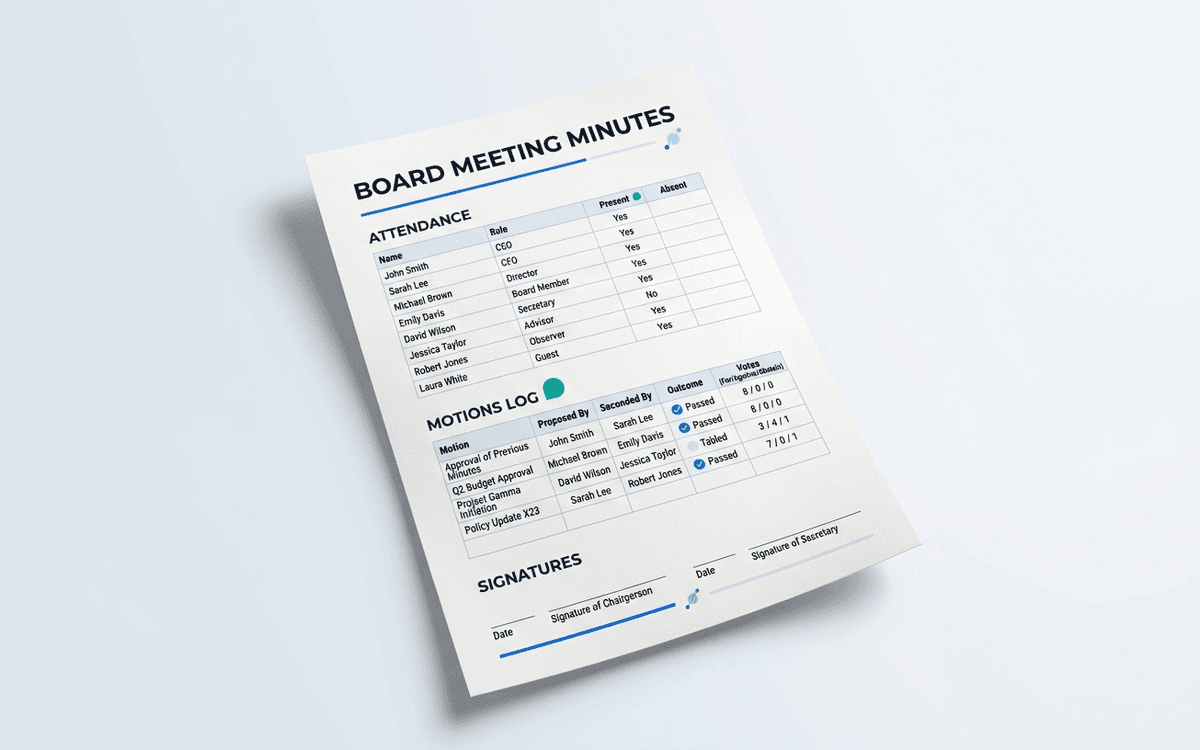
Board Meeting Minutes Template
A board meeting minutes template gives you a tested structure for capturing attendance, motions, votes, and action items — so your minutes hold up to legal review, satisfy your corporate secretary, and don't take three hours to write up after the meeting.
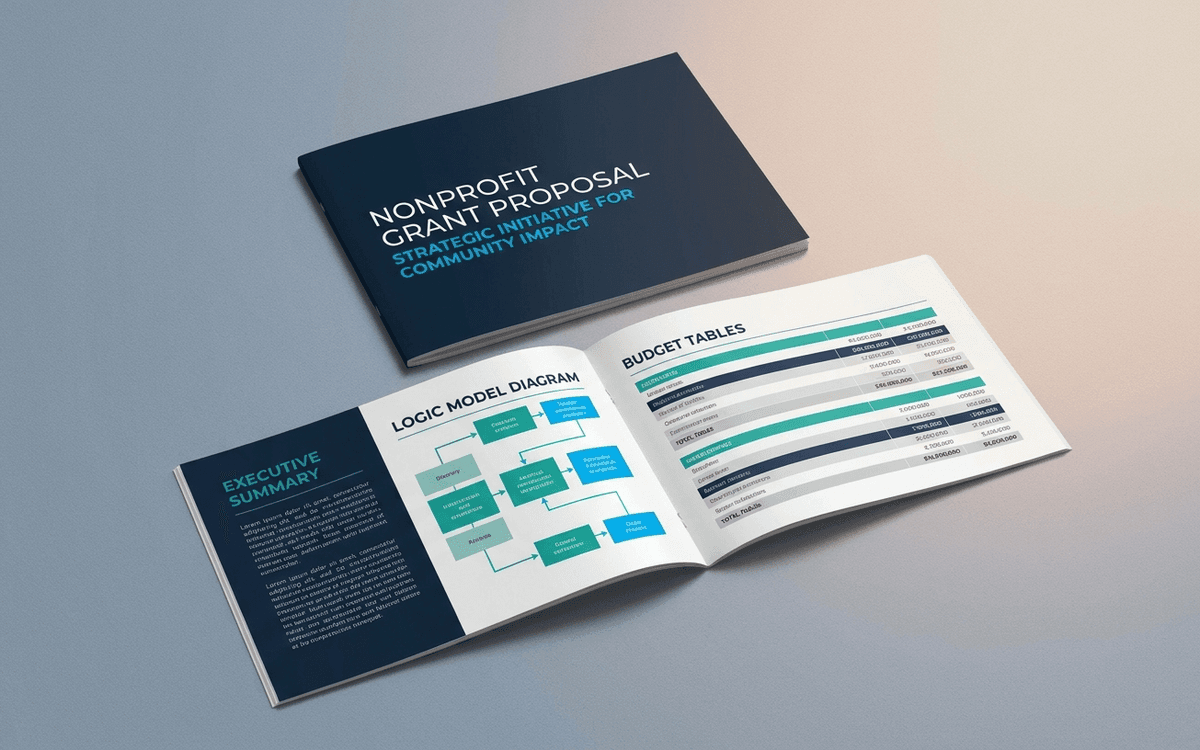
Grant Proposal Template
A grant proposal template that walks a nonprofit through every section funders expect — executive summary, statement of need, program design, logic model, budget narrative, and evaluation plan — so the writing time goes to the actual program, not to figuring out the structure.
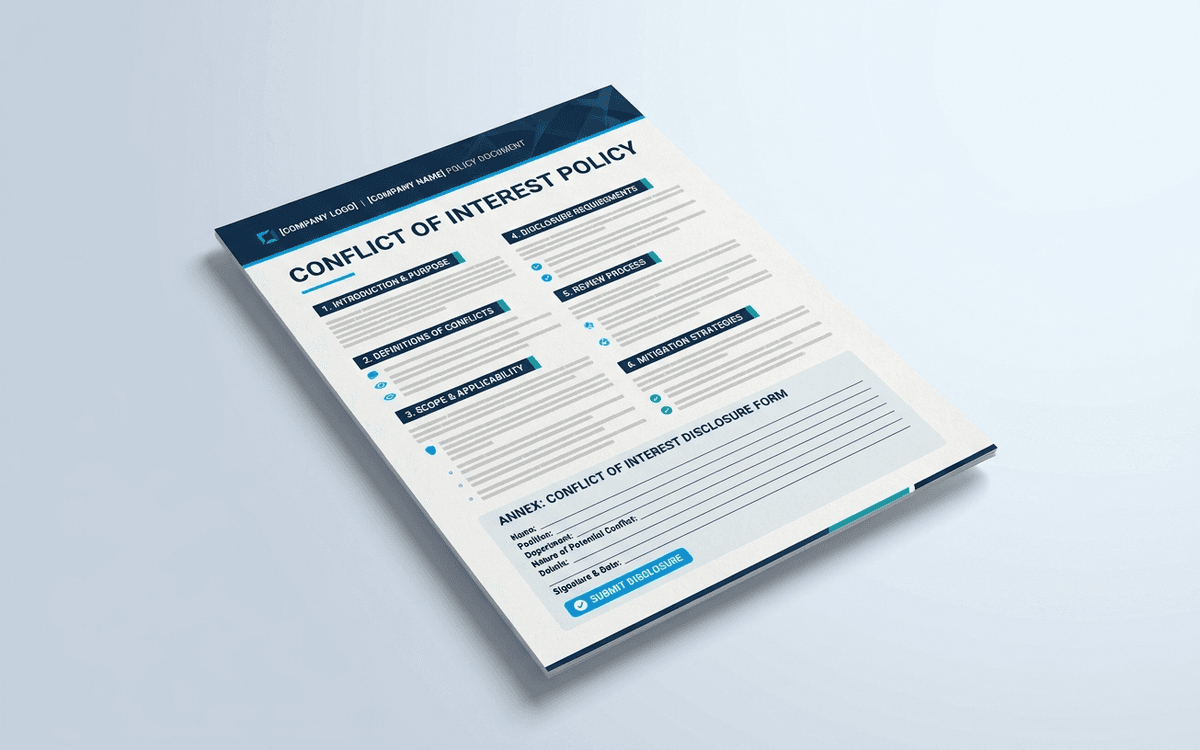
Conflict of Interest Policy Template
A conflict of interest policy template aligned to IRS Form 990 expectations — annual director disclosure, recusal process, and the documentation trail your auditor will ask for. Works for both nonprofit and small-corporate boards.
When the template isn't enough
AppDeck's nonprofit portal turns this template into a live workspace — version control, permissions, signatures, and analytics built in.
Related Articles
Learn more about this topic from our expert guides and resources.