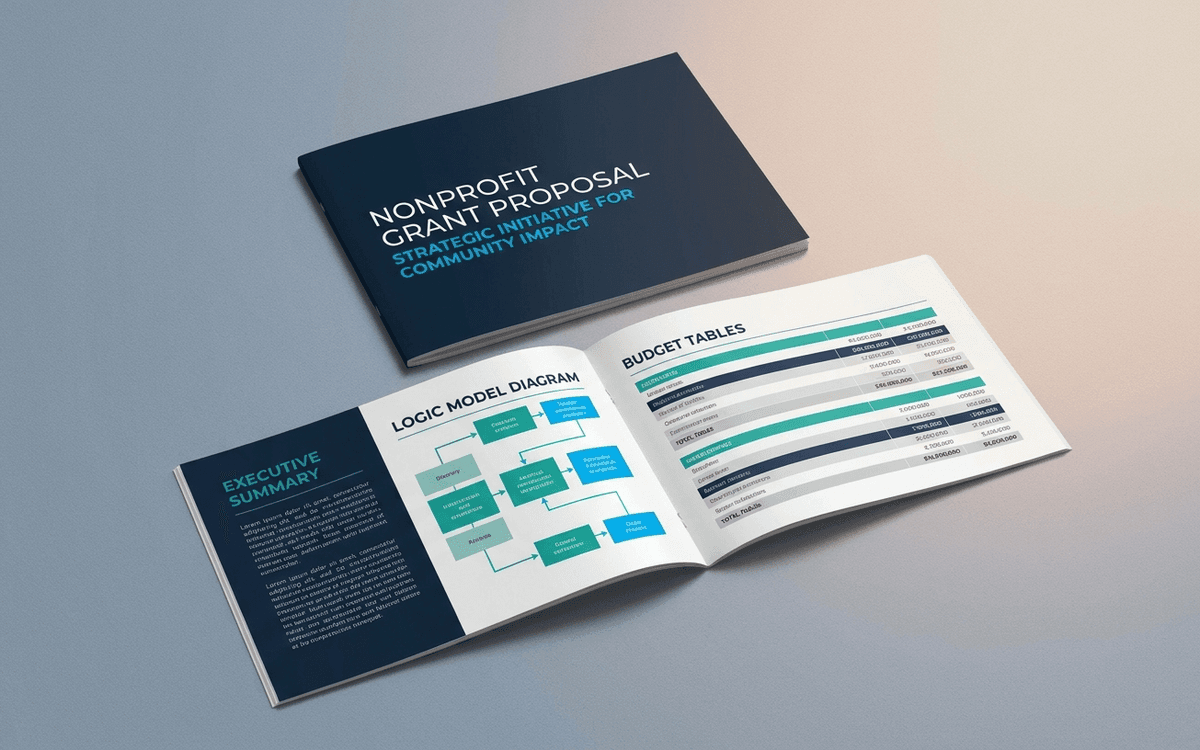
Grant Proposal Template
A grant proposal template that walks a nonprofit through every section funders expect — executive summary, statement of need, program design, logic model, budget narrative, and evaluation plan — so the writing time goes to the actual program, not to figuring out the structure.
- Format:
- Word (.docx) (39 KB)
- Price:
- Free, no paywall
- Published May 2026
Download this template — free
Tell us where to send the link. We'll never share your email.
What's included
- Cover sheet with organization, project, amount requested, contact
- Executive summary (one page)
- Organizational background with mission and 990 reference
- Statement of need with data-supported framing
- Project description (what + how + when)
- Logic model (inputs → activities → outputs → outcomes → impact)
- Target population and reach numbers
- Project timeline with milestones
- Detailed budget table and budget narrative
- Evaluation plan with measurable outcomes
- Sustainability plan (post-grant)
- Organizational capacity / staffing block
- Attachments checklist (990, board list, audit, etc.)
How to use this template
1. Write the executive summary LAST
The executive summary is the first page funders read, and the last page you should write. Draft the full proposal first, then distill the exec summary from it. A written-first exec summary tends to overpromise; a written-last exec summary reflects what the proposal actually says.
2. Anchor the Statement of Need with data
Funders fund problems they believe are real and measurable. A great Statement of Need cites specific numbers (from census data, industry studies, peer-reviewed sources) showing scope, urgency, and underservedness. Generic phrases like "tremendous need" without numbers signal an unprepared proposal.
3. Build the Logic Model explicitly
Inputs (resources) → Activities (what you do) → Outputs (deliverables) → Outcomes (changes) → Impact (long-term). Most grant proposals get rejected at the Outputs-to-Outcomes step — programs that can show what they delivered but not what changed. Spend disproportionate time on the outcome definitions.
4. Make the budget reconcile to the program description
Every line item in the budget should map to a specific activity in the program description. Reviewers cross-check these. If the program says "two community workshops" and the budget has a line for "8 community workshops," the proposal loses credibility instantly.
5. Address sustainability honestly
Funders ask "what happens after this grant ends?" because they've been burned by programs that collapse the day funding stops. Honest answers (other funders in pipeline, fee-for-service revenue, board-led capital campaign, programmatic sunset built in) beat magical answers ("we'll find other funders").
Who it's for
- Executive Directors at small-to-mid nonprofits
- Development directors building a grant pipeline
- Program leads writing their first grant
- Boards reviewing draft proposals before submission
Frequently asked questions
- How long should a grant proposal be?
- Whatever the funder's guidelines specify, period. Most foundation guidelines specify 5–15 pages, with detailed budgets and attachments separate. If no guidelines are given, 8–12 pages is the standard target. Over-length proposals are skimmed; under-length proposals signal lack of seriousness.
- Should I tailor each proposal to the funder?
- Yes. Same program, but framed against the specific funder's strategic priorities and language. Foundations and corporate funders have areas of focus — the proposal should land on those, using their words. Boilerplate proposals sent to multiple funders unchanged have markedly lower success rates.
- What's a logic model and is it required?
- A logic model is a visual chain: Inputs → Activities → Outputs → Outcomes → Impact. It's required by some funders explicitly (especially government grants) and expected by most foundations. Even when not required, including one signals operational seriousness. The template includes a logic model section.
- What attachments do funders typically ask for?
- Most common: most recent 990, audited financials (latest 1–2 years), board roster, IRS determination letter, organizational budget, and project budget. Some funders also ask for letters of support from partners and resumes of key staff. Build a standard attachments folder so you're not scrambling per submission.
- How do I find funders who match my work?
- Three sources: (1) the Foundation Directory Online (subscription via many libraries), (2) peer nonprofits' annual reports listing their funders, (3) Candid's free GuideStar 990 finder for foundations whose 990s show grants in your area. Submitting to a wrong-fit funder is the most common cause of rejection.
More nonprofit templates
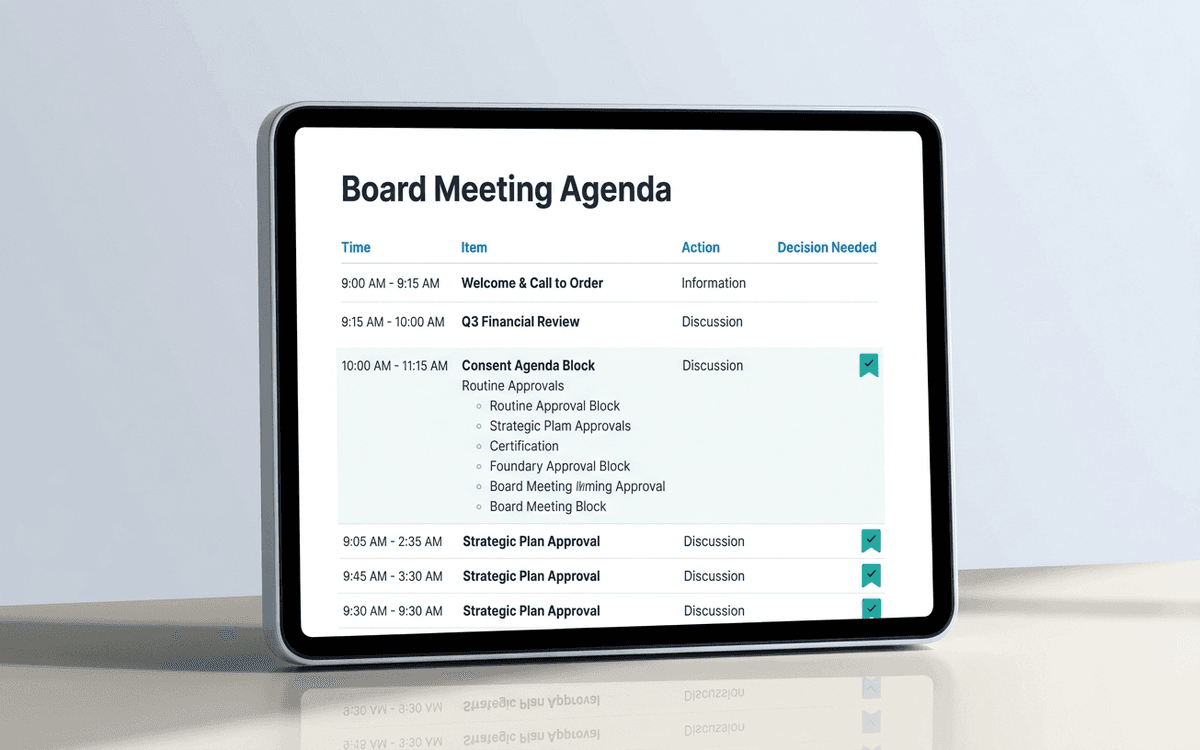
Board Meeting Agenda Template
A board meeting agenda template gives you a fight-tested running order — timing, owners, decision flags, and a consent agenda — so the meeting runs to the clock, decisions get made, and directors leave knowing exactly what they approved.
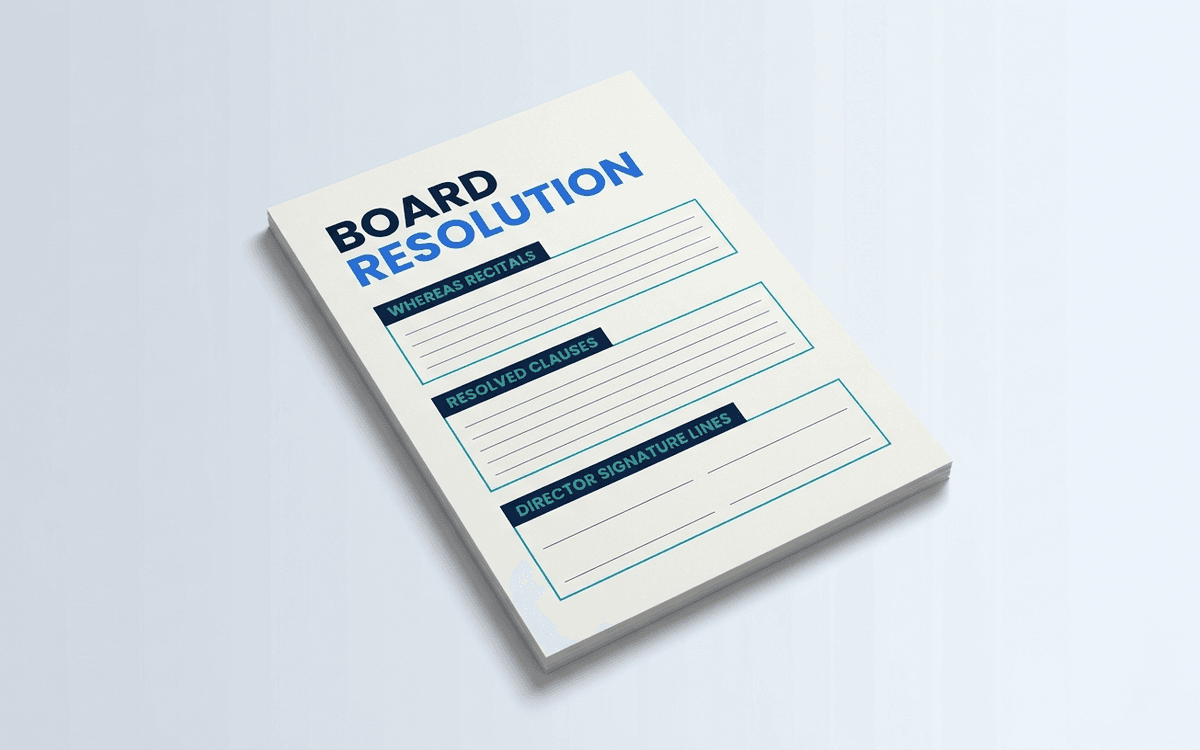
Board Resolution Template
A board resolution template gives you the format directors and corporate counsel expect — a recital block that explains why the resolution is being taken, the resolved language itself, and signature lines for written consent — so corporate actions between meetings hold up to legal review.
When the template isn't enough
AppDeck's nonprofit portal turns this template into a live workspace — version control, permissions, signatures, and analytics built in.
Related Articles
Learn more about this topic from our expert guides and resources.