
Board Resolution Template
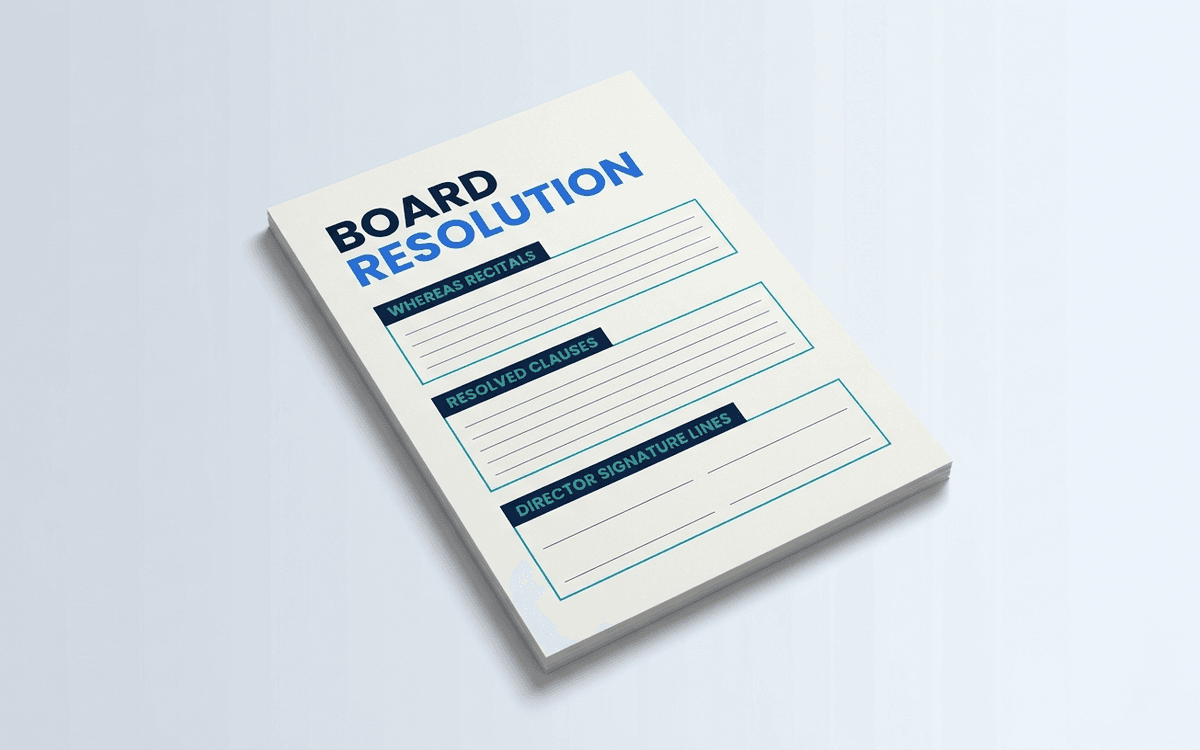
A board resolution template gives you the format directors and corporate counsel expect — a recital block that explains why the resolution is being taken, the resolved language itself, and signature lines for written consent — so corporate actions between meetings hold up to legal review.
- Format:
- Word (.docx) (36 KB)
- Price:
- Free, no paywall
- Published May 2026
Download this template — free
Tell us where to send the link. We'll never share your email.
What's included
- Header with company name, state of incorporation, and resolution number
- Recital block (the "WHEREAS" clauses that establish context)
- Resolved language (the "RESOLVED" clauses that take action)
- Authorization language for officers to execute documents
- Effective-date and certification line
- Director signature block for unanimous written consent
- Counterpart-signature clause for distributed signing
- Optional secretary certification page
How to use this template
1. Start with the recitals (the "WHEREAS")
The recitals explain WHY the resolution is being taken. They're not strictly required, but they make the resolution self-documenting and easier to defend if anyone reviews the record later. Two to four recitals is the right range for most resolutions.
2. State the action clearly in the resolved language
The "RESOLVED" clause is the operative part. State exactly what the board is approving: amounts, parties, share counts, titles. Avoid hedging language. If the resolution authorizes future officer action, say what kind: "the Officers are authorized to execute and deliver such documents as are reasonably necessary to effectuate the foregoing."
3. Decide: written consent or meeting minute?
A resolution adopted between meetings is documented as Unanimous Written Consent (UWC) — every director signs. A resolution adopted IN a meeting goes in the minutes, not a standalone resolution document. Use this template when you need UWC.
4. Confirm unanimity is required
In most states, written consent requires unanimous director signatures (unless your bylaws allow majority written consent). If even one director won't sign, the resolution fails as written consent — you'd need to call a meeting instead. Don't paper around this.
5. File it in the corporate record
Signed resolutions live in the same corporate record as minutes. If you're using a board portal, upload it; if you're still on paper, file it in the minute book. Resolutions are part of the permanent corporate record.
Who it's for
- Corporate secretaries documenting board actions between meetings
- Founders approving a financing, stock issuance, or officer appointment
- Nonprofit boards taking unanimous written consent on grants or hires
- Legal counsel preparing closing documents
Frequently asked questions
- What's the difference between a board resolution and board meeting minutes?
- Minutes record everything that happened in a meeting — discussion, motions, votes, action items. A resolution documents a SPECIFIC corporate action and is typically used when the action is taken between meetings (Unanimous Written Consent) or when you need a standalone document for a counterparty (lender, investor, regulator).
- Does every director have to sign a written consent?
- In most U.S. states and under most corporate bylaws, yes — written consent requires unanimous director signatures. A few states and some company bylaws allow majority written consent, but unanimous is the default and the safest path. Check your bylaws.
- When do I need a separate resolution vs. just minutes?
- When a counterparty (bank, investor, regulator, attorney) asks for one specifically, or when the action is being taken between meetings via written consent. Standard corporate actions taken in a meeting can be documented in the minutes — but the minutes should reproduce the resolved language verbatim.
- What are "WHEREAS" clauses for?
- WHEREAS clauses are the recitals — they establish context and explain why the resolution is being taken. They're not required by law but they make resolutions self-documenting. Future you (or your auditor) reading a resolution 5 years later will appreciate the WHEREAS clauses.
- Can a resolution be signed electronically?
- In almost every U.S. state, yes — electronic signatures are legally equivalent to wet signatures under the ESIGN Act and state versions of UETA. Most boards now sign via DocuSign, HelloSign, or similar. Counterpart-signature language in the resolution covers distributed signing.
More board templates
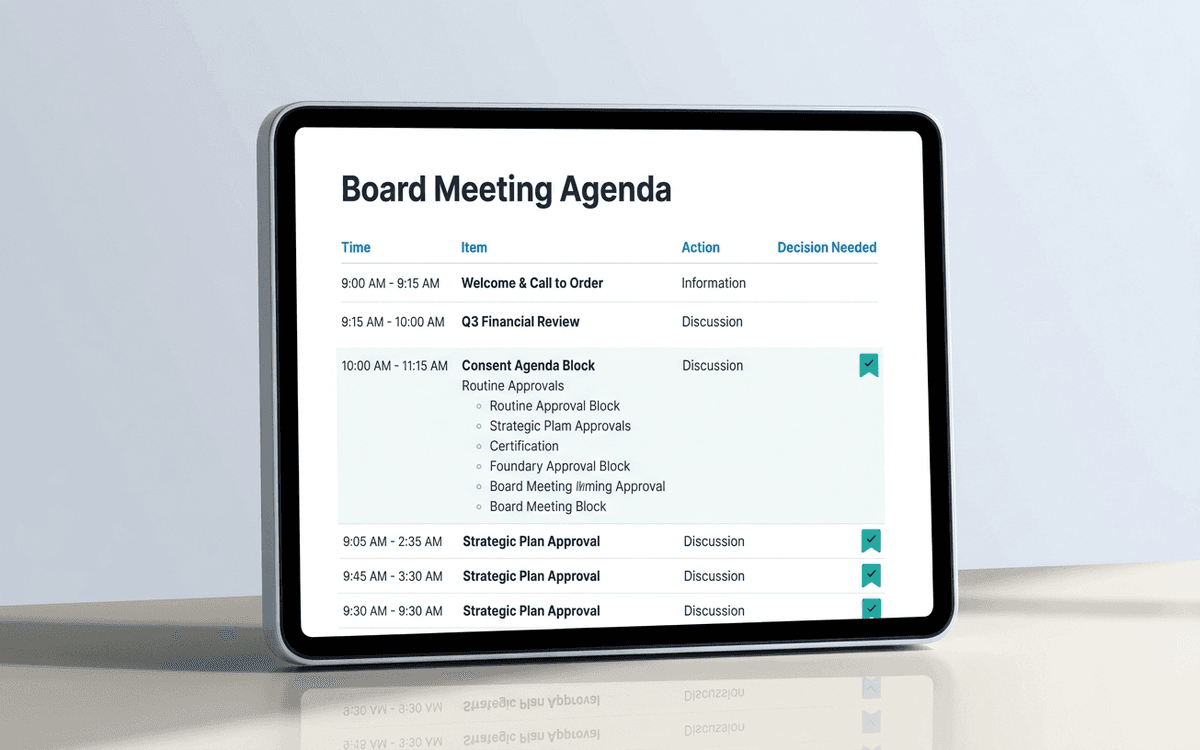
Board Meeting Agenda Template
A board meeting agenda template gives you a fight-tested running order — timing, owners, decision flags, and a consent agenda — so the meeting runs to the clock, decisions get made, and directors leave knowing exactly what they approved.
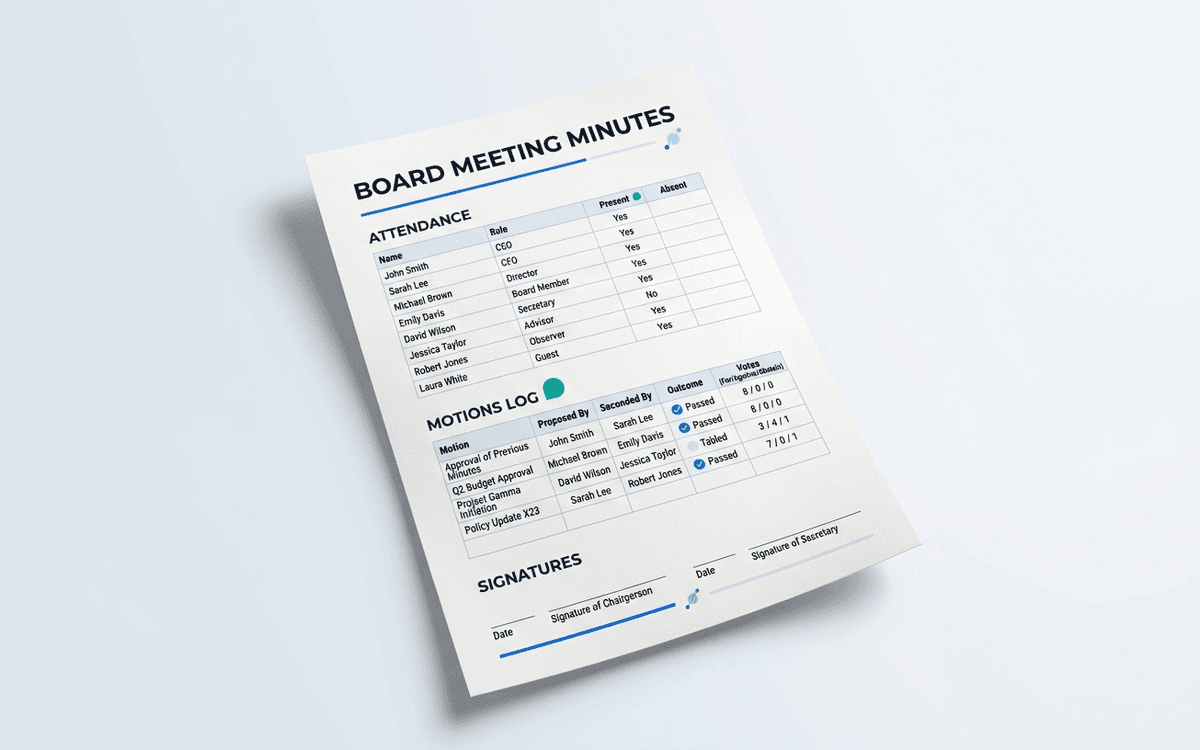
Board Meeting Minutes Template
A board meeting minutes template gives you a tested structure for capturing attendance, motions, votes, and action items — so your minutes hold up to legal review, satisfy your corporate secretary, and don't take three hours to write up after the meeting.
When the template isn't enough
AppDeck's board portal turns this template into a live workspace — version control, permissions, signatures, and analytics built in.