
Board Meeting Minutes Template
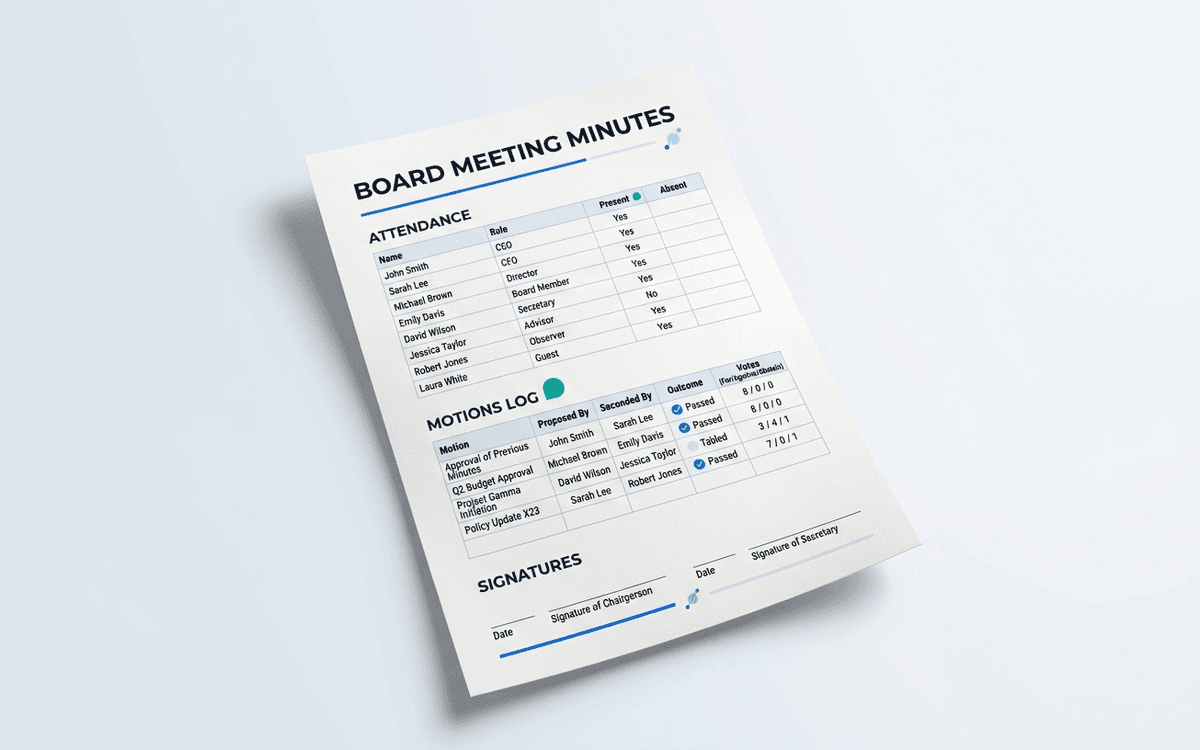
A board meeting minutes template gives you a tested structure for capturing attendance, motions, votes, and action items — so your minutes hold up to legal review, satisfy your corporate secretary, and don't take three hours to write up after the meeting.
- Format:
- Word (.docx) (38 KB)
- Price:
- Free, no paywall
- Published May 2026
Download this template — free
Tell us where to send the link. We'll never share your email.
What's included
- Meeting metadata block (date, time, location, meeting type, quorum status)
- Attendance table with present / absent / by-invitation columns
- Approval of prior minutes section
- Officer & committee reports with placeholder sub-sections
- Old business and new business sections
- Motion-by-motion log with mover, seconder, vote count, and outcome
- Action items table with owner and due date
- Executive session block with auto-redaction note
- Signature block for Secretary and Chair
How to use this template
1. Duplicate before each meeting
Save a fresh copy named `YYYY-MM-DD Board Minutes.docx` before the meeting starts. Pre-fill the metadata block, attendees, and the agenda items copied from the agenda — that saves 10 minutes during the meeting itself.
2. Capture motions verbatim
When a motion is made, type the wording exactly as the mover stated it, then the seconder's name, then the vote. Use the bracketed placeholders in the template — don't paraphrase motions. Paraphrased minutes are the #1 reason boards have to re-do votes later.
3. Record vote counts, not just outcomes
For every vote: yes / no / abstain counts, plus any recusals (and why). This is the corporate-record level that holds up to legal review or an audit. Just writing "approved" leaves you exposed.
4. Flag executive session content separately
Anything discussed in executive session goes in the redacted section, not the main body. The template's structure makes it easy to publish a clean version to non-board observers while keeping the full version for the official record.
5. Circulate for approval within 72 hours
Send the draft to the Board Chair within 72 hours while the meeting is still fresh. Approval happens at the next meeting — but corrections caught early are dramatically less painful than corrections raised three months later.
Who it's for
- Corporate secretaries at startups and small companies
- Nonprofit board chairs and executive directors
- Founders and CEOs running their first board
- Boards transitioning from email + PDF to a portal
Frequently asked questions
- Are board meeting minutes legally required?
- For incorporated entities (C-corps, S-corps, LLCs with boards, and most nonprofits), yes — most state corporate statutes require minutes as part of the corporate record. Even when not strictly required, minutes are critical evidence for showing that directors exercised their fiduciary duty.
- How detailed should board meeting minutes be?
- Aim for action-oriented detail, not a transcript. Capture: what was decided, who proposed it, the vote count, and what comes next. You don't need to record every comment — that's both unnecessary and creates legal exposure. Motions and votes get verbatim treatment; discussion gets summarized.
- Who writes board meeting minutes?
- Typically the Corporate Secretary, or whoever the board designates for that meeting. At small startups and nonprofits, it's often the COO, EA, or board chair. The person taking minutes should not be the same person leading the discussion — splitting roles produces dramatically better minutes.
- What format do minutes need to be in?
- There's no required format, but every jurisdiction expects: date, attendees, motions, votes, and signatures. Word and Google Doc are standard. Many boards now use a portal (like AppDeck) that auto-formats minutes from the agenda and motion log — that's where this template eventually leads.
- How long do we need to keep board meeting minutes?
- Permanently. Board minutes are part of the corporate record and should be retained for the life of the entity. For nonprofits, IRS rules require retention. For corporations, state law typically requires permanent retention as well.
More board templates
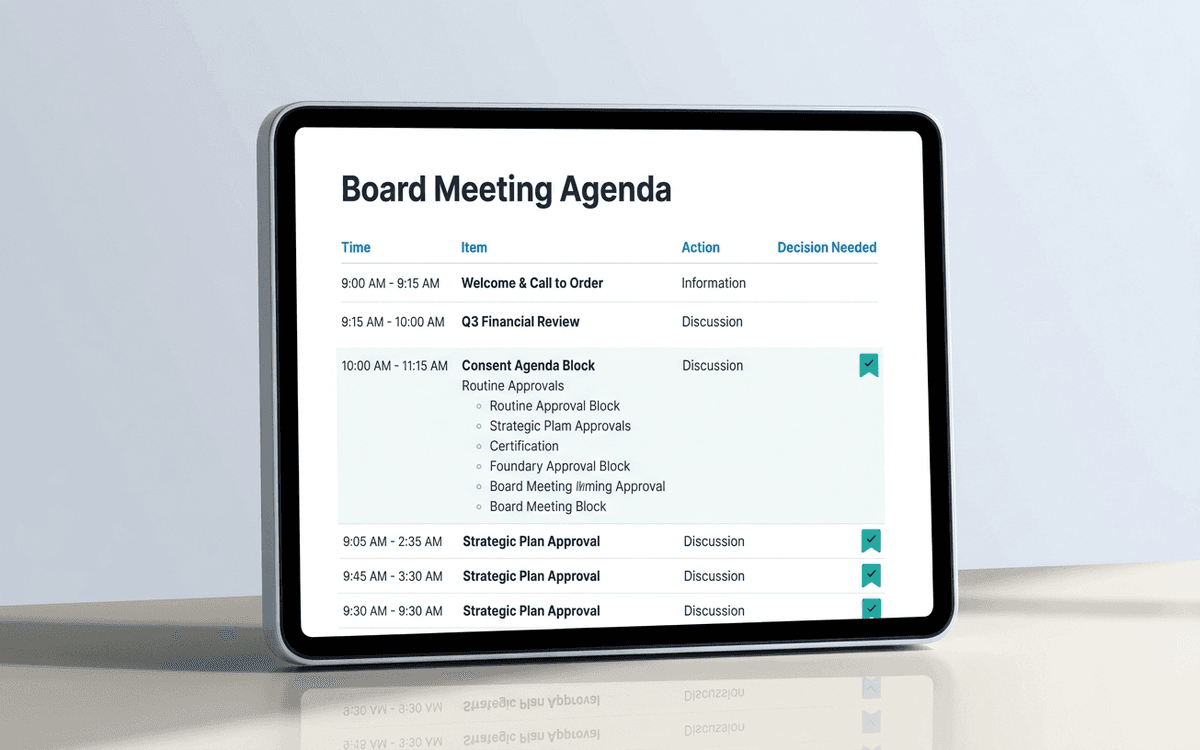
Board Meeting Agenda Template
A board meeting agenda template gives you a fight-tested running order — timing, owners, decision flags, and a consent agenda — so the meeting runs to the clock, decisions get made, and directors leave knowing exactly what they approved.
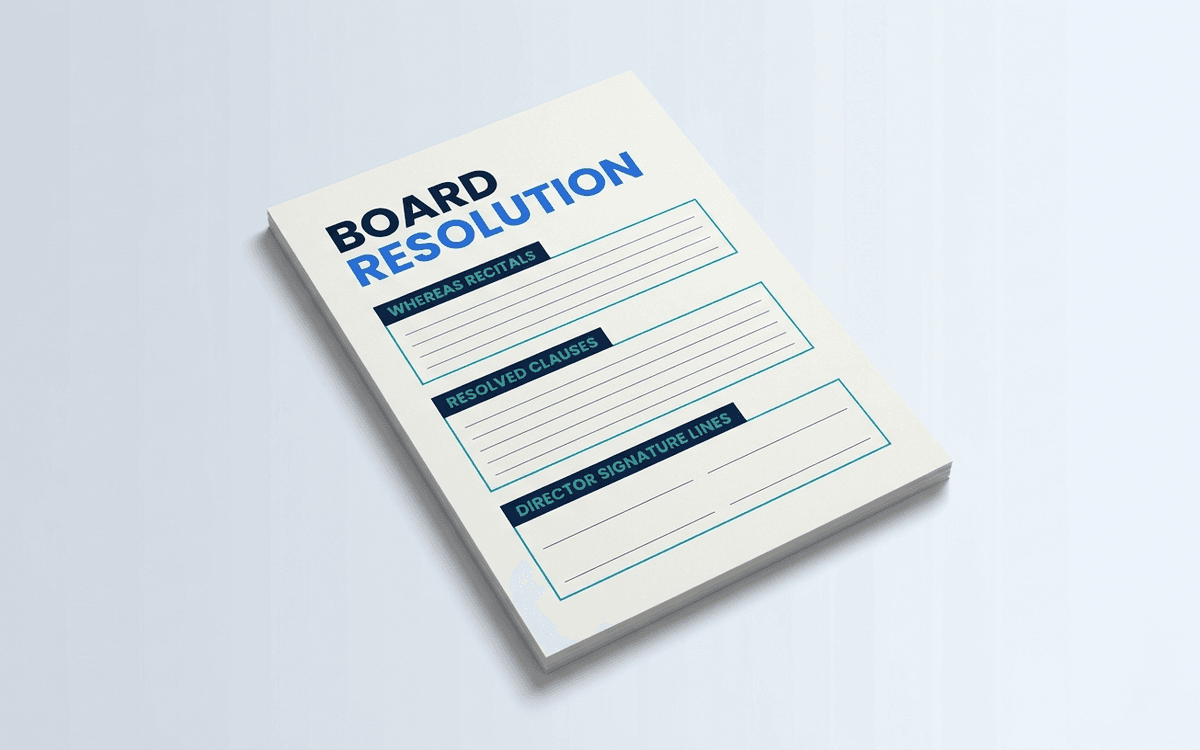
Board Resolution Template
A board resolution template gives you the format directors and corporate counsel expect — a recital block that explains why the resolution is being taken, the resolved language itself, and signature lines for written consent — so corporate actions between meetings hold up to legal review.
When the template isn't enough
AppDeck's board portal turns this template into a live workspace — version control, permissions, signatures, and analytics built in.