
Board Meeting Agenda Template
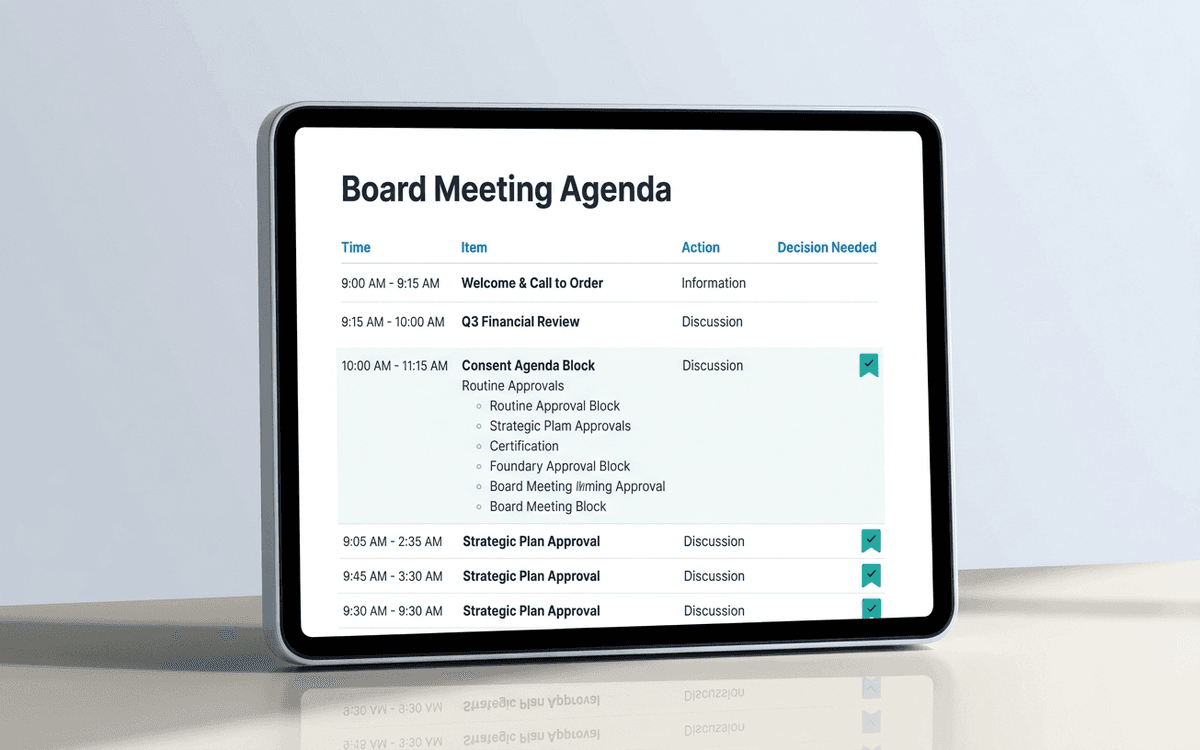
A board meeting agenda template gives you a fight-tested running order — timing, owners, decision flags, and a consent agenda — so the meeting runs to the clock, decisions get made, and directors leave knowing exactly what they approved.
- Format:
- Word (.docx) (36 KB)
- Price:
- Free, no paywall
- Published May 2026
Download this template — free
Tell us where to send the link. We'll never share your email.
What's included
- Meeting metadata block (date, time, location, quorum)
- Pre-read materials checklist with deadlines
- Consent agenda section for non-controversial items
- Time-boxed agenda items with owner and item type (discuss / decide / inform)
- Decision-flagged sections so directors know exactly what they're voting on
- Executive session block at the end
- Action item carryover from the prior meeting
- Next-meeting placeholder
How to use this template
1. Send the agenda 5–7 days before the meeting
The agenda should land with pre-reads at the same time. Anything circulated less than 48 hours before is functionally not pre-read — assume directors will see it for the first time in the meeting and plan accordingly.
2. Use the consent agenda aggressively
Anything that doesn't need discussion goes on the consent agenda: prior minutes, routine committee reports, standard approvals. Directors pre-read these and they pass with a single vote. This is the single biggest lever for compressing a 3-hour meeting into 90 minutes.
3. Tag every item as Discuss / Decide / Inform
The biggest source of meeting drift is ambiguity about what kind of conversation an item is. Tag explicitly. "Inform" items shouldn't take more than 5 minutes. "Decide" items need a clear question, options, and a recommended path before the meeting.
4. Build in executive session even when you don't need it
Always end with a 15-minute executive session block. If you don't need it, you adjourn early. If you do, directors aren't scrambling to ask non-employees to leave. Normalizing executive session removes the stigma of using it.
5. Track action items into the next agenda
Every action item from this meeting becomes a one-line status check at the top of the next meeting. The agenda template has a "Carryover from prior meeting" section exactly for this. Boards that do this consistently are dramatically more effective.
Who it's for
- Founders running their first formal board
- Corporate secretaries who keep getting agenda revision requests
- Nonprofit executive directors with active boards
- Startups graduating from advisor calls to a real board cadence
Frequently asked questions
- How long should a board meeting agenda be?
- For most early-stage boards, a quarterly meeting agenda fits on 1–2 pages. The agenda itself is short; the supporting pre-read materials carry the detail. If your agenda is more than 2 pages, you're probably putting content on it that belongs in the board pack.
- What's a consent agenda and do I need one?
- A consent agenda is a section of the agenda where multiple items get approved in a single vote, without discussion. Use it for prior minutes, routine reports, and standard renewals. Any director can pull an item off the consent agenda for discussion. Almost every well-run board uses one — it's the single most impactful agenda technique.
- How far in advance should I send the agenda?
- 5–7 calendar days is the standard for quarterly board meetings. The board pack should land at the same time. Anything tighter than 48 hours and you've effectively eliminated pre-reads, which means the meeting becomes a recap rather than a working session.
- Who builds the board meeting agenda?
- Typically the Board Chair and CEO together, with the Corporate Secretary as administrative owner. At startups without a chair, the CEO drafts and the lead director reviews. The mistake to avoid: building the agenda alone the night before. Co-authoring keeps the meeting working session-shaped, not theater.
- Should we time-box agenda items?
- Yes, always. Time-boxing forces the discipline of preparing recommendations rather than running open-ended discussion. The first few meetings will overrun — that's normal. By meeting 4 you'll be calibrated.
More board templates
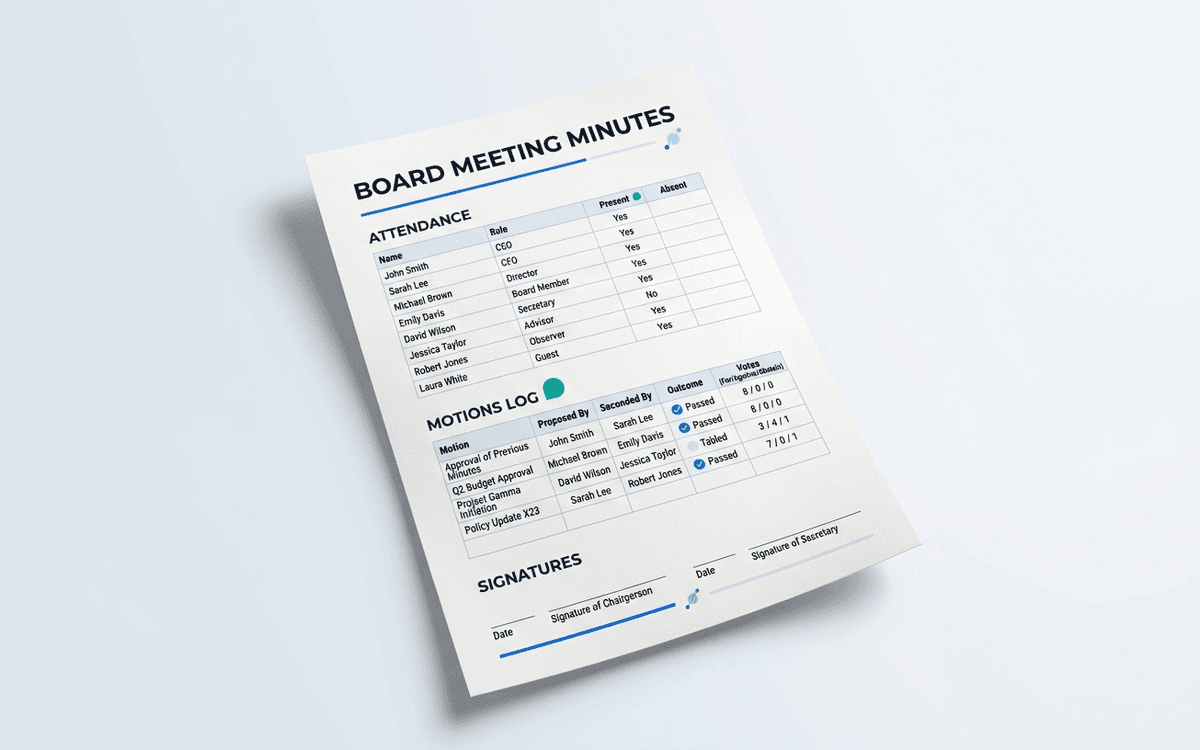
Board Meeting Minutes Template
A board meeting minutes template gives you a tested structure for capturing attendance, motions, votes, and action items — so your minutes hold up to legal review, satisfy your corporate secretary, and don't take three hours to write up after the meeting.
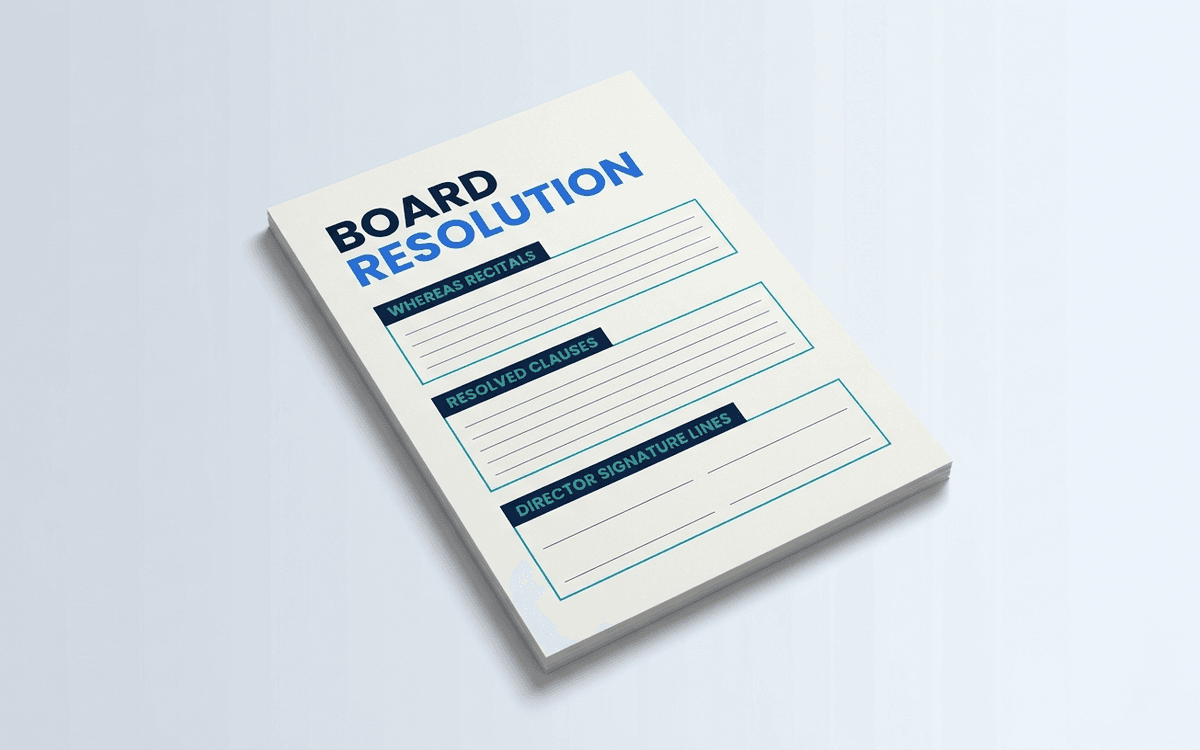
Board Resolution Template
A board resolution template gives you the format directors and corporate counsel expect — a recital block that explains why the resolution is being taken, the resolved language itself, and signature lines for written consent — so corporate actions between meetings hold up to legal review.
When the template isn't enough
AppDeck's board portal turns this template into a live workspace — version control, permissions, signatures, and analytics built in.