
The Complete Guide to Virtual Data Rooms
Everything you need to know about investor data rooms — from setup and document organization to security, due diligence, and choosing the right software.
In This Guide
What is an Investor Data Room?
An investor data room (also called a virtual data room or VDR) is a secure online platform where companies share confidential documents with potential investors, acquirers, or partners during fundraising, M&A, or due diligence processes. It replaces scattered email attachments and unsecured shared drives with a single, controlled workspace.
Investor data rooms are used by founders, CFOs, investor relations teams, and investment bankers to share financials, legal documents, IP records, and operational data with prospective investors while maintaining complete control over who sees what.
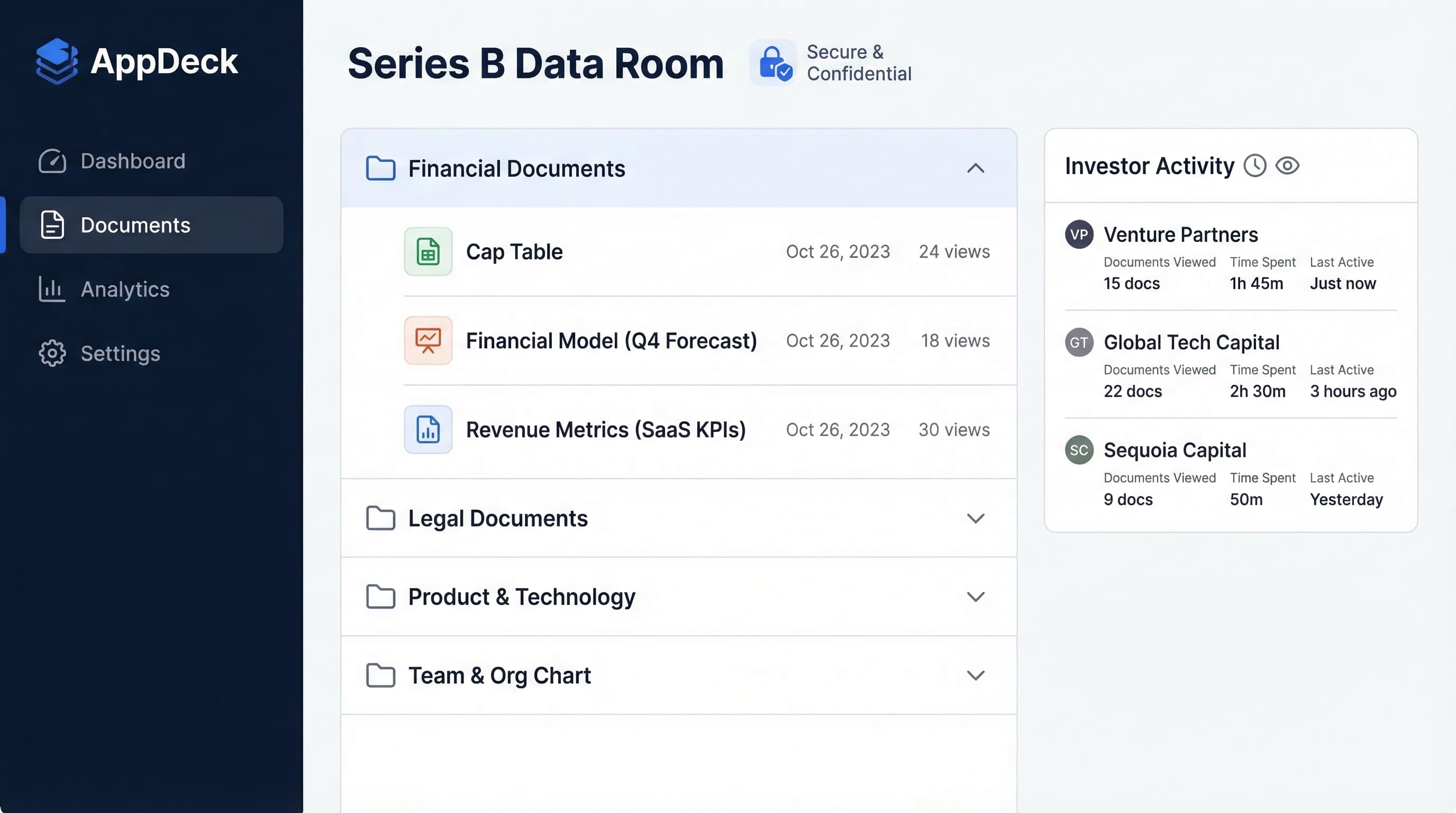
Modern data rooms go beyond simple file hosting. They include real-time analytics that show which investors are most engaged, built-in Q&A workflows for due diligence questions, e-signature capabilities for NDAs and term sheets, and live dashboards that display up-to-date financial metrics alongside static documents.
Why You Need a Data Room
Many startups and growth-stage companies still share sensitive fundraising documents through email, Google Drive, or Dropbox links. These approaches create serious risks: no control over forwarding, no visibility into who has accessed what, and no way to revoke access after a deal falls through.
A dedicated data room signals professionalism to investors, accelerates the due diligence timeline, and gives you strategic intelligence about which investors are genuinely engaged — all while keeping your most confidential information protected.
Faster Due Diligence
Companies with organized data rooms close due diligence significantly faster than those sharing documents ad hoc through email.
Audit Trail Coverage
Every document view, download, and question is logged with timestamps, creating a complete record of the entire due diligence process.
Investor Intelligence
See exactly which investors are spending time in your data room, which documents they focus on, and who has gone cold — so you can prioritize follow-ups.
Controlled Access
Grant and revoke access instantly. Set document-level permissions so early-stage investors see the pitch deck while serious prospects get full financials.
Essential Data Room Features
The capabilities every investor data room should include to support fundraising and due diligence.
Secure Document Sharing
AES-256 encryption, granular permissions, and dynamic watermarking help keep confidential documents protected throughout the fundraising process.
Access Analytics
Track who viewed what documents, time spent on each page, download history, and engagement patterns to gauge investor interest.
Q&A Workflows
Organized investor questions with audit trails, assignable responses, and threaded conversations to streamline due diligence communication.
Folder Organization
Structured folders for financials, legal, IP, team, and market data. Pre-built templates follow industry-standard due diligence folder structures.
E-Signature Integration
Sign NDAs and term sheets directly in the data room. Built-in e-signature workflows eliminate back-and-forth with external tools.
Real-Time Dashboards
Embed live financial metrics alongside static documents so investors always see up-to-date revenue, burn rate, and growth data.
Setting Up Your Data Room
A well-organized data room makes a strong first impression on investors and dramatically speeds up the due diligence process. Follow this proven setup process to get your data room investor-ready:
- Create your folder structure — Use industry-standard categories: Financials, Legal, Cap Table, IP, Team, Customers, Market, and Product.
- Upload core documents — Start with your pitch deck, financial model, cap table, articles of incorporation, and key contracts.
- Set permission levels — Create tiers of access: a teaser level for initial interest, and full access for investors in active due diligence.
- Configure NDA workflow — Require investors to sign an NDA before accessing sensitive materials, with built-in e-signature.
- Enable analytics and Q&A — Turn on document-level tracking and set up Q&A channels so investor questions are organized and auditable.
Due Diligence Essentials
Due diligence is the process where investors verify the claims in your pitch and assess the risks of investing. A well-prepared data room answers most questions before they are even asked, signaling that your company is well-run and transparent.
The documents investors expect to see fall into several categories. Having them organized and readily accessible demonstrates operational maturity and respect for the investor's time.
Financial Documents
- ·Historical financial statements (3 years)
- ·Financial model and projections
- ·Monthly burn rate and runway
- ·Revenue breakdown by customer/segment
Legal & Corporate
- ·Articles of incorporation and bylaws
- ·Cap table and previous funding rounds
- ·Material contracts and agreements
- ·IP filings and patent documentation
Team & Operations
- ·Org chart and key team bios
- ·Employee stock option plan details
- ·Key hires planned and hiring roadmap
- ·Board meeting minutes and resolutions
Market & Product
- ·TAM/SAM/SOM analysis
- ·Competitive landscape overview
- ·Product roadmap and milestones
- ·Customer references and case studies
Security & Compliance
Investor data rooms contain some of the most sensitive information a company possesses: financial projections, cap tables, IP documentation, and strategic plans. A data room must be built with security as a foundation, not an afterthought.
The baseline requirements for any modern data room include SOC 2 Type II certification, AES-256 encryption at rest and in transit, granular permission controls at the folder and document level, and comprehensive audit trails that log every view, download, and action.
Additional security measures to look for include dynamic watermarking on viewed documents, the ability to disable downloads or printing, fence-view technology that restricts visibility to prevent screen captures, session timeouts, IP-based access restrictions, and remote access revocation.
Choosing Data Room Software
Selecting the right data room is a critical decision that affects your fundraising timeline and investor experience. Evaluate vendors across five dimensions: security certifications, analytics depth, ease of use, pricing transparency, and the quality of Q&A and collaboration features.
Avoid platforms with per-page pricing or long-term lock-in contracts. The best vendors offer transparent flat-rate or per-seat pricing, unlimited storage, and the flexibility to scale as your deal progresses.
Data Room Software Comparison (2026)
Side-by-side comparison of leading data room platforms including features, pricing, and user reviews.
What Is a Virtual Data Room?
A primer on virtual data rooms: how they work, when you need one, and how they differ from file-sharing tools.
Investor Data Room Best Practices
The essential playbook for organizing documents, managing access, and impressing investors.
Templates & Resources
Related articles and resources to help you run a successful fundraising process from start to finish.
Investor Data Room Best Practices
The essential playbook for organizing documents, managing access, and impressing investors during due diligence.
Data Room Software Comparison 2026
Side-by-side comparison of leading data room platforms including features, pricing, and user reviews.
What Is a Virtual Data Room?
A primer on virtual data rooms: how they work, when you need one, and how they differ from file-sharing tools.
Due Diligence Checklist
A comprehensive checklist covering financials, legal, IP, team, and operational documents investors expect to see.
Investor Update Templates
Ready-to-use templates for monthly and quarterly investor updates that keep stakeholders informed.
CFO Dashboard Metrics
The essential financial metrics every CFO should track and share with investors and board members.
Related Products
The investor data room works even better alongside these complementary AppDeck products.
Investor Data Room
The secure, analytics-powered data room built for modern fundraising.
Board Portal
Board portal for governance alongside fundraising. Keep directors informed and aligned during capital raises.
Executive Dashboard
Share real-time metrics with investors. Embed live financial dashboards directly in your data room.
Shareholder Portal
After fundraising, manage shareholder communications, distributions, and reporting in one secure place.
Frequently Asked Questions
Common questions about investor data rooms, answered.
What is a virtual data room?
A virtual data room (VDR) — also called an investor data room — is a secure online repository where companies share confidential documents with potential investors during fundraising, M&A transactions, or due diligence processes. It replaces insecure email attachments and shared drives with encrypted, permission-controlled access.
When should I set up a data room?
Set up your data room before you start fundraising conversations. Ideally, begin populating it 4-6 weeks before your first investor meeting. Having a well-organized data room ready signals professionalism and accelerates the due diligence process once investors express interest.
What documents should I include in an investor data room?
A standard investor data room includes financial statements, cap table, pitch deck, business plan, legal documents (articles of incorporation, operating agreements), IP documentation, key contracts, team bios, customer metrics, and market analysis. The exact contents depend on your stage and industry.
How is a data room different from Google Drive or Dropbox?
Unlike general file-sharing tools, data rooms provide granular permission controls, document-level access analytics, dynamic watermarking, NDA workflows, Q&A management, and complete audit trails. These features are essential for protecting confidential information during high-stakes transactions.
How long does it take to set up a data room?
With a modern platform like AppDeck, you can set up the data room structure in under an hour. The bulk of the time goes into gathering and uploading your documents, which typically takes 1-2 weeks depending on how organized your existing files are.
Can investors access the data room on mobile devices?
Yes. Modern data rooms are fully responsive and work on any device. Investors can review documents, ask questions, and sign NDAs from their phone or tablet, which is important for busy partners reviewing deals on the go.
How do I know which investors are most interested?
Data room analytics show you exactly which investors have logged in, which documents they viewed, how much time they spent on each page, and whether they downloaded anything. This engagement data helps you prioritize follow-ups and gauge genuine interest.
Related Guides
Go deeper with our in-depth guides
Ready to Launch Your Data Room?
Join companies that have streamlined their fundraising with AppDeck. Set up in 30 minutes, impress investors from day one.
Free 14-day trial -- now in beta -- Enterprise-grade security