
Investor Update Email Template: 5 Free Templates & Writing Guide
5 free investor update email templates for startups. Monthly, quarterly, fundraising, and board-ready formats with real examples and best practices.
Download the template: Get the email as a free Word doc — Investor Update Email Template (.docx) — subject lines, TL;DR block, KPI snapshot, wins, lowlights, asks, and closing question that gets replies. No paywall.
Introduction
The best investor update I ever received was 312 words long. It had five numbers, two asks, and one honest admission that churn was spiking. I wired additional capital into that company two weeks later.
The worst investor update I ever received was a 14-page PDF attached to a three-sentence email. I never opened it.
After twenty years on both sides of the investor table—raising capital for my own companies and investing in others—I'm convinced that consistent, well-structured investor updates are the single highest-ROI activity a founder can do for their fundraising career. Not because any individual email is transformative, but because the compounding effect of regular communication builds the kind of trust that opens checkbooks when it matters most.
Here's what a good investor update template actually does for you:
- Builds trust over time. Investors who see your numbers every month develop conviction. When you need a bridge round or a follow-on, they already know the story.
- Opens doors you don't expect. Your investors forward updates to their partners, LPs, and portfolio CEOs. I've seen introductions to enterprise customers, VP-level hires, and acquirers come directly from a well-written monthly update.
- Gets you help when you need it. An investor who reads "we're struggling with enterprise sales hiring" in your update is far more likely to make an introduction than one you cold-email six months later.
- Forces operational discipline. Writing down your key metrics every month makes you a better operator. Full stop.
In this guide, I'll share five investor update email templates you can copy and customize today—from early-stage monthly updates to board meeting pre-reads and annual reviews. Each template includes the exact format, placeholder fields, and guidance on when to use it.
What to Include in Every Investor Update
Before we get to the templates, let's cover the essential sections that belong in every investor update, regardless of stage or cadence. Think of these as your building blocks.
1. KPI Highlights (The Dashboard)
Lead with numbers. Always. Your investors want to see three to five key metrics before they read a single word of narrative.
For early-stage (pre-Series A):
- MRR or revenue
- MoM growth rate
- Burn rate and runway (months)
- Key engagement metric (DAU, activation rate, etc.)
For growth-stage (Series B+):
- ARR and growth rate
- Net revenue retention
- CAC payback period
- Gross margin
- Headcount
If you're using an executive dashboard, you can embed a live link instead of static numbers. More on that in the automation section below.
2. Wins (What Went Right)
Keep this to two or three bullet points. Highlight customer wins, product milestones, key hires, or partnership announcements. Be specific—"closed Acme Corp at $48K ACV" is better than "strong enterprise traction."
3. Challenges and Asks (What You Need Help With)
This is the most important section, and the one most founders skip. Be direct about what's not working and what you need from your investors.
Good asks:
- "We need intros to VP Sales candidates with PLG experience"
- "Looking for a design agency recommendation for rebrand"
- "Need warm intro to [Specific Company] for partnership discussion"
Bad asks:
- "Let us know if you can help with anything"
- "Introductions are always appreciated"
4. Financial Snapshot
A brief table showing revenue, expenses, cash balance, and runway. Doesn't need to be audited financials—just enough for investors to understand your financial position. For a deeper treatment of what metrics to include, see our guide on essential CFO dashboard metrics.
5. Product Update
Two to three sentences on what shipped, what's in progress, and what's coming next. Link to a changelog or product blog if you have one.
6. Team News
New hires, departures, promotions, or organizational changes. Investors care deeply about team stability, so don't skip this even when there's nothing to report—say "team is stable at 28 people."
7. Upcoming Milestones
What are you aiming to accomplish before the next update? This creates accountability and gives investors context for evaluating your progress.
5 Investor Update Templates
Template 1: Monthly Investor Update (Early Stage)
When to use: Seed through Series A. Send on the same day each month (I recommend the first Monday).
Subject line: [COMPANY NAME] — Investor Update — [MONTH YEAR]
Hi everyone,

Here's the [MONTH] update for [COMPANY NAME].

## Key Metrics
- MRR: $[AMOUNT] ([+/- X%] MoM)
- Burn rate: $[AMOUNT]/mo
- Runway: [X] months
- Customers: [X] ([+X] net new this month)
- [KEY ENGAGEMENT METRIC]: [VALUE] ([TREND])

## Wins
- [WIN 1: Be specific — customer name, deal size, milestone hit]
- [WIN 2]
- [WIN 3]

## Challenges
- [CHALLENGE 1: Be honest about what's not working]
- [CHALLENGE 2]

## Asks
- [ASK 1: Specific, actionable request]
- [ASK 2: Include context — who, what, why]

## Financial Snapshot
| Metric         | This Month | Last Month | Trend |
|----------------|-----------|------------|-------|
| Revenue        | $[X]      | $[X]       | [+X%] |
| Total Expenses | $[X]      | $[X]       | [+X%] |
| Net Burn       | $[X]      | $[X]       | [+X%] |
| Cash Balance   | $[X]      | —          | —     |
| Runway         | [X] mo    | [X] mo     | —     |

## Product
- Shipped: [FEATURE/RELEASE]
- In progress: [WHAT'S BEING BUILT]
- Next up: [UPCOMING PRIORITY]

## Team
[NEW HIRES, DEPARTURES, OR "Team stable at X people"]

## Next Month's Goals
1. [GOAL 1]
2. [GOAL 2]
3. [GOAL 3]

Thanks for your continued support. Reply with any questions
or introductions — I read every response.

[YOUR NAME]
Founder & CEO, [COMPANY NAME]
Tips for this template:
- Keep total length under 500 words. Investors scan these on their phones.
- Send even when the news is bad. Especially when the news is bad.
- The "Asks" section should change every month. If you're not asking for help, you're leaving value on the table.
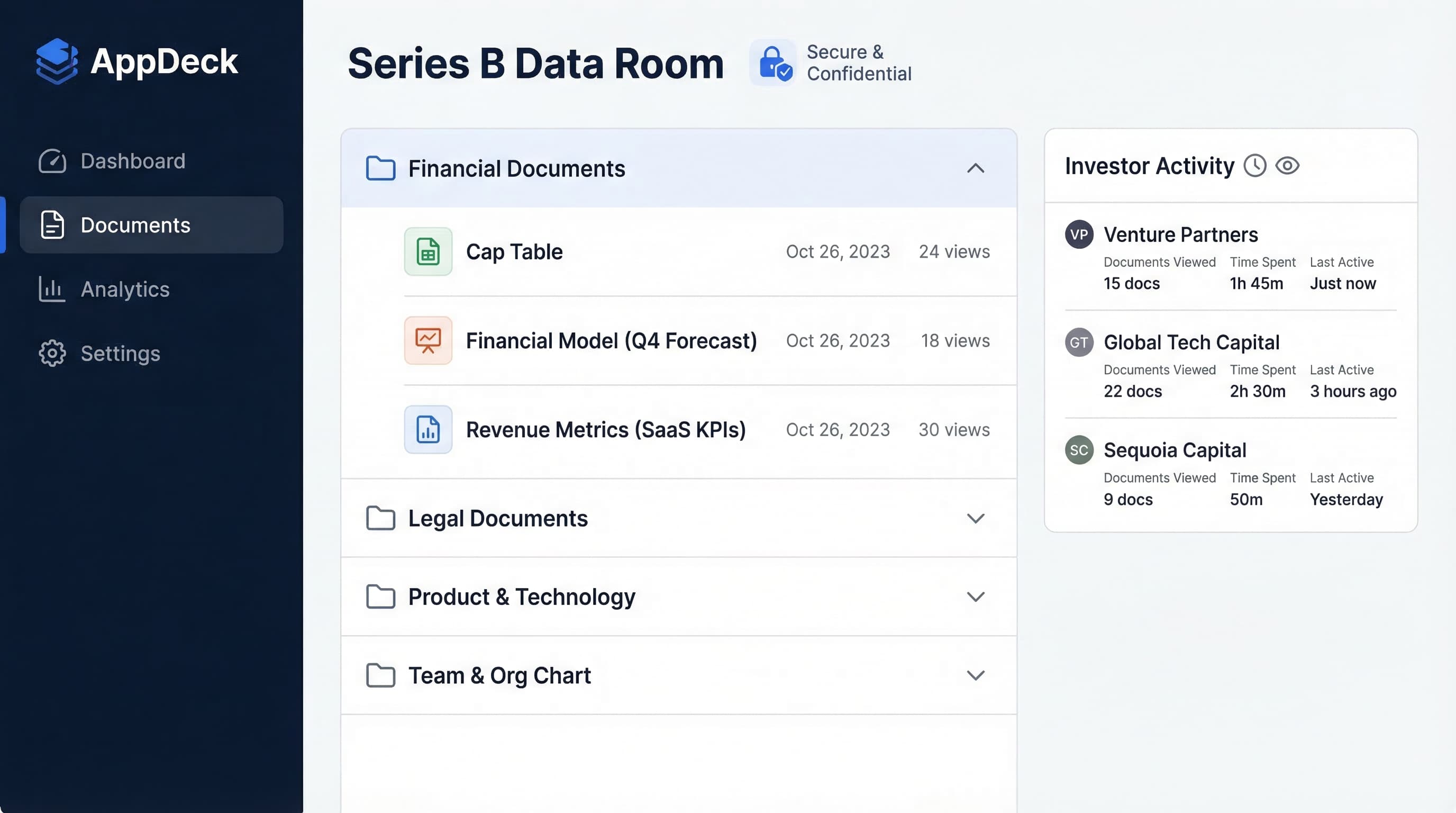
- Link to your investor data room if you have supplementary materials (pitch deck, detailed financials, customer case studies) that investors can browse on their own time.
Template 2: Quarterly Investor Update (Growth Stage)
When to use: Series B and beyond, or any company with 50+ investors where monthly updates become operationally heavy.
Subject line: [COMPANY NAME] — Q[X] [YEAR] Investor Update
Hi everyone,

Here's our Q[X] [YEAR] update for [COMPANY NAME]. Executive summary
first, details below.

## Executive Summary
[2-3 sentences capturing the quarter. Example: "Q3 was our strongest
quarter yet. We crossed $10M ARR, closed our first enterprise deal
over $200K, and expanded the team to 85 people. The main challenge
remains sales cycle length in the enterprise segment."]

## Key Metrics

| Metric                | Q[X] Actual | Q[X] Target | Q[X-1] Actual | YoY Change |
|-----------------------|-------------|-------------|----------------|------------|
| ARR                   | $[X]        | $[X]        | $[X]           | [+X%]     |
| Quarterly Revenue     | $[X]        | $[X]        | $[X]           | [+X%]     |
| Net Revenue Retention | [X%]        | [X%]        | [X%]           | [+X pp]   |
| Gross Margin          | [X%]        | [X%]        | [X%]           | [+X pp]   |
| CAC Payback (months)  | [X]         | [X]         | [X]            | [trend]   |
| Customers             | [X]         | —           | [X]            | [+X%]     |
| Headcount             | [X]         | [X]         | [X]            | [+X]      |

For real-time access to these metrics, visit our investor dashboard:
[DASHBOARD LINK]

## Business Highlights
- [HIGHLIGHT 1: Major customer wins, notable logos]
- [HIGHLIGHT 2: Product launches or major releases]
- [HIGHLIGHT 3: Strategic partnerships or market expansion]
- [HIGHLIGHT 4: Key hires or team milestones]

## Challenges & Risks
- [CHALLENGE 1: What's not working and what you're doing about it]
- [CHALLENGE 2: Market headwinds, competitive pressure, etc.]
- [RISK 1: What keeps you up at night]

## Financial Summary

| Line Item           | Q[X] Actual | Q[X] Budget | Variance |
|---------------------|-------------|-------------|----------|
| Revenue             | $[X]        | $[X]        | [+/-X%]  |
| COGS                | $[X]        | $[X]        | [+/-X%]  |
| Gross Profit        | $[X]        | $[X]        | [+/-X%]  |
| Operating Expenses  | $[X]        | $[X]        | [+/-X%]  |
| EBITDA              | $[X]        | $[X]        | [+/-X%]  |
| Cash Balance        | $[X]        | —           | —        |
| Runway              | [X] months  | —           | —        |

## Product & Engineering
- [KEY RELEASES THIS QUARTER]
- [INFRASTRUCTURE OR PLATFORM IMPROVEMENTS]
- [NEXT QUARTER PRODUCT PRIORITIES]

## Go-to-Market
- [SALES PERFORMANCE AND PIPELINE]
- [MARKETING METRICS: leads, conversion, CAC trends]
- [CUSTOMER SUCCESS: NPS, churn, expansion]

## Team Update
- New hires: [NAMES AND ROLES]
- Departures: [IF ANY]
- Headcount: [X] ([+/-X] vs last quarter)
- Key open roles: [ROLES YOU'RE HIRING FOR]

## Asks
1. [SPECIFIC ASK WITH CONTEXT]
2. [SPECIFIC ASK WITH CONTEXT]
3. [SPECIFIC ASK WITH CONTEXT]

## Next Quarter Priorities
1. [PRIORITY 1 WITH TARGET METRIC]
2. [PRIORITY 2 WITH TARGET METRIC]
3. [PRIORITY 3 WITH TARGET METRIC]

Full quarterly financial package and board materials are
available in our investor portal: [INVESTOR PORTAL LINK]

Best,
[YOUR NAME]
CEO, [COMPANY NAME]
Tips for this template:
- This is longer than the monthly update—aim for 800-1,000 words.
- Include both actual vs. target and actual vs. prior period comparisons. Investors want to see if you're hitting your own plan.
- The "Challenges & Risks" section builds credibility. Investors know things aren't perfect. When you surface problems proactively, you demonstrate self-awareness.
- Link to your investor data room for the full financial package. Don't attach 15 documents to an email.
- Consider embedding a live executive dashboard link so investors can drill into metrics between updates.
Template 3: Fundraising Update
When to use: During an active fundraise, sent weekly or biweekly to existing investors who can help with introductions and references.
Subject line: [COMPANY NAME] — Fundraise Update — Week of [DATE]
Hi team,

Quick update on our [SERIES X / ROUND NAME] fundraise.

## Round Status
- Target raise: $[X]M
- Committed: $[X]M ([X%] of target)
- Term sheets: [X] received / [X] in process
- Target close: [DATE]

## This Week's Progress
- [MEETING/CALL 1: Firm name, partner, outcome]
- [MEETING/CALL 2: Firm name, partner, outcome]
- [MEETING/CALL 3: Firm name, partner, outcome]

## Investor Pipeline

| Firm          | Partner     | Stage           | Next Step          |
|---------------|-------------|----------------|--------------------|
| [FIRM 1]      | [NAME]      | Term sheet     | Legal review       |
| [FIRM 2]      | [NAME]      | Partner meeting | Decision by [DATE] |
| [FIRM 3]      | [NAME]      | First meeting  | Follow-up [DATE]   |
| [FIRM 4]      | [NAME]      | Intro needed   | —                  |

## Key Metrics Update (for reference calls)
- MRR/ARR: $[X]
- Growth: [X%] MoM / [X%] YoY
- Runway: [X] months (pre-raise)

## Asks This Week
- Warm intro to [PARTNER NAME] at [FIRM NAME] — [CONTEXT]
- Reference call: [INVESTOR/FIRM] may reach out for
  references — please take the call
- [ANY OTHER SPECIFIC ASK]

## Business Update (brief)
- [1-2 sentences on what happened in the business this week
  that's relevant to the raise — new customer, metric milestone, etc.]

I'll send the next update on [DAY]. Thanks for your support
on this round.

[YOUR NAME]
Tips for this template:
- Keep this short and action-oriented. Your existing investors want to know how to help, not read a novel.
- Be transparent about where you are in the process. If the round is going slowly, say so.
- The pipeline table is critical—it lets investors see exactly where they can add value with introductions.
- Update your investor data room with the latest deck and financials before sending. Investors will share these materials with their networks.
Template 4: Board Meeting Pre-Read
When to use: Send 5-7 business days before each board meeting. This replaces (or supplements) the traditional board packet.
Subject line: [COMPANY NAME] — Board Meeting Pre-Read — [DATE]
Hi Board,

Our next board meeting is [DAY], [DATE] at [TIME] [TIMEZONE].
Please review the materials below before the meeting.

## Agenda
1. [TIME] — Financial review & Q[X] results (15 min)
2. [TIME] — Product roadmap update (15 min)
3. [TIME] — Go-to-market strategy discussion (20 min)
4. [TIME] — [STRATEGIC TOPIC — e.g., international expansion,
   M&A opportunity, pricing change] (30 min)
5. [TIME] — Key decisions & votes (15 min)
6. [TIME] — Executive session (15 min)

## Decisions Needed
- [ ] Approve Q[X] budget reallocation of $[X] from
      [DEPARTMENT] to [DEPARTMENT]
- [ ] Vote on [STRATEGIC DECISION — e.g., new market entry,
      pricing model change]
- [ ] Approve [OPTION GRANT / HIRE / PARTNERSHIP]

## Key Metrics (as of [DATE])

| Metric             | Actual     | Plan       | vs Plan  |
|--------------------|-----------|------------|----------|
| ARR                | $[X]      | $[X]       | [+/-X%]  |
| Quarterly Revenue  | $[X]      | $[X]       | [+/-X%]  |
| Gross Margin       | [X%]      | [X%]       | [+/-X pp]|
| Net Burn           | $[X]/mo   | $[X]/mo    | [+/-X%]  |
| Cash Balance       | $[X]      | —          | —        |
| Runway             | [X] mo    | —          | —        |
| Headcount          | [X]       | [X]        | [+/-X]   |

Live dashboard: [DASHBOARD LINK]

## Discussion Topics — Pre-Reading Required
### [STRATEGIC TOPIC 1]
[2-3 paragraphs framing the decision. Include context,
options being considered, management's recommendation,
and what input you need from the board.]

### [STRATEGIC TOPIC 2]
[Same format as above]

## Materials
All board materials are available in our board portal:
[BOARD PORTAL LINK]

Included documents:
- Financial package (P&L, balance sheet, cash flow)
- Department reports (Sales, Product, Engineering, People)
- Board deck (slides)
- [ADDITIONAL MATERIALS]

Please review before the meeting so we can focus our time
on discussion rather than presentation.

See you [DAY],
[YOUR NAME]
Tips for this template:
- The pre-read should make your board meeting twice as productive. If directors arrive having read the materials, you can skip the "presenting the numbers" portion and go straight to strategic discussion.
- Always include "Decisions Needed" at the top. Directors want to know what's expected of them.
- Don't email large attachments. Use a board portal to share materials securely with version control and read receipts. If you don't have one yet, see our guide on how to create a professional board portal.
- Frame strategic topics as decisions, not updates. "Should we enter the European market in Q3?" is better than "European market overview."
- Include a live dashboard link so directors can explore the latest numbers on their own. An executive dashboard embedded in your board portal makes this seamless.
Template 5: Annual Year-in-Review
When to use: January of each year. Send to all investors, advisors, and key stakeholders. This is your most comprehensive update.
Subject line: [COMPANY NAME] — [YEAR] Year in Review & [NEXT YEAR] Outlook
Hi everyone,

Happy New Year. Here's a look back at [YEAR] and where
we're heading in [NEXT YEAR].

## [YEAR] by the Numbers

| Metric             | [YEAR] End  | [YEAR-1] End | YoY Change |
|--------------------|-------------|--------------|------------|
| ARR                | $[X]        | $[X]         | [+X%]     |
| Annual Revenue     | $[X]        | $[X]         | [+X%]     |
| Customers          | [X]         | [X]          | [+X%]     |
| NRR                | [X%]        | [X%]         | [+/-X pp] |
| Gross Margin       | [X%]        | [X%]         | [+/-X pp] |
| Headcount          | [X]         | [X]          | [+X]      |
| Cash Balance       | $[X]        | $[X]         | —         |

## Milestone Timeline

**Q1:**
- [KEY MILESTONE — e.g., launched V2.0, closed Series A]
- [KEY MILESTONE]

**Q2:**
- [KEY MILESTONE — e.g., crossed 100 customers, hired VP Sales]
- [KEY MILESTONE]

**Q3:**
- [KEY MILESTONE — e.g., expanded to Europe, hit $5M ARR]
- [KEY MILESTONE]

**Q4:**
- [KEY MILESTONE — e.g., achieved profitability, launched enterprise tier]
- [KEY MILESTONE]

## What Went Well
- [STRENGTH 1: 2-3 sentences with specific results]
- [STRENGTH 2]
- [STRENGTH 3]

## What Didn't Go Well
- [CHALLENGE 1: What happened, what you learned, what changed]
- [CHALLENGE 2]
- [CHALLENGE 3]

## Team Growth
- Started [YEAR] with [X] people, ended with [X]
- Key hires: [NAMES AND ROLES of senior hires]
- Departures: [NOTABLE DEPARTURES if any]
- Culture highlights: [OFFSITES, AWARDS, TEAM MILESTONES]

## Product Highlights
- [MAJOR RELEASE 1]
- [MAJOR RELEASE 2]
- [MAJOR RELEASE 3]
- [INFRASTRUCTURE / PLATFORM INVESTMENTS]

## Financial Summary

| Line Item          | [YEAR]     | [YEAR-1]   | YoY Change |
|--------------------|-----------|------------|------------|
| Total Revenue      | $[X]      | $[X]       | [+X%]     |
| Gross Profit       | $[X]      | $[X]       | [+X%]     |
| Operating Expenses | $[X]      | $[X]       | [+X%]     |
| EBITDA             | $[X]      | $[X]       | [trend]   |
| Cash from Ops      | $[X]      | $[X]       | [trend]   |

## [NEXT YEAR] Outlook

### Strategic Priorities
1. [PRIORITY 1 — with target metric]
2. [PRIORITY 2 — with target metric]
3. [PRIORITY 3 — with target metric]

### Key Targets
- Revenue target: $[X] ([X%] growth)
- Customer target: [X]
- Headcount plan: [X] by year-end
- Product: [MAJOR INITIATIVE]

### What I Need From You in [NEXT YEAR]
- [ASK 1]
- [ASK 2]
- [ASK 3]

Detailed financial package and board materials for Q4 and
full-year are available in our investor portal: [PORTAL LINK]

Thank you for your partnership in [YEAR]. I'm excited about
what we'll build together in [NEXT YEAR].

[YOUR NAME]
Founder & CEO, [COMPANY NAME]
Tips for this template:
- This is the one update where length is acceptable—aim for 1,000-1,500 words.
- The milestone timeline is powerful. It reminds investors of everything that happened, which they've likely forgotten.
- "What Didn't Go Well" is the section that builds the most credibility. Every investor knows your year wasn't perfect. Owning it shows maturity.
- Include a forward-looking section with concrete targets. Investors want to know where the business is heading.
- This is an excellent time to refresh your investor data room with updated materials for the new year.
Investor Update Best Practices
After reading thousands of investor updates (and writing hundreds), here are the practices that separate great investor communicators from everyone else.
Send Consistently, on the Same Day
Pick a day—first Monday of the month, last Friday, whatever works—and never miss it. Consistency signals operational discipline. When updates suddenly stop, investors assume the worst.
My recommendation: Monthly for early-stage companies, quarterly for growth-stage. Set a recurring calendar reminder and treat it like a board meeting—non-negotiable.
Lead with Metrics, Not Narrative
Investors want numbers first, story second. Start every update with your three to five key metrics. If the numbers are good, the narrative writes itself. If the numbers are bad, the narrative should explain why and what you're doing about it.
Be Honest About Challenges
The fastest way to lose investor trust is to hide problems. The fastest way to build it is to surface them early with a plan. "Churn spiked to 8% this month. We've identified the root cause (onboarding gaps in the enterprise segment) and are shipping fixes next week" is infinitely better than silence.
Include Specific Asks
Every update should include one to three specific, actionable asks. This is literally why you have investors—they have networks, expertise, and resources. Use them. Read our guide on investor data room best practices for more on managing investor relationships effectively.
Keep It Scannable
Monthly updates should be under 500 words. Use bullet points, tables, and bold text. Your investors are reading this on their phones between meetings. If they have to scroll more than three times, you've lost them.
Include a Dashboard Link
Static numbers in an email are fine. A link to a live executive dashboard where investors can explore metrics on their own is better. It reduces follow-up questions and signals operational sophistication.
Common Mistakes to Avoid
I've been on the receiving end of enough investor updates to compile a clear list of what not to do.
Writing a Novel
If your monthly investor update is longer than 500 words, it's too long. Save the detailed analysis for quarterly updates and board meetings. The monthly update is a pulse check, not an annual report.
Going Silent
The number one complaint investors have about founders: "They stopped sending updates." Going dark—especially when things are tough—destroys trust. If you can't write a full update, send five bullet points. Something is always better than nothing.
Only Sharing Good News
Investors aren't stupid. If every update is sunshine and rainbows, they know you're hiding something. The founders who earn the most trust are the ones who share challenges alongside wins.
Making Vague Asks
"Let us know if you can help" is not an ask. "We need a warm intro to the VP of Engineering at Stripe—here's a one-liner you can forward" is an ask. Specific asks get specific help.
Skipping Metrics
An investor update without numbers is a blog post. Always lead with three to five quantitative metrics, even if the numbers aren't where you want them to be.
Sending Attachments Instead of Links
Don't email a 15 MB PDF. Host your materials in an investor data room and link to them. It's more secure, you can track who views what, and you can update documents without resending.
Inconsistent Formatting
Use the same template every time. Investors develop muscle memory for your format—they know where to find the metrics, where the asks are, and where the financial snapshot lives. Changing your format every month makes it harder for them to engage.
How to Automate Investor Updates
Writing investor updates manually every month is a grind. Here's how to reduce the effort from hours to minutes.
Step 1: Connect Your Data Sources
The most time-consuming part of writing an investor update is gathering the numbers. If your metrics live in spreadsheets, accounting software, and CRM dashboards that don't talk to each other, you'll spend hours pulling data before you write a single word.
The fix: centralize your key metrics in an executive dashboard that pulls from your data sources automatically. When it's time to write your update, the numbers are already there.
Step 2: Use a Template (From This Post)
Pick one of the five templates above and save it as your standard format. Fill in the static fields once (company name, investor list, standard metrics) and create a reusable document.
Step 3: Build a Distribution System
Email works for small investor lists (under 20). Once you grow beyond that, managing reply-alls, bounced emails, and opt-outs becomes a headache.
A better approach: publish your investor update in a dedicated investor portal and send a notification email with a link. This gives you:
- Analytics: See who opened the update and when
- Version control: Update a typo without resending
- Archive: Investors can browse past updates anytime
- Security: Control access without managing email forwards
Step 4: Embed Live Dashboards
Instead of pasting static metrics into an email, embed a live dashboard link. Investors can click through to see real-time numbers, historical trends, and drill-down views. It reduces follow-up questions and shows that you have your data house in order.
Step 5: Set a Recurring Reminder
Block 60 minutes on your calendar for the same day each month. With your dashboard connected and your template saved, writing the actual update should take 30-45 minutes. The remaining time is for review and personalization.
Frequently Asked Questions
How often should I send investor updates?
Monthly for seed through Series A. Quarterly for Series B and beyond. During an active fundraise, weekly or biweekly. The key is consistency—pick a cadence and stick to it. Investors would rather get a short monthly update than a detailed quarterly one that shows up unpredictably.
How long should an investor update be?
Monthly updates: 300-500 words. Quarterly updates: 800-1,000 words. Annual reviews: 1,000-1,500 words. If investors have to scroll for more than 30 seconds, you've lost most of them. Put detailed materials in your investor data room and link to them.
Should I send updates when the news is bad?
Absolutely. This is when updates matter most. Investors who learn about problems from your update—along with your plan to fix them—maintain confidence. Investors who learn about problems through the grapevine, or worse, from a surprise down round, lose trust permanently.
Who should receive investor updates?
All equity investors, active advisors, and board members. Some founders also include key angels, potential future investors they're building relationships with, and board observers. When in doubt, include people—it costs you nothing and builds goodwill.
What metrics should early-stage startups include?
At minimum: MRR (or revenue), month-over-month growth rate, burn rate, runway in months, and one key product metric (active users, activation rate, retention). Don't over-complicate it. Five metrics are better than fifteen. For a comprehensive breakdown of which metrics to track at each stage, read our guide on CFO dashboard metrics.
Should I personalize each investor update?
The core update should be the same for everyone. But adding a one-line personal note to your lead investors ("Thanks for the intro to Acme—we're in diligence") goes a long way. Many founders use a standard update plus personalized follow-ups for investors who are actively helping.
What if I miss a month?
Send it late. A late update is better than no update. Include a brief note acknowledging the delay—"Apologies for the late update, we were heads-down on [reason]"—and get back on schedule next month. Don't let one missed month turn into six months of silence.
How do I handle investor updates during a fundraise?
Separate your fundraise updates from your regular business updates. Keep sending your normal monthly update to all investors. Send a separate, more frequent fundraise-specific update (Template 3 above) to your existing investors who can help with introductions and references. For more on managing investor materials during fundraising, see our investor data room best practices guide.
Start Sending Better Investor Updates Today
The best time to start sending investor updates was when you closed your round. The second best time is this month. Pick the template that matches your stage, customize it with your metrics, and commit to a monthly cadence.
Your investors are your most underutilized resource. A well-written update—sent consistently—is how you unlock their full value.
Need a better way to share updates with investors? AppDeck's investor data room gives you a professional portal where investors can access updates, financials, and dashboards in one secure place. Pair it with an executive dashboard for real-time metrics, or use our board portal to distribute board meeting pre-reads securely.
Related Reading

Founder & CEO, AppDeck
Serial entrepreneur with 20+ years building B2B software companies. Former executive managing 2,800+ employees across three continents. Vik reviews all AppDeck content for accuracy and practical relevance.
Share this article
Explore Related Solutions
Related Articles
Due Diligence Checklist: Complete Guide for M&A, Fundraising & Investors
The definitive due diligence checklist for fundraising, M&A, and investor review. 100+ items organized by category with templates and data room setup tips.
Investor Data Room Best Practices: A CFO's Complete Guide for 2026
Learn the essential best practices for creating and managing investor data rooms. Complete guide with checklist, templates, and real-world examples from successful fundraising rounds.
What Is a Virtual Data Room? The Complete Guide for 2026
Everything about virtual data rooms (VDRs): use cases, features, security, pricing, and how to set one up for M&A, fundraising, and due diligence.