
Vendor Risk Assessment Template
A vendor risk assessment template that scores a vendor across security, financial, operational, and concentration risk — aligned to what SOC 2 and ISO 27001 auditors expect — so vendor due diligence becomes a 30-minute exercise instead of a project.
- Format:
- Word (.docx) (39 KB)
- Price:
- Free, no paywall
- Published May 2026
Download this template — free
Tell us where to send the link. We'll never share your email.
What's included
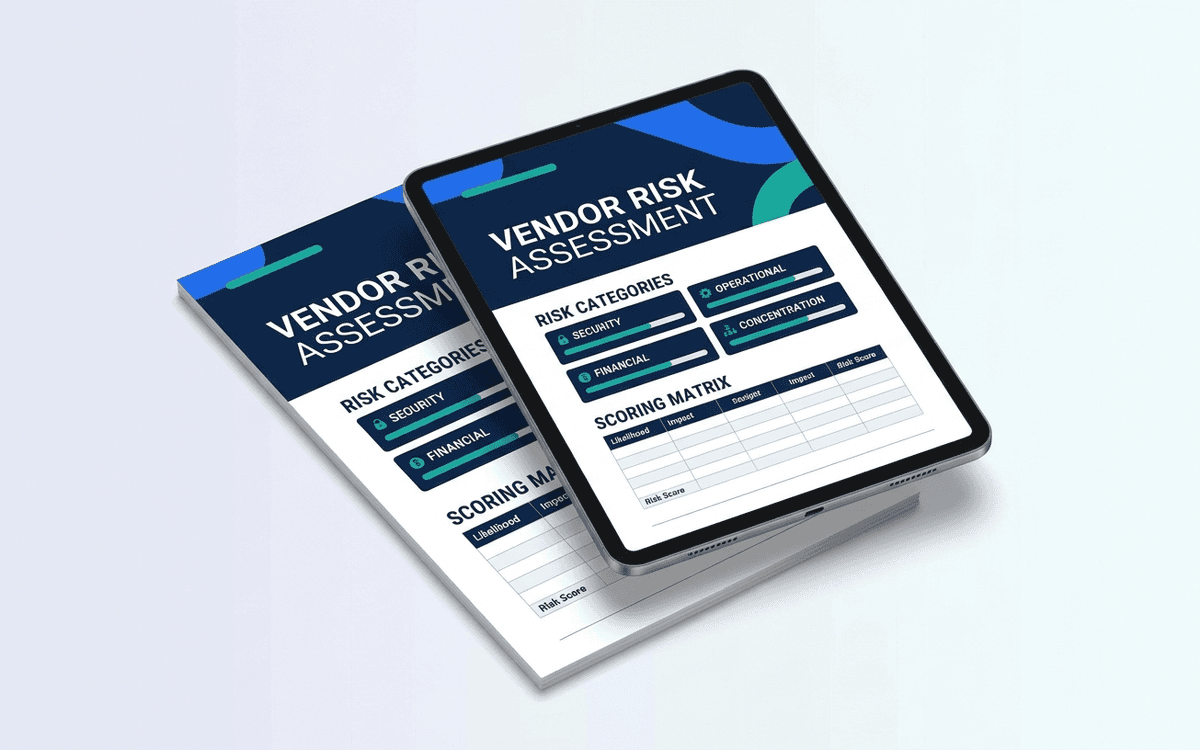
- Vendor metadata block (name, services, data classification, business owner)
- Risk classification tier (Critical / High / Medium / Low) — drives depth of review
- Security risk section (certifications, encryption, access controls, incident history)
- Financial risk section (financial health, concentration, insurance)
- Operational risk section (SLA, uptime, geographic concentration, key-person)
- Concentration risk section (% of category spend, switching cost, replaceability)
- Data privacy section (PII handling, regions, breach notification)
- Scoring rubric (1–5 per category, weighted total)
- Remediation requirements (must-fix before approval, monitor list)
- Review cadence and re-assessment trigger
- Approval block
How to use this template
1. Classify the vendor BEFORE assessing them
A vendor that handles PII or runs in your production environment is Critical-tier and gets a full assessment. A SaaS tool used by one team for $200/month is Low-tier and gets a 15-minute check. Match the depth of assessment to the risk classification — full Critical-tier reviews on every vendor create assessment fatigue and missed risks.
2. Ask for evidence, not assertions
Vendors will check every box on a self-assessment. Ask for evidence: current SOC 2 Type II report, penetration test results from the last 12 months, IRS-stamped articles of incorporation, current insurance certificates. Assertions without evidence get a score of 1 on that line.
3. Score concentration risk separately
Concentration risk is the single most under-assessed category. If a vendor is 40% of your category spend, or running a service with no realistic substitute, that vendor is high-risk regardless of how secure they are. The template gives concentration its own section so it doesn't hide inside operational risk.
4. Set re-assessment triggers
Risk assessments go stale fast. Build in triggers: annual re-assessment for Critical and High tiers, biennial for Medium, on-request for Low. Also re-assess on event triggers: material breach, M&A, ownership change, key personnel departure, expanded scope of services.
5. Maintain the central risk register
Individual assessments are useful; a central register of all vendor risks is more useful. Aggregate the assessments into a single spreadsheet sorted by risk tier and category. That register is what your SOC 2 auditor will ask for first.
Who it's for
- Security and compliance teams running structured vendor onboarding
- Operations leaders evaluating critical vendors
- Companies preparing for SOC 2 or ISO 27001 audits
- CISOs in regulated industries (financial services, healthcare, education)
Frequently asked questions
- When do I need to run a vendor risk assessment?
- For Critical and High-tier vendors: before contract signature, and at least annually thereafter. For Medium-tier: at signature and biennially. For Low-tier: a 15-minute lightweight check at signature is usually enough. Event triggers (breach, M&A, expanded scope) also drive ad-hoc re-assessments regardless of tier.
- What counts as a "Critical-tier" vendor?
- Three tests: (1) the vendor processes or stores PII / customer data; (2) the vendor runs in your production environment; or (3) the vendor is in the failure path of revenue. Any one of these makes the vendor Critical. Examples: cloud infrastructure, identity providers, payment processors, key SaaS systems of record.
- How is vendor risk assessment different from vendor scorecard?
- Risk assessment is a one-time (or annual) evaluation of risk EXPOSURE — what could go wrong. Vendor scorecard is an ongoing evaluation of vendor PERFORMANCE — what is going wrong (or right) right now. Both matter. Risk assessment runs before the vendor is approved and at re-assessment cadence; scorecards run on the regular vendor-management cadence.
- Do I need a vendor risk assessment for SOC 2?
- Yes — vendor risk management is a required category under the Trust Services Criteria (specifically CC1 and CC9). Auditors will ask for: the vendor risk policy, the risk assessment process, the central register, and evidence that critical vendors were assessed. The template here covers the assessment side; you'll also need a policy document.
- Should we share the assessment with the vendor?
- The assessment itself: usually no — it includes internal commentary, concentration analysis, and remediation requirements. But share specific findings that require vendor action: missing certifications, security gaps, contract terms that need renegotiation. Vendors who get specific feedback can fix things; vendors who get a black-box "you failed" cannot.
More vendor templates
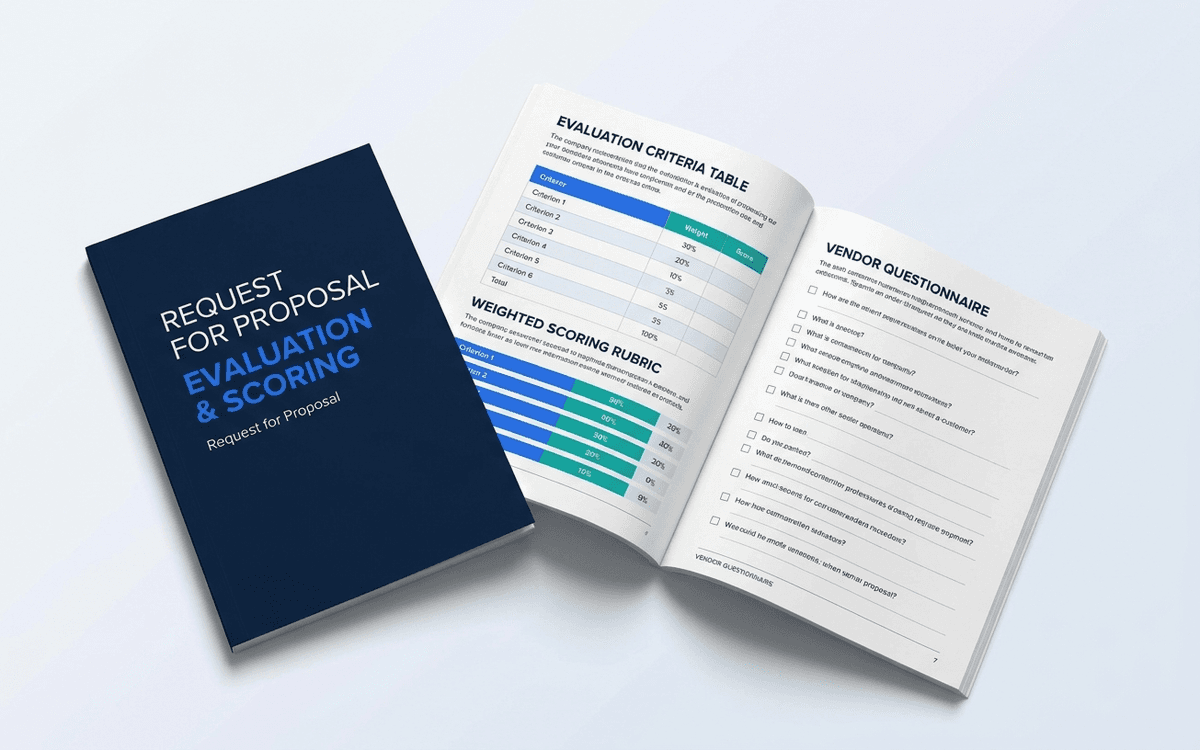
RFP Template
An RFP template runs a defensible procurement process without making vendors hate you — clear evaluation criteria, weighted scoring, structured questions, and a timeline that respects everyone's time.
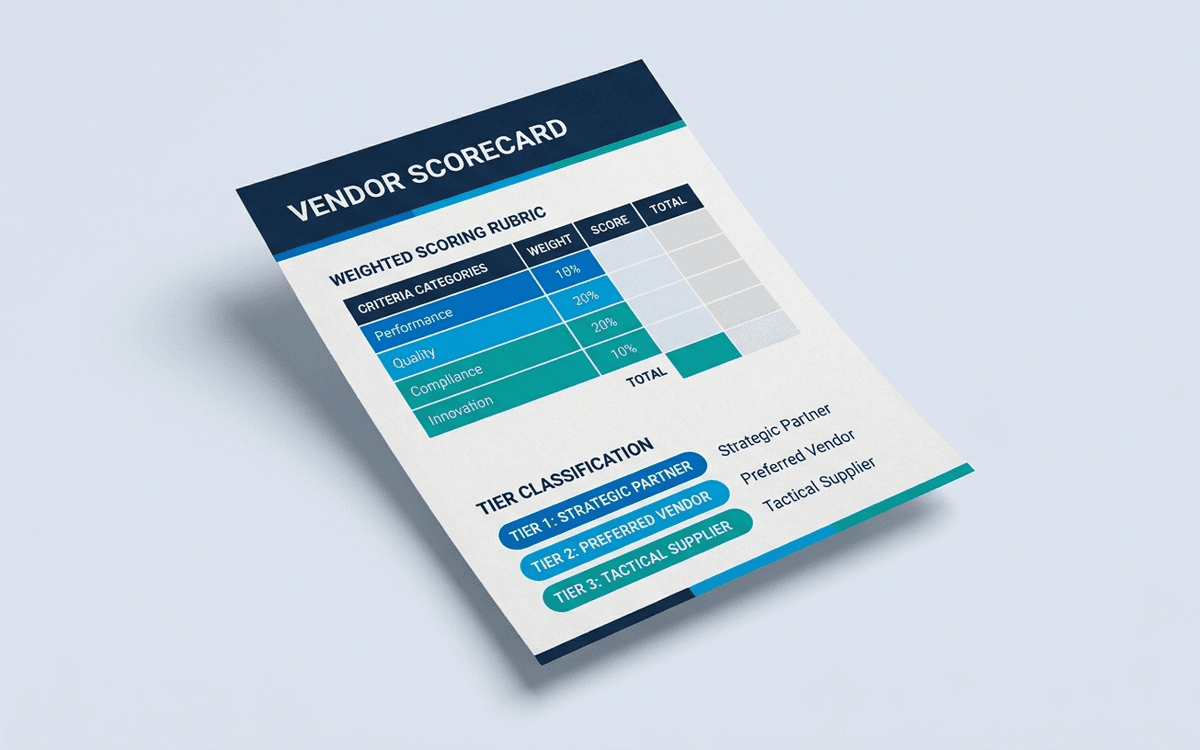
Vendor Scorecard Template
A vendor scorecard template gives you a one-page quarterly performance review covering delivery, quality, responsiveness, cost, and risk — so vendor conversations move from anecdote to evidence and renewal decisions get made on data.
When the template isn't enough
AppDeck's vendor portal turns this template into a live workspace — version control, permissions, signatures, and analytics built in.