
RFP Template
An RFP template runs a defensible procurement process without making vendors hate you — clear evaluation criteria, weighted scoring, structured questions, and a timeline that respects everyone's time.
- Format:
- Word (.docx) (38 KB)
- Price:
- Free, no paywall
- Published May 2026
Download this template — free
Tell us where to send the link. We'll never share your email.
What's included
- Project background and business context
- Scope of services / product requirements
- Mandatory vs. desired requirements (must-have vs. nice-to-have)
- Vendor company information questionnaire
- Technical questionnaire (customizable per category)
- Pricing structure request (TCO over 3 years)
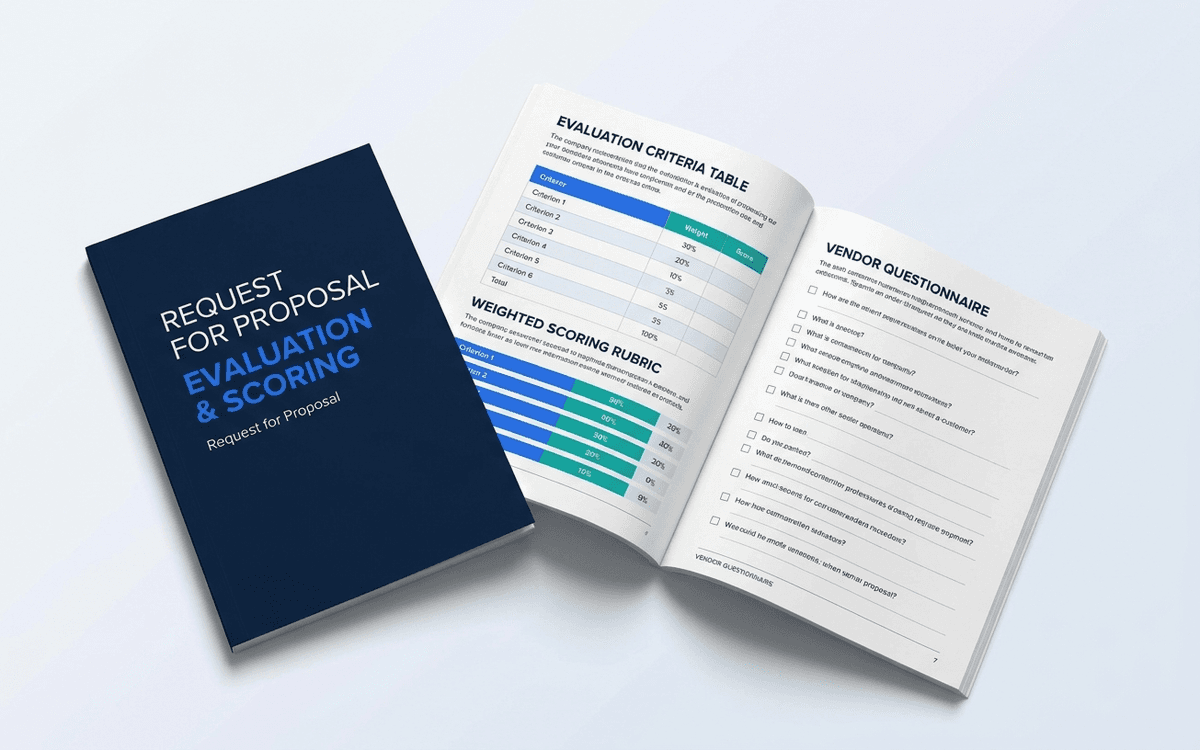
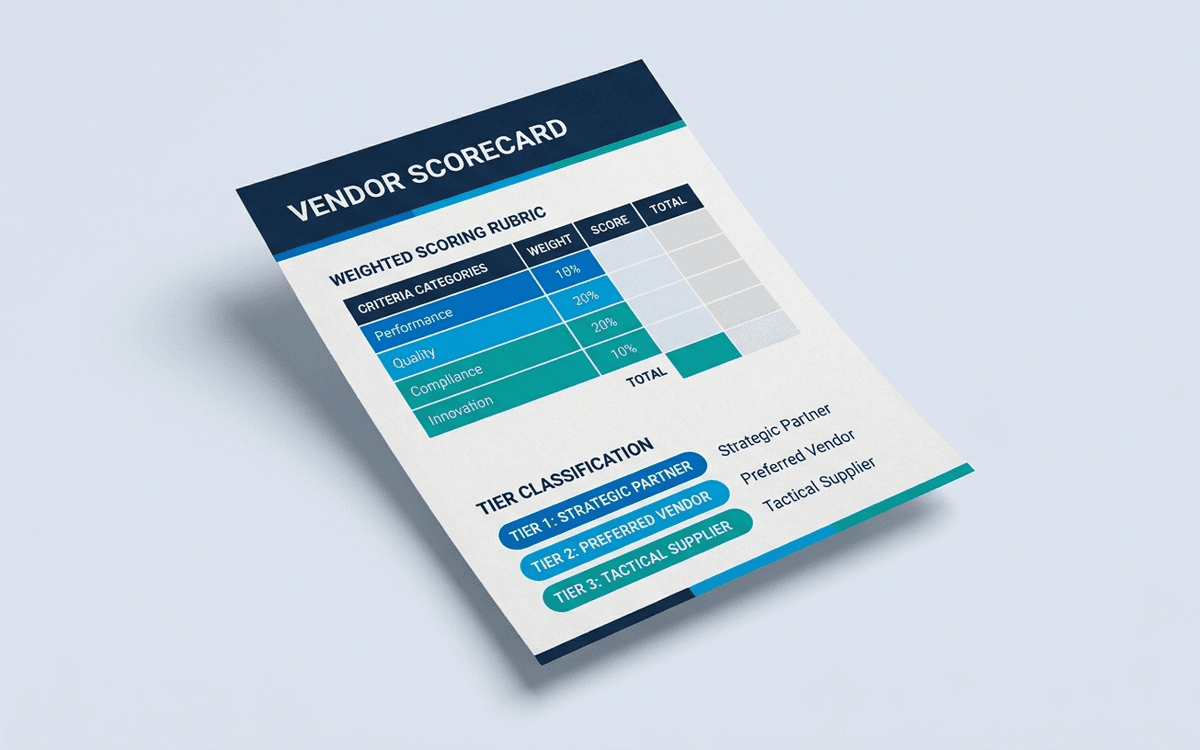
- Weighted scoring rubric for evaluation
- Submission process and required format
- Timeline (questions deadline, response deadline, demo window, decision date)
- Evaluation team and contact information
- Confidentiality and IP terms
How to use this template
1. Decide the scoring weights BEFORE sending the RFP
If you choose weights after seeing responses, you'll unconsciously bias toward your preferred vendor. Lock the weights with your evaluation team before any vendor sees the RFP. Standard distribution: 40% functional fit, 30% total cost, 20% vendor stability/support, 10% implementation risk.
2. Separate must-haves from nice-to-haves
Every requirement gets tagged M (must) or N (nice). Must-have failures eliminate a vendor; nice-to-haves contribute to score. This single discipline saves more procurement decisions from going sideways than anything else.
3. Ask for 3-year TCO, not first-year price
Vendors win deals on year-1 pricing then claw back on years 2-3. Ask for 3-year total cost of ownership including licenses, professional services, support, and projected growth. Compare TCO, not list price.
4. Limit the question window
Open a single 5-day window for vendor questions. Distribute all questions and answers to all vendors at the same time. This prevents incumbents from getting better information than challengers, and it forces vendors to do real homework rather than back-channel.
5. Run scored demos, not pitches
Send vendors a scripted demo scenario (with the specific workflows you care about) instead of asking for an "overview." Score each demo against the rubric immediately after. Pitch demos are theater; scripted demos surface actual fit.
Who it's for
- Procurement and operations teams running structured sourcing
- IT leaders evaluating software vendors
- Founders bringing in their first enterprise tool
- Boards or nonprofits required to demonstrate competitive sourcing
Frequently asked questions
- When should I use an RFP vs. just calling vendors?
- Use a structured RFP when: (a) the purchase is >$50K annually, (b) you have 3+ viable vendors, (c) there are non-price factors that matter, or (d) your board/auditors expect competitive sourcing. For commodity purchases or sub-$10K tools, a structured RFP is overkill — a comparison spreadsheet is enough.
- How long should the RFP response window be?
- 2–3 weeks is standard. Shorter than 10 business days and you'll get rushed proposals from only the vendors who happen to have capacity that week. Longer than 4 weeks and the engagement loses urgency. Adjust based on complexity.
- Should I share the budget in the RFP?
- Sharing a range works better than hiding it. "$50K-$80K annually" lets vendors right-size their proposal. Hiding budget produces either lowball proposals (vendors hedging) or wildly overspec'd ones. Don't share a single number — share a range.
- What's the difference between an RFP, RFI, and RFQ?
- RFI (Request for Information) is exploratory — used to learn what's out there before committing to a process. RFP (Request for Proposal) evaluates fit on both functional and commercial dimensions. RFQ (Request for Quotation) is price-only on a tightly defined spec. Use the lightest-weight one that fits your decision.
- How many vendors should I invite?
- Three to five is the sweet spot. Below three you can't triangulate; above five evaluation becomes performative. Be honest with invited vendors about how many others are participating — they'll appreciate the transparency and invest accordingly.
When the template isn't enough
AppDeck's vendor portal turns this template into a live workspace — version control, permissions, signatures, and analytics built in.