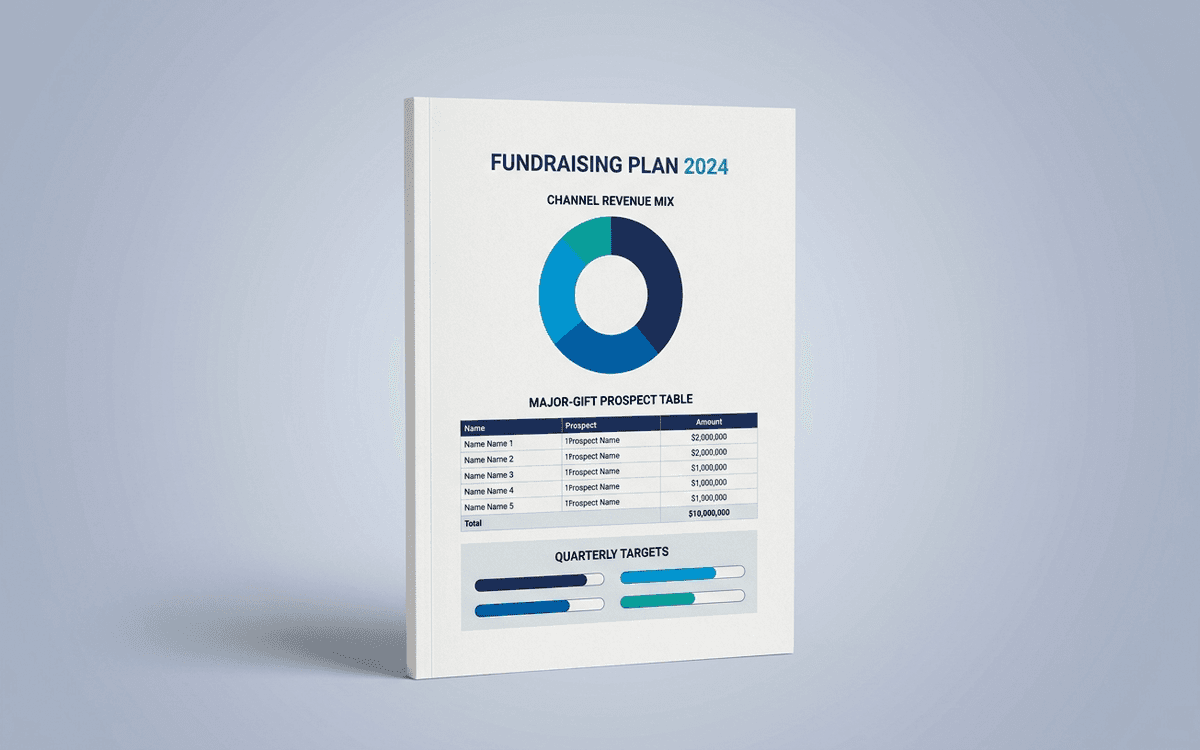
Fundraising Plan Template
A nonprofit fundraising plan template that breaks the year into addressable revenue lines — individual giving, major gifts, grants, events, and earned revenue — with quarterly targets and ownership so the plan survives contact with reality.
- Format:
- Word (.docx) (38 KB)
- Price:
- Free, no paywall
- Published May 2026
Download this template — free
Tell us where to send the link. We'll never share your email.
What's included
- Total fundraising goal for the year
- Revenue mix by channel (individual / major / grants / events / earned)
- Channel-by-channel target and last-year baseline
- Quarterly targets per channel
- Major-gift prospect list with ask amounts
- Grant pipeline with deadlines
- Event calendar with revenue targets
- Donor cultivation calendar
- Owner per channel
- Risks and contingencies (what if a major gift falls through?)
How to use this template
1. Start with PRIOR YEAR by channel, not the goal
Bottom-up beats top-down for fundraising plans. Last year's actuals by channel + realistic growth assumptions beats a top-down goal divided into channels you wish would grow. Start with the floor, then layer growth assumptions.
2. Name the MAJOR-GIFT prospects, don't leave it generic
Major gifts (typically the top 10% of donors driving 60-80% of individual revenue) require named prospects with named cultivation owners. "Find 5 major donors" isn't a plan; "Cultivate [Name 1] for $25K Q2, [Name 2] for $50K Q3" is. Specificity drives execution.
3. Budget for FUNDRAISING COSTS by channel
Each channel has a different cost-to-raise ratio. Events typically cost 25-50% of revenue raised. Direct mail 20-30%. Major gifts 5-10%. Grants 5-15%. Plan with both gross targets and net (after cost), not just gross.
4. Plan for the JANUARY-FEBRUARY GAP
Year-end giving (Nov-Dec) drives 30-40% of annual individual revenue. The Jan-Feb gap after that is real and predictable. Plan it: lower individual giving targets in Q1, ramp grant submissions, schedule major-gift cultivation. Treating Q1 like Q4 in reverse is a recipe for panic in March.
5. Review monthly, replan quarterly
Monthly review with the ED catches drift early. Quarterly replanning adjusts for reality — what closed, what fell through, what new opportunities emerged. Annual plans set in stone get out of date; quarterly replans stay useful.
Who it's for
- Development directors at small-to-mid nonprofits
- Executive directors at nonprofits without a development lead
- Boards reviewing the annual fundraising plan
- Capital campaign leads layering campaigns into operating fundraising
Frequently asked questions
- What should the revenue mix look like for a healthy nonprofit?
- Industry-dependent, but a common rule of thumb: no single source above 35-40% of total revenue. Diversification reduces risk. A nonprofit getting 75% from one foundation is one funder decision away from a crisis. Plans should aim toward diversification, not optimize a single channel.
- How often should we update the fundraising plan?
- Monthly informal check-in, quarterly formal replan, annual full refresh. The quarterly replan is the most important — it incorporates reality and adjusts forward. Plans treated as immutable annual documents are dead within a quarter.
- Who should own the fundraising plan?
- Development director if you have one. Executive director if you don't. Board treasurer or development committee chair reviews and approves. The plan needs ONE primary owner — committee-owned plans drift faster than individual-owned ones.
- What's the difference between annual fundraising and a capital campaign?
- Annual fundraising sustains operations. Capital campaigns fund specific, time-bound projects (building, endowment, expansion). Capital campaigns layer ON TOP of annual fundraising and require dedicated case-for-support, named gifts, and explicit start/end. Don't mix the two in one plan.
- How much should we budget for fundraising costs?
- Industry benchmark: 10-20% of total fundraising revenue spent on fundraising costs. Above 25% raises donor concern. Below 5% usually means underinvestment in development capacity. Cost ratios vary by channel — bake the right ratio into the plan upfront.
More nonprofit templates
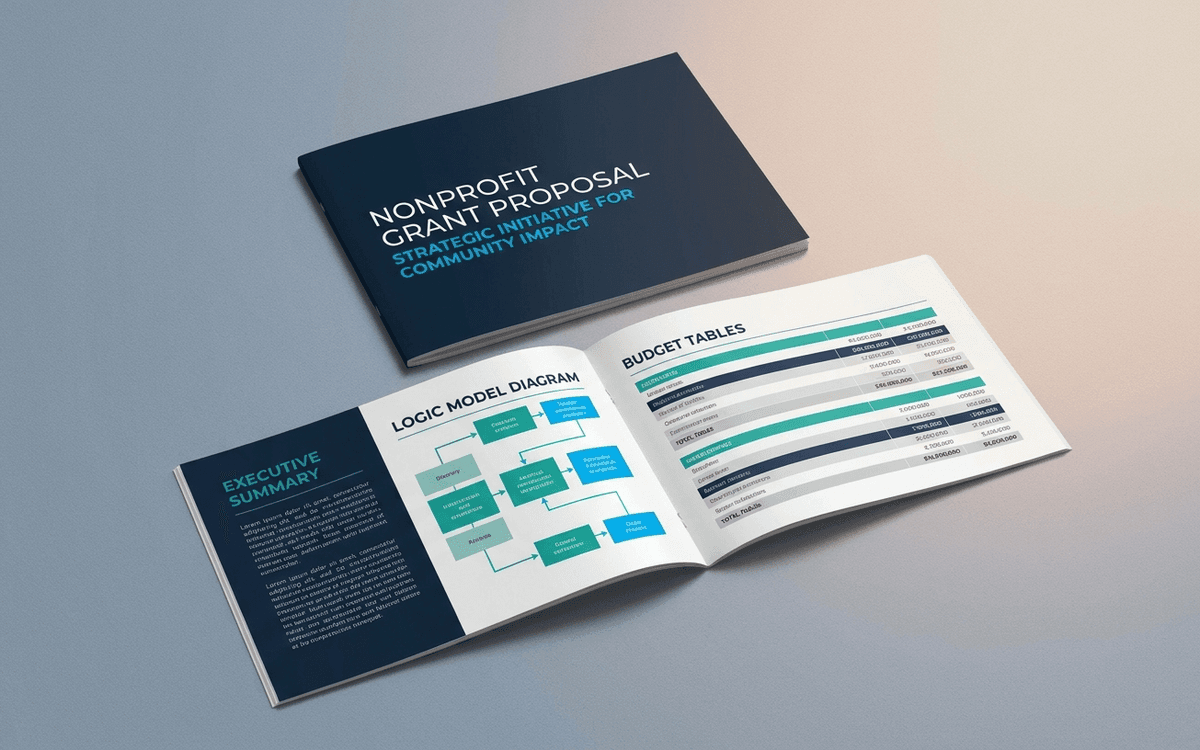
Grant Proposal Template
A grant proposal template that walks a nonprofit through every section funders expect — executive summary, statement of need, program design, logic model, budget narrative, and evaluation plan — so the writing time goes to the actual program, not to figuring out the structure.
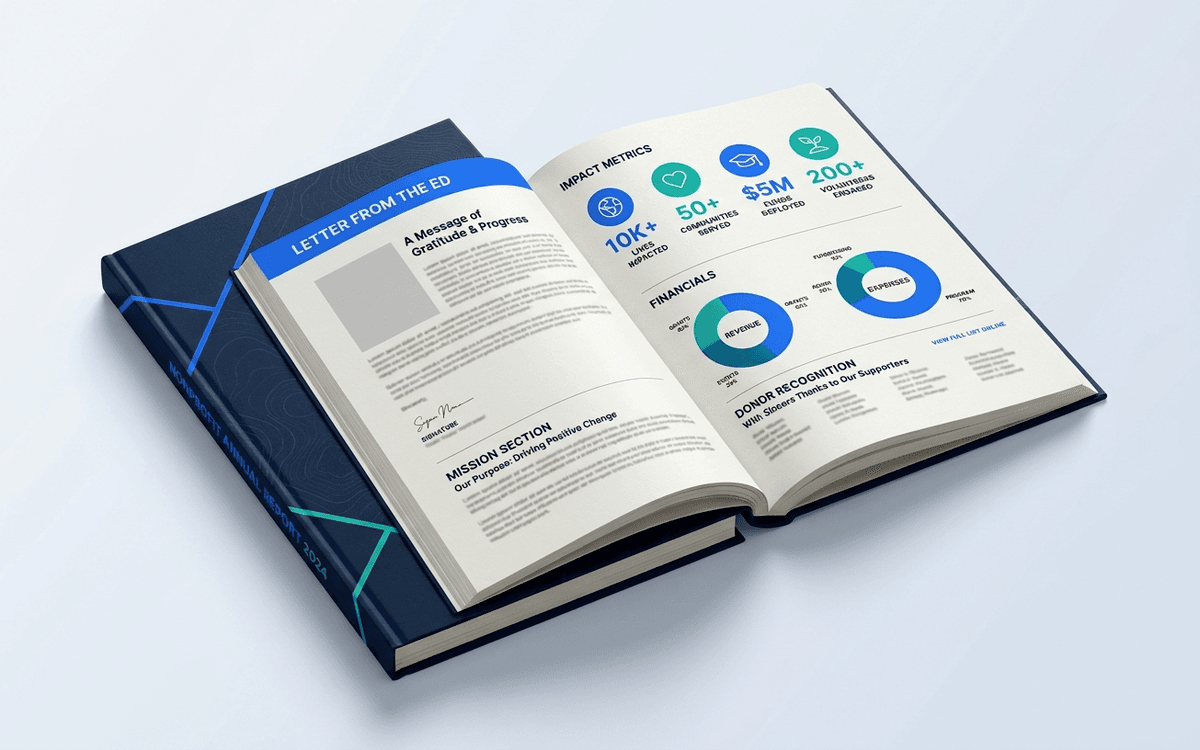
Nonprofit Annual Report Template
A nonprofit annual report template that satisfies three audiences at once — board members who care about governance, donors who care about impact, and grantors who care about financial stewardship — in a 6-to-12-page document that doesn't take three months to write.
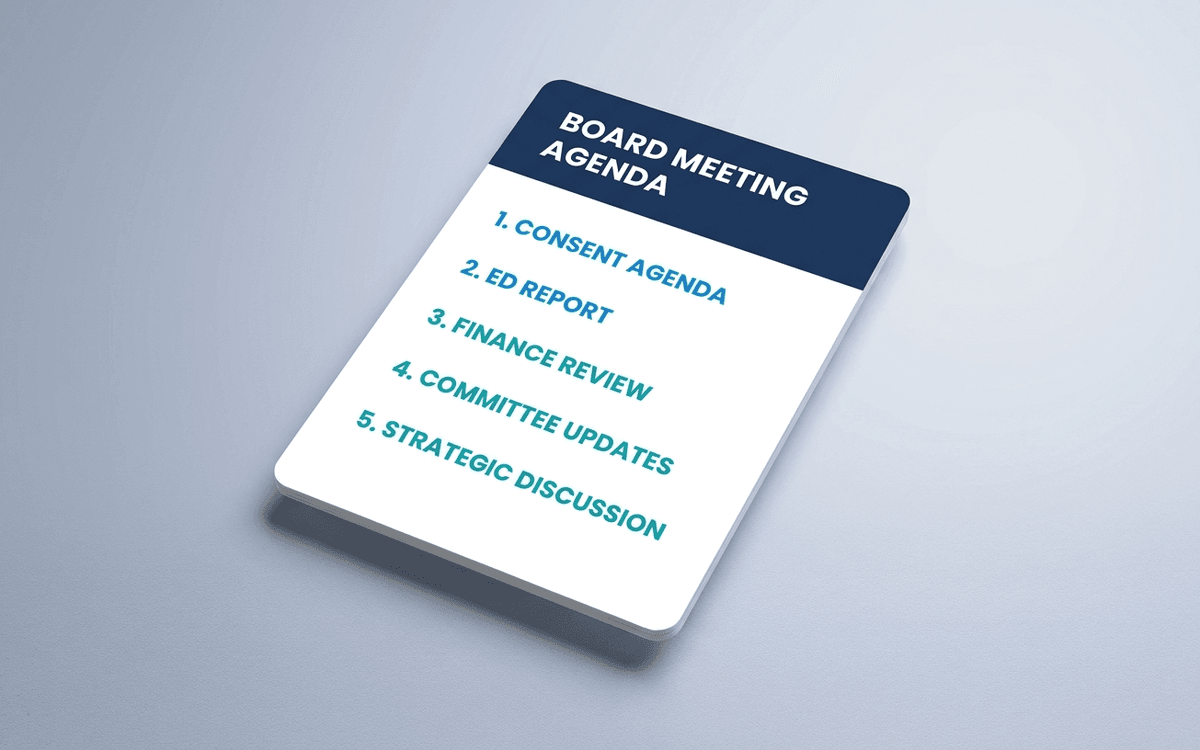
Nonprofit Board Meeting Agenda Template
A nonprofit board meeting agenda template built around the actual cadence of nonprofit governance — ED report, finance review, committee updates, strategic discussion — with a consent agenda that gets routine items out of the way in one vote.
When the template isn't enough
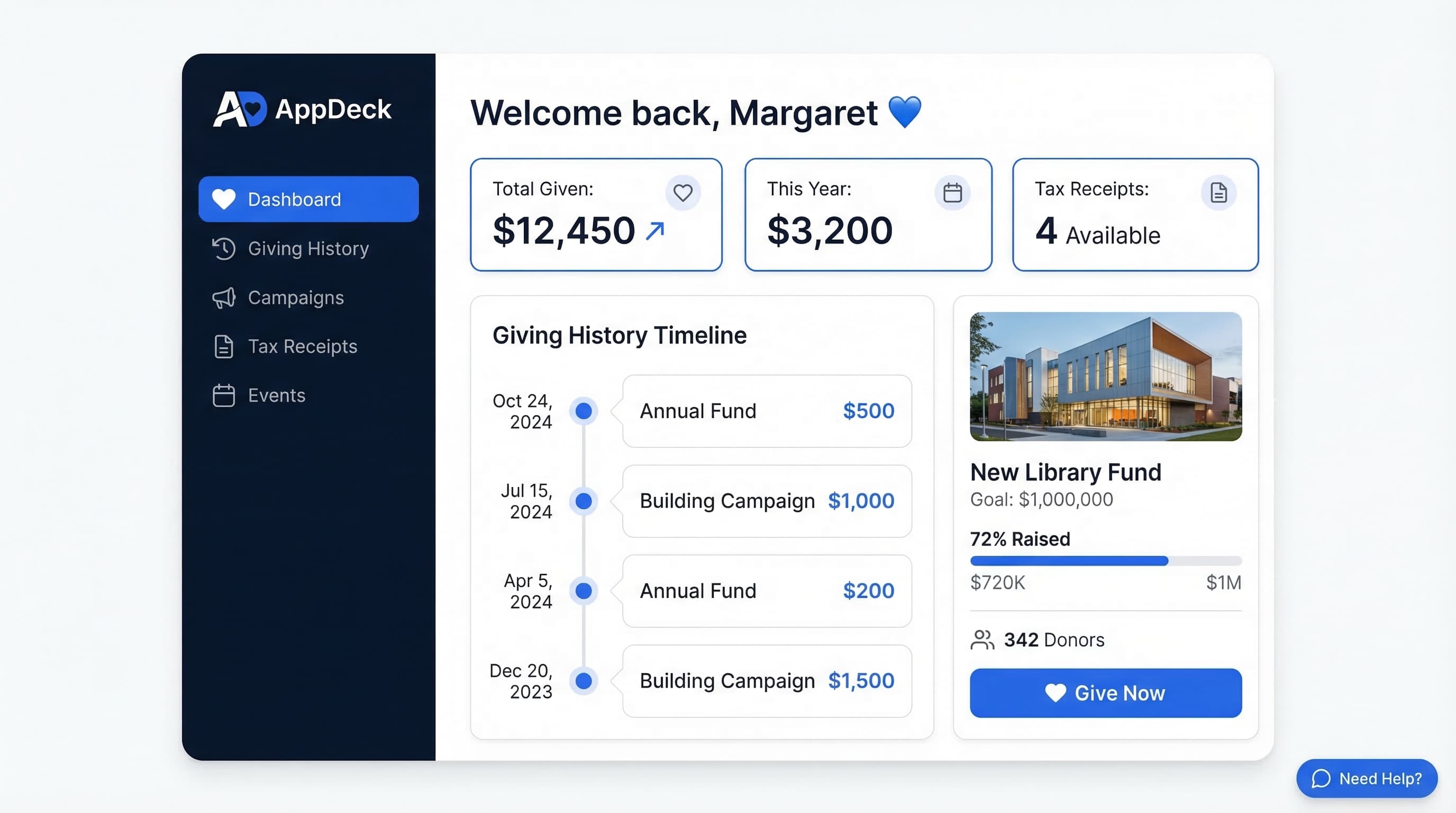
AppDeck's nonprofit portal turns this template into a live workspace — version control, permissions, signatures, and analytics built in.
Related Articles
Learn more about this topic from our expert guides and resources.