
Alumni Engagement Strategies: 15 Proven Tactics for Universities & Schools
Boost alumni engagement with proven strategies for universities, colleges, and schools. Covers alumni portals, events, mentorship programs, giving campaigns, and digital communication.
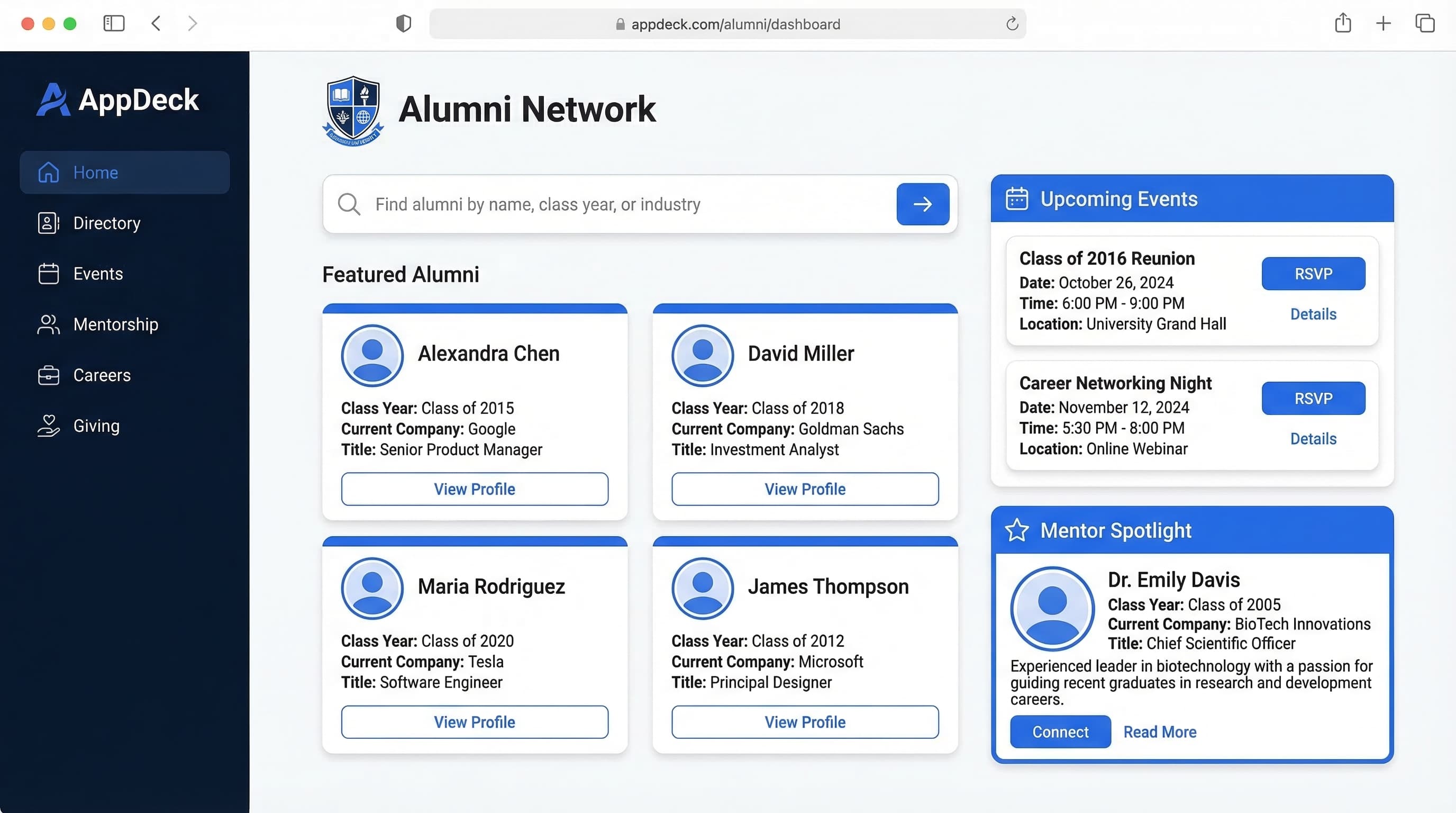
TL;DR: Boost alumni engagement with proven strategies for universities, colleges, and schools. Covers alumni portals, events, mentorship programs, giving campaigns, and digital communication.
Introduction
Alumni engagement drives fundraising, strengthens institutional reputation, and fuels student recruitment. Your alumni are your most powerful ambassadors — they hire your graduates, donate to your programs, mentor your students, and advocate for your institution in their communities and industries. Yet most institutions struggle with alumni participation rates below 20%.
After 10+ years helping universities, colleges, and independent schools build engagement platforms, I've seen the same pattern repeatedly. Institutions that treat alumni engagement as a strategic priority — not just an annual fund appeal — consistently outperform those that only reach out when they need money. The difference isn't budget. It's approach.
In this guide, I'll walk through 15 proven alumni engagement strategies that institutions should implement in 2026, along with the technology and metrics you need to make them work.
What you'll learn:
- How to build a centralized alumni engagement platform
- 15 strategies that increase participation, giving, and advocacy
- How to measure alumni engagement beyond donation dollars
- Why purpose-built alumni portals outperform social media and email
- Technology decisions that make or break your engagement program
See also: Member Engagement Strategies covers the same retention dynamics from the association and professional-society lens — many of the tactics translate directly to alumni programs.
Why Alumni Engagement Matters
Alumni engagement isn't just about fundraising — though that's certainly part of it. Engaged alumni create a virtuous cycle that strengthens every aspect of your institution.
The Numbers Tell the Story
The fundraising connection:
- Institutions with alumni participation rates above 30% raise 3-5x more per alumnus than those below 15%
- Alumni who attend at least one event per year are 4x more likely to donate
- Engaged alumni give 2.5x larger gifts on average compared to disengaged alumni
- Alumni giving accounts for 25-30% of total fundraising at most private institutions
The recruitment impact:
- ✅ 65% of prospective students say alumni reputation influenced their enrollment decision
- ✅ Alumni referrals convert to enrolled students at 2x the rate of other channels
- ✅ Institutions with active alumni networks report 15-20% higher yield rates on admissions offers
- ✅ Alumni interviewers and ambassadors extend institutional reach into new markets
The career placement effect:
- ✅ 70% of jobs are filled through networking — your alumni network is a career engine
- ✅ Institutions with active alumni mentorship programs report 25% higher career placement rates
- ✅ Alumni-to-student hiring pipelines strengthen employer relationships and rankings outcomes
The cost of disengagement:
- ❌ Average alumni participation rate nationally: 16% (and declining)
- ❌ 80%+ of alumni have no meaningful interaction with their institution after graduation
- ❌ Lost alumni = lost donors, lost mentors, lost recruiters, lost advocates
- ❌ Re-engaging lapsed alumni costs 5-7x more than maintaining active engagement
What Good Alumni Engagement Looks Like
Before (transactional):
- Alumni hear from the institution only during annual fund season
- No way for alumni to connect with each other
- Events limited to homecoming and reunion weekends
- Communication is one-size-fits-all mass emails
- No career services available after graduation
- No way to track who's engaged and who's not
After (relational):
- Year-round engagement through a centralized alumni portal
- Searchable directory connecting alumni by class, industry, and location
- Monthly events — virtual and in-person — across multiple cities
- Personalized communication based on interests and engagement history
- Active mentorship program matching alumni with current students
- Real-time engagement data driving strategy decisions
Result: Higher participation rates, increased giving, stronger career outcomes for graduates, and an alumni community that actively promotes your institution.
15 Alumni Engagement Strategies
1. Launch an Alumni Portal
The problem: Alumni information and resources are scattered across your website, email lists, social media groups, and third-party platforms. There's no single place where alumni can connect, find resources, or engage with the institution. Your advancement team has no visibility into who's active and who's not.
The solution: Launch a centralized alumni portal that serves as the digital home for your alumni community.
What your alumni portal should include:
- ✅ Searchable alumni directory (by class year, industry, location, interests)
- ✅ Event calendar and registration
- ✅ Career center with job postings and mentorship matching
- ✅ News and updates from campus
- ✅ Giving history and online donation tools
- ✅ Affinity group spaces and discussion forums
- ✅ Document library (transcripts, certificates, institutional publications)
- ✅ Personal profile management
Why a portal beats scattered tools:
- Single login for everything alumni-related
- Centralized engagement data for your advancement team
- Professional environment (vs. social media noise)
- Institutional branding and control over the experience
- Privacy controls that alumni trust
Implementation tip: AppDeck Alumni Portal provides all of these capabilities with setup in under a day. The key is launching with a core feature set — directory, events, and career resources — then expanding based on alumni feedback. The portal-building patterns that work for alumni overlap heavily with member-portal patterns more broadly; see How to Build a Membership Portal for a deeper implementation framework.
2. Build a Searchable Alumni Directory
The problem: Alumni want to connect with classmates and fellow graduates in their industry or city, but there's no easy way to find each other. LinkedIn is noisy and not institution-specific. Your institution's contact database is locked inside your CRM where alumni can't access it.
The solution: Create a searchable, opt-in alumni directory within your portal that lets alumni find and connect with each other.
Directory search and filter options:
- Graduation year and degree program
- Current industry and job title
- Geographic location (city, state, country)
- Skills and areas of expertise
- Willingness to mentor or host informational interviews
- Affinity group membership
- Volunteer interests
Privacy controls are essential:
- Let alumni choose what information is visible
- Provide opt-in/opt-out at the field level (show my industry but not my employer)
- Require authentication — no public access
- Include clear privacy policies and data usage terms
Engagement driver: A well-built directory gives alumni a reason to log into the portal regularly. When alumni can search by industry and location, they naturally form connections — and those connections keep them tied to the institution.
Key metric: Track directory profile completion rate. Target 60%+ of registered alumni with complete profiles within the first year.
3. Create a Mentorship Program
The problem: Current students and recent graduates need career guidance, industry connections, and professional mentorship. Alumni want to give back but don't know how. Without a structured program, mentorship happens informally (or not at all), benefiting only students who already have connections.
The solution: Build a formal mentorship program that matches alumni mentors with current students based on career interests, industry, and goals.
Mentorship program structure:
Matching criteria:
- Student's career interests aligned with mentor's industry/role
- Geographic proximity (for in-person meetings) or virtual preference
- Shared background (major, extracurriculars, affinity groups)
- Mentor's availability and commitment level
Program format options:
- 1:1 mentorship: Semester-long pairings with monthly check-ins
- Group mentorship: One alumni mentor with 3-5 students in a cohort
- Flash mentorship: One-time 30-minute informational interviews (lower commitment)
- Industry panels: Alumni from the same industry speaking to interested students
Program logistics:
- Application process for both mentors and mentees
- Orientation session covering expectations, communication guidelines, and goals
- Mid-program check-in survey to identify issues early
- End-of-program evaluation from both mentor and mentee
- Recognition event for participating mentors
Impact metrics:
- ✅ Students with mentors report 35% higher career confidence
- ✅ Mentored students receive 20% more job offers within 6 months of graduation
- ✅ Alumni who mentor are 3x more likely to donate to the institution
- ✅ Mentorship programs have the highest satisfaction scores of any alumni engagement activity
Implementation tip: Start with flash mentorship (low commitment) to build your mentor pool, then invite active flash mentors into semester-long pairings. This reduces the barrier to entry and lets you identify your most committed mentors.
4. Host Class Reunions (Virtual & In-Person)
The problem: Reunion events happen every 5 years and only attract 10-15% of a class. Between reunions, there's no touchpoint. Alumni who can't travel to campus miss out entirely. The result: most alumni go decades without any event-based connection to the institution.
The solution: Host annual reunion events for every class — and offer virtual options for those who can't attend in person.
Reunion format options:
In-person events:
- Campus-based reunion weekends (traditional, high-impact)
- Regional alumni meetups in major cities (lower barrier, higher frequency)
- Industry-specific networking events hosted at alumni workplaces
- Family-friendly events (campus tours for alumni kids, picnics, athletic events)
Virtual events:
- Class-year video calls (casual catch-up format, 60-90 minutes)
- Virtual campus tours showcasing new buildings and programs
- Online trivia nights with class-specific questions
- Virtual wine tastings or cooking classes with classmates
Hybrid events:
- Campus events with live streaming for remote alumni
- Simultaneous watch parties in multiple cities for major institutional events
- Virtual Q&A sessions following in-person lectures or panels
Reunion engagement timeline:
- 6 months out: Save the date with early registration discount
- 3 months out: Class committee outreach — personal invitations from classmates
- 1 month out: Final push with event schedule and featured activities
- 1 week out: Logistics reminder with maps, parking, and virtual links
- Day after: Thank you message with photos and highlights
- 1 month after: Survey and save-the-date for next year
Key metric: Track reunion attendance rate by class year and format (in-person vs. virtual). Virtual options typically increase overall reunion participation by 40-60%.
5. Share Alumni Spotlights
The problem: Alumni do remarkable things — build companies, win awards, serve their communities, advance their fields. But most institutions only spotlight alumni during capital campaigns or when someone makes a major gift. The rest of the community never hears these stories.
The solution: Create a consistent alumni spotlight program that celebrates achievements across your entire alumni community — not just the most prominent or wealthiest graduates.
Spotlight content formats:
- Written profiles (500-800 words) on the alumni portal and institutional blog
- Short video interviews (3-5 minutes) for social media and email
- Podcast episodes featuring alumni conversations
- Photo essays documenting alumni at work in their communities
- "Day in the life" features showing diverse career paths
Spotlight selection criteria:
- Career achievements and professional milestones
- Community service and volunteer work
- Entrepreneurship and innovation
- Unique career paths that inspire current students
- Alumni who are active mentors or volunteers for the institution
- Geographic and demographic diversity
Distribution strategy:
- Feature on alumni portal homepage (rotating)
- Monthly spotlight email to full alumni list
- Social media features (LinkedIn, Instagram, Facebook)
- Include in institutional magazine or newsletter
- Share with local media for hometown coverage
Why spotlights drive engagement: Alumni who see people like themselves featured feel a stronger connection to the institution. Spotlights also create a positive feedback loop — featured alumni share their profiles widely, exposing your institution to new audiences. And alumni who are never asked for money but are asked to share their stories often become more generous donors organically.
Key metric: Track spotlight views, shares, and the downstream engagement of featured alumni (do they become more active after being spotlighted? Almost always, yes).
6. Offer Career Services
The problem: Career services typically end at graduation. But alumni — especially those in the first 10 years after graduating — need ongoing career support. Job searches, career transitions, skill development, and professional networking don't stop when you receive your diploma.
The solution: Extend career services to alumni as a lifelong benefit of their degree.
Alumni career services to offer:
Job board and opportunities:
- Alumni-exclusive job postings from employers who hire your graduates
- Internship postings for alumni looking to change careers
- Freelance and consulting opportunity listings
- Job alerts based on industry, location, and experience level
Professional development:
- Resume and LinkedIn profile review services
- Mock interview sessions (conducted by alumni in HR/recruiting roles)
- Salary negotiation workshops
- Career transition coaching for alumni changing fields
Networking resources:
- Industry-specific networking events
- Alumni directory with "open to networking" filters
- Introductions facilitated through the career center
- Annual career fair connecting alumni employers with alumni job seekers
Skill development:
- Access to professional development webinars
- Discounted continuing education courses
- Certificate program offerings for alumni
- Partnership with online learning platforms for alumni discounts
Why this matters for engagement: Career services give alumni a practical, ongoing reason to stay connected. An alumnus who landed their current job through the alumni network is an alumnus who donates, volunteers, and advocates. Career value is the single most compelling engagement driver for alumni under 40.
Key metric: Track job placements facilitated through alumni career services, career event attendance, and the correlation between career service usage and giving behavior.
7. Launch Affinity Groups
The problem: A 55-year-old CEO and a 23-year-old recent graduate share an alma mater, but they have very different interests and needs. One-size-fits-all programming doesn't resonate with either. Alumni need communities within the community — groups where they share more than just a graduation year.
The solution: Create affinity groups that connect alumni around shared identities, interests, industries, and geographies.
Types of affinity groups:
Industry-based:
- Tech & Startups Alumni
- Healthcare & Life Sciences Alumni
- Finance & Banking Alumni
- Education & Nonprofit Alumni
- Law & Government Alumni
Identity-based:
- Women Alumni Network
- First-Generation Alumni
- International Alumni
- LGBTQ+ Alumni Alliance
- Veterans Alumni Network
Interest-based:
- Alumni Entrepreneurs Club
- Alumni Book Club
- Alumni Athletes Network
- Alumni Arts & Culture Group
- Alumni Sustainability & Social Impact
Regional chapters:
- City-based chapters (New York, San Francisco, Chicago, London, etc.)
- State or country chapters for smaller alumni populations
- Virtual chapters for alumni in areas without critical mass
Affinity group structure:
- Volunteer leadership team (chair, vice chair, events coordinator, communications lead)
- Institutional staff liaison for support and resources
- Annual programming calendar with at least quarterly activities
- Dedicated space within the alumni portal for group communication and resources
- Budget allocation for group events and activities
Why affinity groups work: They create a sense of belonging that the institution alone can't provide. An alumnus might not feel connected to a 50,000-person alumni body, but they feel deeply connected to a 200-person network of fellow entrepreneurs from their school. Affinity groups turn passive alumni into active community members.
Key metric: Track affinity group membership, event attendance by group, and the engagement and giving rates of affinity group members vs. non-members (group members consistently give at 2-3x the rate).
8. Personalize Communication
The problem: Your advancement office sends the same email to every alumnus — whether they graduated last year or 40 years ago, whether they live locally or overseas, whether they're engaged or haven't opened an email in three years. The result: declining open rates, rising unsubscribe rates, and alumni who feel like a number rather than a valued community member.
The solution: Segment your alumni database and personalize communications based on who they are and how they engage.
Segmentation dimensions:
Demographic:
- Class year and graduation decade
- Degree program and school/college
- Geographic location
- Career stage (early career, mid-career, senior/retired)
Behavioral:
- Engagement level (highly active, moderately active, lapsed, never engaged)
- Event attendance history
- Giving history (current donor, lapsed donor, never given)
- Portal login frequency
- Volunteer activity
Interest-based:
- Self-reported interests (career, mentorship, social, athletics, arts)
- Affinity group membership
- Past event types attended
- Content engagement (what articles and updates they click on)
Communication personalization examples:
| Segment | Message Focus | Tone | Frequency |
|---|---|---|---|
| Recent graduates (0-5 years) | Career services, mentorship, networking | Casual, practical | Bi-weekly |
| Young alumni (5-15 years) | Professional development, giving, events | Professional, aspirational | Monthly |
| Mid-career (15-30 years) | Mentorship, leadership roles, major gifts | Strategic, recognition-focused | Monthly |
| Senior alumni (30+ years) | Legacy, campus updates, reunion | Warm, nostalgic | Monthly |
| Lapsed alumni | Re-engagement, low-commitment opportunities | Welcoming, no-ask | Quarterly |
Key principle: The right message to the right person at the right time. A recent graduate doesn't need a planned giving brochure. A 60-year-old alumnus doesn't need an entry-level job board. Personalization shows alumni you know who they are and value them as individuals.
Key metric: Track open rates, click rates, and unsubscribe rates by segment. Personalized communications typically achieve 2-3x higher open rates than mass emails.
9. Create Giving Campaigns
The problem: Annual fund appeals feel repetitive and impersonal. Alumni receive the same letter every year asking for money, with no connection to how their gift makes a difference. Participation declines year over year as alumni tune out the noise.
The solution: Design giving campaigns that are creative, social, competitive, and tied to tangible impact. The discipline and tooling here overlap substantially with broader nonprofit donor management; see Donor Management Best Practices for the stewardship-cycle frameworks that translate directly to alumni giving programs.
Campaign types:
Annual fund with a twist:
- Themed giving days (Founders Day, school anniversary)
- 24-hour or 48-hour giving challenges with real-time progress tracking
- Participation-focused messaging ("Your gift of any amount counts — help us reach 1,000 donors")
- Impact stories showing exactly where gifts go
Class challenges:
- Class-year giving competitions (which class reaches the highest participation rate?)
- Reunion year giving goals (milestone classes: 5th, 10th, 25th, 50th)
- Class agent programs with peer-to-peer outreach
- Leaderboards showing class standings in real-time
Matching gift campaigns:
- Corporate matching gift education (many alumni don't know their employer matches)
- Challenge gifts from major donors ("A generous alumnus will match every gift up to $100K")
- Day-of matching during giving days to create urgency
Crowdfunding for specific projects:
- Student scholarship funds (name the student, share their story)
- Department or program-specific campaigns
- Capital projects with visual progress meters
- Student organization and club funding
Giving campaign best practices:
- ✅ Lead with impact, not need ("Your gift sends a first-gen student to summer research")
- ✅ Make it social — leaderboards, class competitions, social media sharing
- ✅ Offer multiple giving levels with specific impact at each level
- ✅ Thank donors immediately, personally, and publicly (with permission)
- ✅ Report back on results within 30 days of campaign close
- ❌ Don't lead with dollar goals — lead with participation goals
- ❌ Don't ask lapsed alumni for money as their first re-engagement touchpoint
Key metric: Track participation rate (not just dollars raised). A campaign that raises $500K from 200 donors is less strategically valuable than one that raises $300K from 2,000 donors. Participation builds habit, and habit builds lifetime giving.
10. Leverage Social Media
The problem: Your institution has social media accounts, but they're managed by the marketing team and focused on student recruitment. Alumni content is an afterthought — the occasional homecoming photo or giving day post. Meanwhile, alumni have created their own unofficial Facebook groups and LinkedIn networks that your institution has no visibility into.
The solution: Build an intentional alumni social media strategy that complements (not replaces) your alumni portal.
Platform-specific strategies:
LinkedIn:
- Official alumni group with active moderation and regular content
- Alumni career achievement posts (promotions, awards, new ventures)
- Job postings shared by alumni employers
- Professional development content and industry insights
- Alumni panel discussions via LinkedIn Live
Facebook:
- Class-year groups for social connection and reunion planning
- Regional alumni chapter groups
- Photo sharing from events and campus milestones
- Casual community building and nostalgia content
Instagram:
- Alumni spotlight stories and reels
- Behind-the-scenes campus content that alumni enjoy
- Event highlights and recaps
- User-generated content from alumni using branded hashtags
Social media + portal integration:
- Social media drives awareness and casual engagement
- Portal handles deeper engagement (directory, mentorship, career services, giving)
- Use social to promote portal features and drive registration
- Share portal content (spotlights, events) on social channels
- Track which social channels drive the most portal sign-ups
Key principle: Social media is the front porch; your alumni portal is the living room. Social media creates visibility and casual touchpoints. The portal creates meaningful engagement and community. You need both, but don't confuse one for the other.
Key metric: Track social media followers, engagement rates, and conversion to portal registration and event attendance.
11. Host Webinars & Workshops
The problem: Alumni professional development typically means one annual conference that 2% of alumni attend. The rest of the year, there's nothing. Alumni looking for ongoing learning and skill development don't think of their alma mater as a resource.
The solution: Host regular webinars and workshops led by alumni experts, covering topics that provide real professional and personal value.
Webinar and workshop topics:
Career and professional development:
- Industry trends and insights (led by alumni leaders in that field)
- Leadership and management skills
- Career transition strategies
- Negotiation and communication skills
- Personal branding and networking
Entrepreneurship:
- Starting a business: lessons from alumni founders
- Fundraising and venture capital (led by alumni investors and founders)
- Scaling a business: growth-stage challenges
- Side hustle to full-time: making the leap
Personal enrichment:
- Financial planning at every life stage
- Health and wellness for busy professionals
- Travel and cultural experiences
- Creative pursuits (writing, art, photography)
Institutional connection:
- Faculty lecture series open to alumni
- Research updates from departments
- Campus master plan and future vision
- Student project showcases
Webinar logistics:
- Monthly cadence (predictable, sustainable)
- 45-60 minutes including Q&A
- Recorded and archived in the alumni portal for on-demand viewing
- Promoted 3 weeks in advance through email, social media, and portal
- Follow-up email with recording link, key takeaways, and related resources
Why this works: Webinars provide value that doesn't require travel, cost, or significant time commitment. They position the institution as a lifelong learning partner. And the alumni who present become more deeply engaged themselves — they're investing their expertise in the community.
Key metric: Track webinar registration, attendance (live vs. on-demand), satisfaction scores, and repeat attendance rates. Target 100+ live attendees per session within the first year.
12. Mobile-First Communication
The problem: Your alumni emails are designed for desktop. Your portal isn't optimized for mobile. Your event registration requires a desktop browser. But 65% of alumni engage with institutional communications on their phones — and that number rises to 80% for alumni under 35.
The solution: Design every alumni touchpoint for mobile first, desktop second.
Mobile-first priorities:
Email design:
- Single-column layouts that render cleanly on any screen
- Large, tappable buttons for CTAs (event registration, giving, portal login)
- Short subject lines (40 characters or fewer)
- Preview text optimized for mobile email clients
- Images that load quickly on cellular connections
Portal experience:
- Responsive design that works seamlessly on phones and tablets
- Touch-friendly navigation and form fields
- Quick-loading pages (under 3 seconds on cellular)
- Mobile-optimized directory search
- One-tap event registration and donation forms
Event communication:
- Mobile-friendly event pages with maps, directions, and calendar integration
- QR codes for easy check-in at in-person events
- SMS reminders for registered attendees (day before and morning of)
- Post-event surveys optimized for mobile completion
Giving experience:
- Mobile-optimized donation forms (minimal fields, auto-fill support)
- Apple Pay and Google Pay integration
- Text-to-give options for giving days and events
- Mobile-friendly giving receipts and acknowledgments
Key statistic: Institutions that optimize their giving forms for mobile see a 20-30% increase in online donations. Every extra field or confusing layout on a mobile giving form costs you donors.
Key metric: Track mobile vs. desktop engagement across email, portal, and giving. If mobile engagement is below 50%, your mobile experience needs work.
13. Recognize Volunteers
The problem: Your most engaged alumni — the ones who serve on boards, organize events, mentor students, and champion your institution — often receive little recognition. Over time, even the most dedicated volunteers burn out if they feel unappreciated. And potential volunteers see no incentive to step up.
The solution: Create a formal volunteer recognition program that publicly celebrates alumni who give their time and talent.
Recognition tiers:
Everyday recognition:
- Personal thank-you notes from advancement staff after every volunteer activity
- Social media shoutouts for volunteer contributions
- Mention in alumni portal news and newsletters
- Small branded gifts (pins, stickers, apparel) as thank-you tokens
Annual recognition:
- Volunteer appreciation event (in-person or virtual)
- Annual volunteer report highlighting collective impact
- Feature in alumni magazine or annual report
- Service milestone recognition (5, 10, 15, 20+ years of volunteer service)
Premier recognition:
- Named volunteer awards (Alumni Volunteer of the Year, Mentor of the Year, etc.)
- Recognition at institutional ceremonies and events
- Profile features in institutional publications
- Invitation to exclusive leadership events and advisory councils
Volunteer engagement best practices:
- ✅ Make volunteering easy — clear roles, time commitments, and expectations
- ✅ Provide training and resources so volunteers feel prepared
- ✅ Connect volunteers with each other to build a volunteer community
- ✅ Offer multiple levels of commitment (from 2-hour events to year-long board service)
- ✅ Ask for feedback and act on it — volunteers are your best source of program improvement ideas
- ✅ Share the impact of their work ("Your mentorship program served 150 students this year")
Why recognition matters: Recognized volunteers recruit other volunteers. When alumni see peers celebrated for their contributions, volunteering becomes aspirational. A strong volunteer recognition program can double your active volunteer pool within two years.
Key metric: Track volunteer retention rate year-over-year, new volunteer recruitment, and volunteer hours contributed. Target 70%+ annual retention for active volunteers.
14. Share Institutional Updates
The problem: Alumni feel disconnected from what's happening on campus. They graduated and moved on, and now they only hear from the institution when it's asking for money or promoting an event. The emotional connection to the institution fades as alumni feel increasingly out of the loop.
The solution: Keep alumni informed and connected with regular institutional updates that make them feel like insiders, not outsiders.
Content categories:
Campus and facilities:
- New building openings and renovation projects
- Campus master plan updates with renderings and timelines
- Sustainability initiatives and campus improvements
- Virtual campus tours showing what's changed
Academic and research:
- New program launches and curriculum updates
- Faculty research highlights and publications
- Student and faculty awards and recognition
- Ranking improvements and accreditation achievements
Athletics and student life:
- Athletic highlights and championship results
- Student organization achievements
- Performing arts and cultural events
- Community service and social impact initiatives
People and milestones:
- New president, dean, or faculty introductions
- Retired faculty tributes
- Enrollment milestones and demographic highlights
- Institutional anniversary celebrations
Distribution channels and cadence:
| Channel | Frequency | Content Focus |
|---|---|---|
| Alumni portal news feed | Ongoing | All categories, curated |
| Email newsletter | Monthly | Top stories, upcoming events |
| Alumni magazine | Quarterly or bi-annually | In-depth features, class notes |
| Social media | 3-5x per week | Bite-sized updates, visual content |
| President's letter | Annually | Vision, achievements, gratitude |
Key principle: The goal is to make alumni feel proud, informed, and connected — without overwhelming them. Every update should answer the question: "Why should an alumnus care about this?" If it only matters to current students or internal stakeholders, it's not alumni content.
Key metric: Track email open rates, portal news engagement, and alumni satisfaction survey scores on "feeling connected to the institution."
15. Track & Measure Engagement
The problem: Most advancement offices measure alumni engagement by one metric: dollars donated. But giving is a lagging indicator. By the time an alumnus stops donating, you've already lost them. And this approach completely ignores the 80%+ of alumni who contribute in non-financial ways — or who would, if you asked.
The solution: Implement a comprehensive alumni engagement scoring model that captures multiple dimensions of engagement.
Engagement scoring dimensions:
| Dimension | Metrics | Weight |
|---|---|---|
| Participation | Portal logins, email opens, content views | 20% |
| Events | Event registration, attendance (virtual + in-person) | 20% |
| Giving | Donation frequency, amount, consistency | 20% |
| Mentorship | Mentor registration, active pairings, hours contributed | 15% |
| Volunteerism | Volunteer roles, hours, leadership positions | 15% |
| Advocacy | Referrals, social media engagement, testimonials | 10% |
Engagement score tiers:
- 5 — Champion: Active across 4+ dimensions; high-frequency engagement
- 4 — Engaged: Active across 2-3 dimensions; regular participation
- 3 — Connected: Occasional participation; opens emails, attends 1-2 events per year
- 2 — Passive: Minimal interaction; may open emails but rarely acts
- 1 — Disengaged: No meaningful interaction in 12+ months
How to use engagement scores:
For Champions (score 5):
- Invite to leadership roles, advisory boards, speaking opportunities
- Major gift cultivation
- Ask them to recruit other alumni
For Engaged alumni (score 4):
- Deepen involvement with mentorship, volunteering, and affinity groups
- Upgrade giving through personalized cultivation
- Feature in spotlights and recognition programs
For Connected alumni (score 3):
- Increase touchpoints with relevant, personalized content
- Invite to low-commitment activities (webinars, flash mentorship)
- Introduce giving at accessible levels
For Passive alumni (score 2):
- Re-engagement campaign with value-first messaging (career resources, networking)
- Survey to understand interests and barriers
- Avoid asking for money until engagement increases
For Disengaged alumni (score 1):
- Identify and fix data issues (wrong email, unsubscribed)
- Peer-to-peer outreach from classmates
- Major event invitations (milestone reunions, institutional celebrations)
Key principle: Measure what you want to grow. When you measure only giving, you optimize only for giving. When you measure participation, events, mentorship, and volunteerism alongside giving, you build a holistic engagement strategy that grows all dimensions.
Key metric: Track the distribution of alumni across engagement tiers over time. Success looks like the percentage in tiers 3-5 growing quarter over quarter.
Measuring Alumni Engagement
Beyond individual engagement scores, your advancement team needs program-level metrics to evaluate whether your strategies are working.
Key Performance Indicators
Participation metrics:
- Overall alumni participation rate (any engagement activity / total alumni)
- Portal adoption rate (registered users / total alumni)
- Active portal users (logged in within last 90 days / registered users)
- Email engagement rate (opens + clicks / delivered)
Event metrics:
- Total event attendance (in-person + virtual)
- Unique alumni attendees per year
- Event satisfaction scores (post-event surveys)
- Repeat attendance rate (alumni attending 2+ events per year)
Giving metrics:
- Alumni giving participation rate (donors / solicited alumni)
- Average gift size by segment
- Donor retention rate (donors who give again the following year)
- New donor acquisition rate
Mentorship metrics:
- Active mentor-mentee pairings
- Mentorship program completion rate
- Mentor and mentee satisfaction scores
- Career outcomes for mentored students
Volunteer metrics:
- Active volunteer count
- Volunteer retention rate
- Volunteer hours contributed
- Volunteer-to-donor conversion rate
Reporting Cadence
| Report | Frequency | Audience |
|---|---|---|
| Engagement dashboard | Real-time | Advancement staff |
| Monthly engagement summary | Monthly | Advancement leadership |
| Quarterly board report | Quarterly | Board of trustees / advancement committee |
| Annual engagement report | Annually | Full institution, alumni community |
Key principle: Data without action is just noise. Every metric should have a target, and every target should trigger a specific strategy when it's above or below expectations.
Technology for Alumni Engagement
The biggest barrier to effective alumni engagement isn't strategy — it's execution. Advancement teams know what they should be doing. They just don't have the tools to do it efficiently at scale.
Alumni Portals vs. Social Media vs. Email
Social media (Facebook, LinkedIn):
- ✅ Low barrier to entry, wide reach
- ❌ You don't own the platform, audience, or data
- ❌ Algorithm changes can destroy your reach overnight
- ❌ Limited functionality (no directory, mentorship matching, or giving integration)
- ❌ Unprofessional environment for institutional engagement
- Best for: Awareness, casual engagement, content distribution
Email:
- ✅ Direct communication channel you control
- ✅ Good for announcements and campaign-specific messaging
- ❌ One-way communication (no community building)
- ❌ Declining open rates (average: 18-22% for higher ed)
- ❌ No self-service capabilities for alumni
- Best for: Announcements, campaigns, driving traffic to portal
Purpose-built alumni portal:
- ✅ You own the platform, data, and alumni experience
- ✅ Full functionality: directory, events, mentorship, career services, giving
- ✅ Engagement data captured and actionable
- ✅ Institutional branding and professional environment
- ✅ Privacy controls that alumni trust
- ✅ Integration with your CRM and advancement systems
- Best for: Core engagement hub, community building, data-driven strategy
The right approach: Use all three — but treat your alumni portal as the hub. Social media drives awareness and traffic. Email drives action and campaigns. The portal delivers the experience and captures the data.
What to Look for in an Alumni Portal
Must-have capabilities:
- Searchable alumni directory with robust filtering
- Event management and registration
- Career center with job board and mentorship matching
- Communication tools (messaging, announcements, newsletters)
- Giving integration (or seamless linking to your giving platform)
- Engagement analytics and reporting
- Mobile-responsive design
- Custom branding (your institution's identity, not the vendor's)
Nice-to-have capabilities:
- Affinity group spaces with group-specific content and discussions
- Document management (transcripts, certificates)
- Integration with your CRM (Raiser's Edge, Salesforce, Slate)
- Class notes submission and management
- Volunteer management tools
- Survey and feedback tools
AppDeck Alumni Portal covers all the must-haves with a modern, intuitive interface that alumni actually want to use. Setup takes less than a day, and pricing works for institutions of any size — from independent schools to large universities.
For a deeper dive into portal capabilities and selection criteria, see our Complete Guide to Membership Portals.
Frequently Asked Questions
What is a healthy alumni engagement rate?
There is no single benchmark because "engagement" itself is multidimensional. Useful targets to anchor on: 30-40% of alumni reachable by email, 15-25% logged into your portal in the last 90 days, 8-15% giving participation (higher for independent schools, lower for large public universities), and 5-10% active in mentorship, volunteering, or affinity groups. A composite engagement score across participation, events, giving, mentorship, and volunteerism tells a more honest story than any single metric. If your portal adoption is below 20%, fix that first -- the rest of your KPIs will follow.
Is an alumni portal better than a private LinkedIn or Facebook group?
For long-term engagement, yes. Social media groups have low barriers to entry but you do not own the audience, the data, or the experience -- an algorithm change can erase your reach overnight, and you cannot run mentorship matching, a job board, or giving integration inside a Facebook group. A purpose-built portal captures actionable engagement data, supports institutional branding, and gives alumni a professional environment they trust with their employment history and contact info. Use social for awareness and email for campaigns, but treat the portal as the hub.
How often should we communicate with alumni?
Twice a month is the sweet spot for most institutions: one substantive newsletter or program update plus one targeted message based on segment (class year, geography, or affinity group). Daily is spam, monthly is forgettable. Layer event invitations, giving appeals, and personalized milestone messages (work anniversaries, life events) on top of that base cadence, but cap total touches at six to eight per month. Watch your unsubscribe and email engagement rates -- if open rates drop below 15% or unsubscribes climb above 0.5% per send, you are over-communicating.
Which institutions get the most value from a dedicated alumni portal?
Mid-sized independent schools (1,000-10,000 living alumni) and small-to-mid liberal arts colleges (5,000-50,000 alumni) typically see the fastest payback. They have enough alumni to justify the technology but small enough advancement teams that manual processes are unsustainable. Large universities with 100,000+ alumni also benefit but usually need integration with an enterprise CRM like Salesforce or Slate. Institutions under 500 alumni can often get by with a robust CRM and well-managed email -- a portal is overkill at that scale.
When should we replace our existing alumni database with a portal?
When alumni cannot self-serve. If your team is fielding routine requests for directory updates, event registrations, transcript requests, or giving receipts, your database is functioning as a back-office record system rather than an alumni experience. Other triggers: portal-style competitor institutions are pulling your alumni's engagement, your participation rate has been flat or declining for three years, or you cannot answer the question "which alumni are most engaged right now?" without exporting to spreadsheets. The database stays; you add a portal on top.
Conclusion
Alumni engagement is too important to leave to annual fund letters and occasional homecoming events. The 15 strategies in this guide provide a framework that builds genuine, lasting connections between your institution and your alumni — connections that drive giving, mentorship, career outcomes, and institutional reputation.
Key takeaways:
- Build a centralized hub — An alumni portal gives your community a home and your team the data to make smart decisions
- Make it about them, not you — Career services, mentorship, and networking give alumni reasons to engage that have nothing to do with fundraising
- Personalize everything — A 23-year-old recent grad and a 60-year-old emeritus board member need completely different experiences
- Measure holistically — Engagement scoring across participation, events, giving, mentorship, and volunteerism paints the full picture
- Go mobile-first — 65% of alumni engage on their phones; meet them where they are
- Recognize your volunteers — The 5% who do the most deserve your loudest appreciation
- Use the right technology — A purpose-built portal outperforms scattered social media groups and email lists every time
Where to start: If you're doing none of these today, start with strategies #1 (alumni portal), #3 (mentorship program), and #8 (personalized communication). These three deliver the highest immediate impact on engagement and set the foundation for everything else.
If you're ready to give your alumni community a modern, centralized home, AppDeck Alumni Portal provides the directory, events, career services, mentorship matching, and engagement analytics you need — with setup in under a day.
Related reading:

Founder & CEO, AppDeck
Serial entrepreneur with 20+ years building B2B software companies. Former executive managing 2,800+ employees across three continents. Vik reviews all AppDeck content for accuracy and practical relevance.
Share this article
Explore Related Solutions
Related Articles
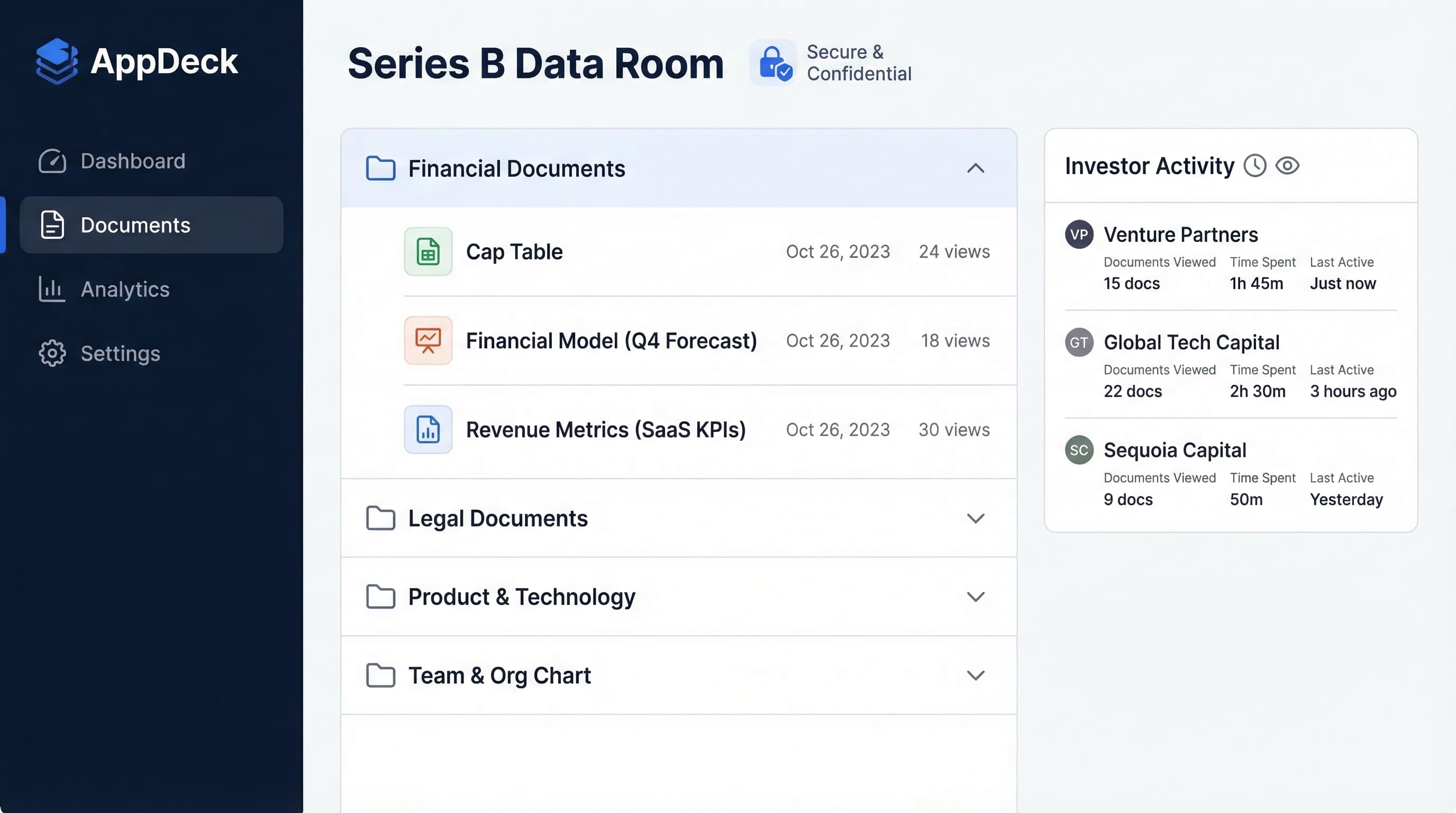
10 AI Fundraising Tools That Actually Help Startups Raise Capital
The best AI tools for startup fundraising in 2026. Investor matching, pitch deck builders, CRM automation, due diligence prep, and outreach tools.
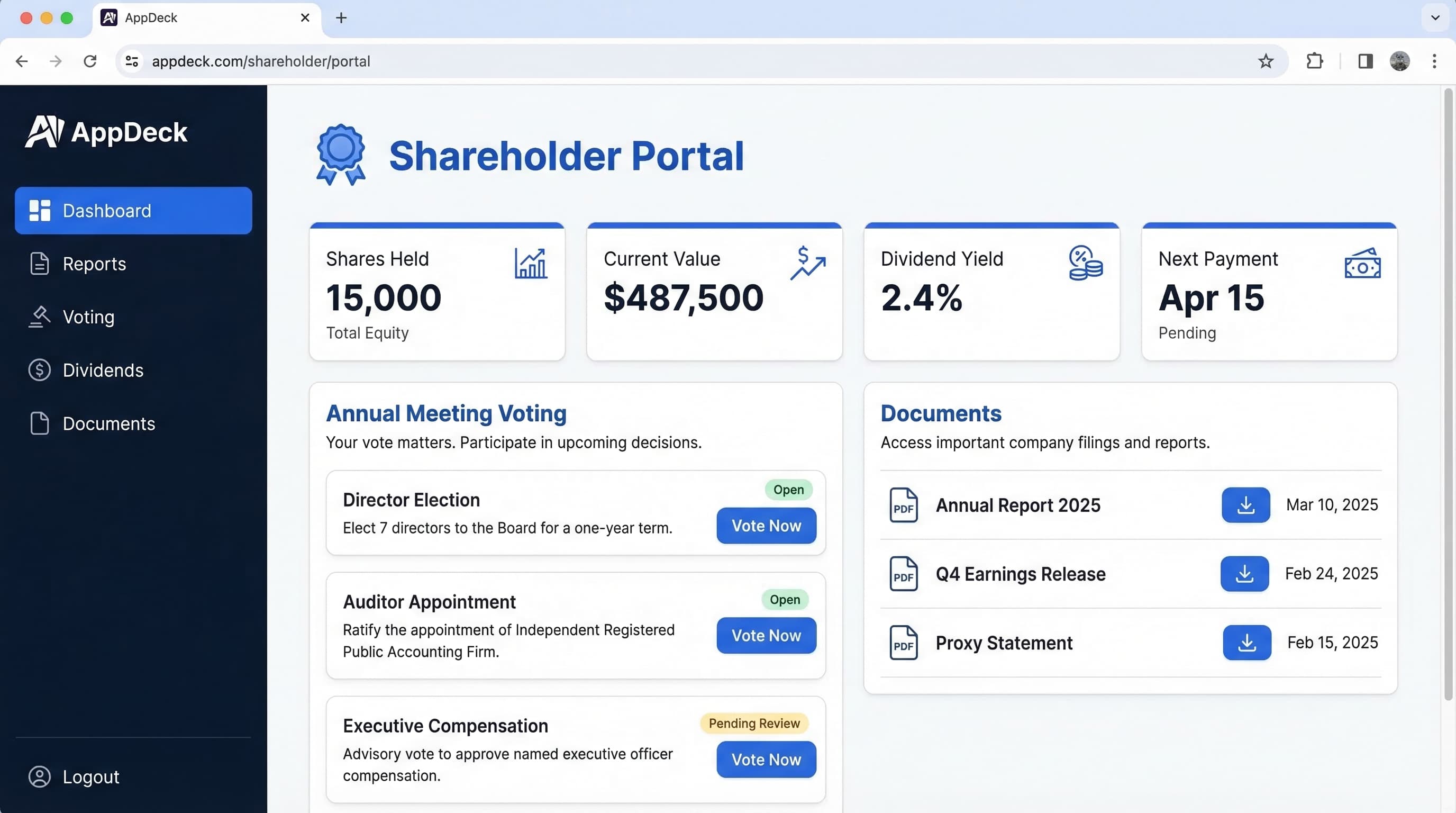
Annual Shareholder Meeting Guide: Planning, Agenda & Best Practices
Complete guide to planning and running annual shareholder meetings (AGMs). Includes timelines, agenda templates, proxy voting, virtual meeting setup, and compliance requirements.
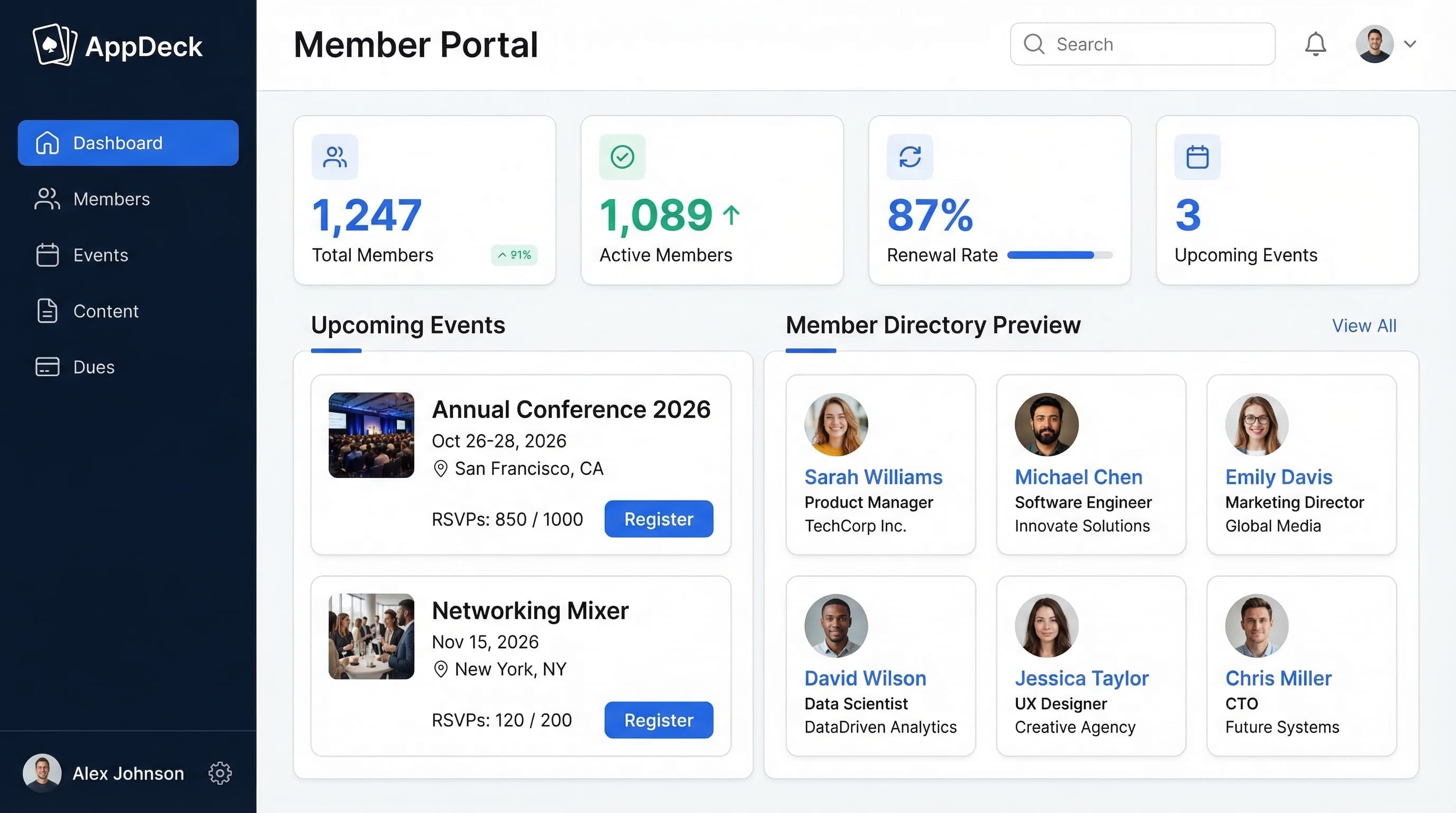
Association Management Best Practices: 12 Strategies for Modern Associations
12 association management best practices for 2026. Covers member portals, dues automation, event management, board governance, communication, and technology modernization.