
Annual Shareholder Meeting Guide: Planning, Agenda & Best Practices
Complete guide to planning and running annual shareholder meetings (AGMs). Includes timelines, agenda templates, proxy voting, virtual meeting setup, and compliance requirements.
TL;DR: Complete guide to planning and running annual shareholder meetings (AGMs). Includes timelines, agenda templates, proxy voting, virtual meeting setup, and compliance requirements.
Every year, thousands of companies convene their shareholders for the single most important governance event on the corporate calendar: the annual shareholder meeting. Whether you call it an annual general meeting (AGM), an annual meeting of stockholders, or simply "the annual meeting," the purpose is the same — give the people who own the company a voice in how it's run.
I've sat on both sides of the table. As a founder, I've presented to investors who had pointed questions about burn rate. As a board member, I've watched companies fumble through poorly planned AGMs that eroded shareholder confidence in under an hour. The difference between a meeting that builds trust and one that destroys it almost always comes down to preparation.
This guide covers everything you need to plan and run a successful annual shareholder meeting — from the 90-day planning timeline to the agenda template, proxy voting mechanics, virtual meeting logistics, and the compliance requirements that trip up even experienced corporate secretaries.
What Is an Annual Shareholder Meeting?
An annual shareholder meeting is a formal gathering where a company's shareholders exercise their ownership rights. They vote on directors, ratify the auditor, approve executive compensation, and raise questions about the company's performance and strategy.
For public companies, the annual meeting is a legal requirement under state corporate law and SEC regulations. For private companies with outside investors, it's typically required by the company's bylaws or shareholder agreement. Either way, it's the one time each year when management is accountable directly to the people who own the business.
The core functions of an annual shareholder meeting include:
- Electing or re-electing board directors — shareholders vote on who represents their interests
- Ratifying the independent auditor — confirming the firm that audits the company's financials
- Approving executive compensation — the "say-on-pay" vote required for public companies
- Voting on shareholder proposals — resolutions submitted by shareholders on governance, ESG, or other matters
- Reviewing business performance — CEO and CFO presentations on results and strategy
- Q&A with management — the open forum where shareholders ask questions directly
Skip any of these, and you're inviting legal liability, regulatory scrutiny, or simply the quiet erosion of investor confidence that shows up later as a depressed share price or a difficult fundraise.
Who Needs to Hold Annual Shareholder Meetings?
Not every company runs the same type of annual meeting, but more organizations are required to hold one than most people realize.
Public Companies
If you're listed on a U.S. stock exchange, annual shareholder meetings are mandatory. The SEC requires public companies to hold an annual meeting for the election of directors, and both the NYSE and NASDAQ have specific listing requirements around meeting frequency, proxy disclosures, and shareholder voting procedures. Miss the deadline, and you risk delisting.
Private Companies with Outside Investors
Most state corporate statutes require annual meetings for all corporations — not just public ones. Delaware General Corporation Law (DGCL) Section 211 states that an annual meeting "shall be held" for the election of directors. If your private company has venture capital investors, private equity sponsors, or angel investors, your shareholder agreement almost certainly requires an annual meeting. Even if it doesn't, holding one is a governance best practice that keeps your investor relationships healthy.
Nonprofits with Members
Many nonprofit corporations hold annual membership meetings that function similarly to shareholder meetings. Members vote on the board, approve bylaw amendments, and review the organization's financial performance. State nonprofit corporation acts typically require these meetings.
LLCs and Partnerships
LLCs and partnerships generally aren't required to hold annual meetings, but many operating agreements include provisions for annual member or partner meetings. If yours does, treat it with the same rigor as a corporate annual meeting.
The 90-Day AGM Planning Timeline
A well-run annual shareholder meeting doesn't happen in a week. The best corporate secretaries I've worked with start planning at least 90 days out. Here's the timeline I recommend.
Days 90–60: Foundation
- Set the date and time. Check for conflicts with major industry conferences, earnings seasons, and religious holidays. Most companies hold their AGM between March and June.
- Secure the venue or virtual platform. If in-person, book a venue with appropriate capacity, AV equipment, and accessibility. If virtual or hybrid, select a platform that supports authenticated login, real-time voting, and live Q&A.
- Draft the proxy statement. Work with legal counsel to prepare the proxy statement (DEF 14A for public companies), including director nominations, executive compensation disclosures, and any shareholder proposals received.
- Coordinate with the board. Confirm which directors are standing for re-election, review committee reports, and align on the management proposals that will be put to a vote.
- Set the record date. The record date determines which shareholders are entitled to vote. For public companies, this is typically 10–60 days before the meeting.
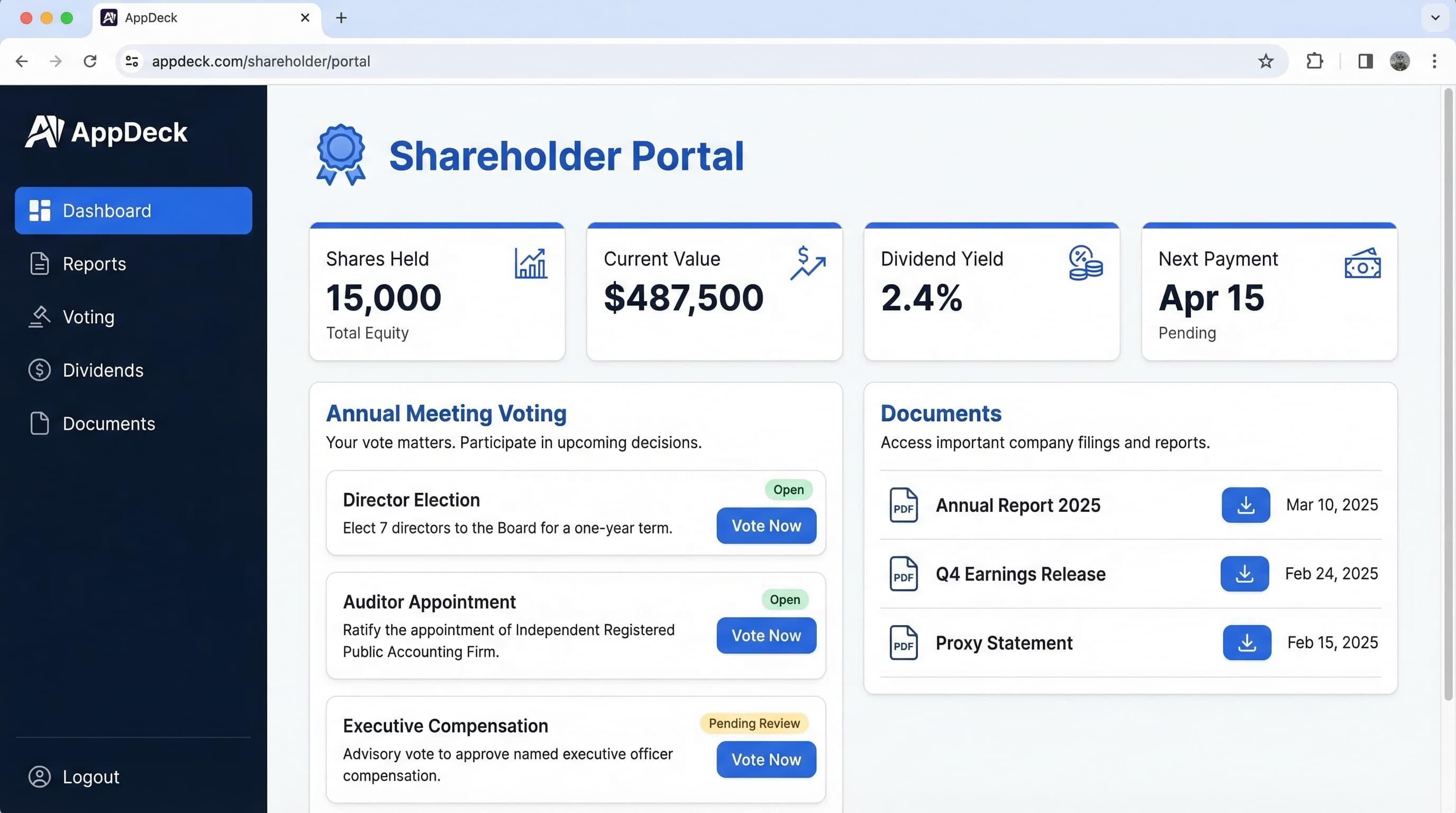
- Prepare the shareholder portal. Set up a secure portal where shareholders can access proxy materials, submit questions in advance, and track meeting logistics. Email is not sufficient for sensitive governance documents.
Days 60–30: Distribution
- File the proxy statement with the SEC (public companies). The preliminary proxy must be filed at least 10 days before mailing if it contains a contested matter.
- Distribute the notice of annual meeting. Mail or electronically deliver the notice to all shareholders of record. Include the date, time, location (or virtual meeting URL), and instructions for proxy voting.
- Send proxy materials. Under the SEC's "notice and access" rules, public companies can send a one-page notice directing shareholders to an online portal instead of mailing the full proxy statement. This is where a shareholder portal pays for itself — shareholders access materials securely, and you have an audit trail of who viewed what.
- Prepare management presentations. Draft the CEO's business review and CFO's financial review. Keep them concise — 15 minutes for the CEO, 10 minutes for the CFO. Shareholders came to vote and ask questions, not sit through a two-hour slide deck.
- Brief the board on shareholder proposals. If any shareholder proposals will be on the ballot, ensure the board has reviewed them and prepared a recommendation (for or against).
Days 30–14: Engagement
- Open proxy voting. Shareholders should be able to vote by proxy card, telephone, or online as early as possible. Track proxy returns daily.
- Prepare the Q&A briefing book. Anticipate the 30 most likely shareholder questions and draft clear, concise answers. Include questions on executive compensation, board diversity, ESG commitments, capital allocation, and any controversies from the past year.
- Rehearse presentations. Run a full rehearsal with the CEO, CFO, and board chair. Practice transitions, timing, and responses to tough questions.
- Monitor quorum. Track proxy returns against your quorum requirement (typically a majority of outstanding shares). If you're short, begin proxy solicitation outreach.
Days 14–1: Final Preparation
- Confirm logistics. Verify the venue setup, AV equipment, virtual platform configuration, and backup internet connections. Test everything twice.
- Finalize the script. Prepare the meeting script for the chair, including the call to order, quorum announcement, voting procedures, and adjournment language. Every word in the formal portions should be scripted to avoid legal missteps.
- Last-minute proxy solicitation. If quorum is at risk, engage a proxy solicitation firm or have investor relations make direct outreach to large shareholders.
- Distribute the board meeting agenda for any board meeting that will take place immediately before or after the AGM. Many companies hold a board meeting right after the annual meeting to appoint officers and handle organizational matters.
- Pre-position the inspector of elections. The inspector (often the transfer agent) verifies the quorum, tabulates votes, and certifies the results.
Day of the Meeting
- Arrive early. Run final AV and platform checks.
- Open virtual access 15–30 minutes before the official start time.
- Follow the script precisely for all formal matters.
- Manage Q&A time firmly but respectfully.
- Announce preliminary vote results before adjournment.
Post-Meeting (Days 1–7)
- File Form 8-K (public companies) — report the voting results within four business days of the meeting.
- Distribute meeting minutes. Share the official minutes with the board and make them available to shareholders through your portal.
- Follow up on action items. If management committed to providing additional information or taking specific actions during Q&A, deliver on those commitments within 48 hours.
- Archive everything. Store the meeting recording, transcript, proxy materials, vote tabulation, and minutes in a secure document repository. An investor data room ensures these records are accessible for future audits and regulatory inquiries.
Annual Shareholder Meeting Agenda Template
Here's the agenda template I've used across multiple companies. Adjust the time allocations based on your company's size and the number of proposals on the ballot.
Total estimated time: 90–120 minutes
| Time | Agenda Item | Lead | Duration |
|---|---|---|---|
| 10:00 AM | Call to order and quorum confirmation | Board Chair | 5 min |
| 10:05 AM | Chair's opening remarks and meeting rules | Board Chair | 5 min |
| 10:10 AM | CEO business review | CEO | 15 min |
| 10:25 AM | CFO financial review | CFO | 10 min |
| 10:35 AM | Board nominations and director elections | Governance Committee Chair | 10 min |
| 10:45 AM | Ratification of independent auditor | Audit Committee Chair | 5 min |
| 10:50 AM | Advisory vote on executive compensation (say-on-pay) | Compensation Committee Chair | 5 min |
| 10:55 AM | Shareholder proposals (if any) | Board Chair | 15–30 min |
| 11:20 AM | Open Q&A session | Board Chair / CEO | 30 min |
| 11:50 AM | Announcement of preliminary vote results | Inspector of Elections | 5 min |
| 11:55 AM | Adjournment | Board Chair | 2 min |
A few notes on this template. The formal business — director elections, auditor ratification, say-on-pay — should move briskly. These items were already described in the proxy statement, and shareholders have already formed their opinions. Spend your time on what shareholders actually want: the business review, the financial review, and the Q&A.
For a deeper dive into meeting structure, see our guide on board meeting best practices.
Proxy Voting: Everything You Need to Know
Most shareholders don't attend the annual meeting in person. They vote by proxy — authorizing someone else (typically management) to cast their vote according to their instructions. Proxy voting is the backbone of the annual meeting process, and getting it right is both a legal obligation and a practical necessity for achieving quorum.
Types of Proxy Votes
- For — the shareholder supports the proposal or nominee
- Against — the shareholder opposes the proposal or nominee
- Abstain — the shareholder declines to vote on a specific item but is counted toward quorum
- Broker non-vote — shares held by a broker that hasn't received voting instructions from the beneficial owner. Under NYSE rules, brokers can vote uninstructed shares on routine matters (like auditor ratification) but not on non-routine matters (like director elections or say-on-pay).
Proxy Voting Methods
Shareholders should have multiple ways to submit their proxy vote:
- Paper proxy card — the traditional method, returned by mail
- Telephone voting — call a toll-free number and enter a control number
- Online voting — log into a secure portal with a control number
- In-person at the meeting — shareholders who attend can revoke their proxy and vote live
The most efficient approach is online voting through a shareholder portal that integrates proxy submission, document access, and meeting logistics into a single platform. Shareholders log in once, review the materials, and cast their votes — no paper, no phone trees, no lost proxy cards.
Proxy Solicitation Rules
Public companies must follow SEC Rule 14a to solicit proxies. Key requirements include:
- The proxy statement must be filed with the SEC before or at the same time it's distributed to shareholders.
- The proxy card must clearly present each matter for a vote and allow shareholders to vote for, against, or abstain on each item.
- Companies using the "notice and access" model must make all proxy materials available on a publicly accessible website.
- If a shareholder submits a proposal under Rule 14a-8, the company must either include it in the proxy statement or seek a no-action letter from the SEC to exclude it.
For private companies, proxy rules are governed by state law and the company's governing documents. The requirements are less prescriptive, but the principles are the same: give shareholders adequate notice, provide the information they need to make informed decisions, and make voting accessible.
Virtual vs. In-Person Shareholder Meetings
The pandemic accelerated a trend that was already underway: virtual annual shareholder meetings. In 2019, roughly 15% of S&P 500 companies held virtual AGMs. By 2023, that number exceeded 60%. Today, the question isn't whether to offer a virtual option — it's whether to go virtual-only, hybrid, or stick with in-person.
In-Person Meetings
Advantages:
- Strongest signal of transparency and accountability
- Natural engagement — shareholders can read the room, approach management during breaks
- Familiar format for institutional investors and governance watchdogs
Disadvantages:
- Limited attendance (travel and time constraints)
- Higher cost (venue, security, catering, AV)
- Geographic bias — favors shareholders near headquarters
Virtual Meetings
Advantages:
- Dramatically higher participation — shareholders can attend from anywhere
- Lower cost — no venue, no travel, no catering
- Better Q&A management — questions can be moderated, organized by topic, and answered more efficiently
- Full recording and transcript for the record
Disadvantages:
- Perception risk — some investors and proxy advisors (like ISS and Glass Lewis) have raised concerns that virtual-only meetings limit shareholder engagement
- Technology risk — platform outages, audio issues, and authentication problems can derail the meeting
- Reduced personal interaction — harder to build relationships with shareholders
Hybrid Meetings
The hybrid model — an in-person meeting with full virtual participation — is emerging as the gold standard. It captures the benefits of both formats while minimizing the downsides. The trade-off is complexity: you're running two meetings simultaneously and need to ensure virtual attendees have equal participation rights.
Legal Considerations
Not all states permit virtual-only shareholder meetings. Delaware (DGCL Section 211(a)(1)) allows fully virtual meetings, as do most states. However, some states require a physical location or impose additional notice requirements for virtual meetings. Check your state's corporate statute and your company's bylaws before committing to a virtual-only format.
Technology Requirements for Virtual AGMs
At minimum, your virtual meeting platform needs to support:
- Authenticated shareholder login — only verified shareholders of record should have voting rights
- Real-time proxy voting — shareholders must be able to vote during the meeting, not just in advance
- Live audio and video — presenters should be visible, and audio quality must be reliable
- Moderated Q&A — a system for submitting, organizing, and presenting questions
- Recording and archiving — the full meeting must be recorded for compliance purposes
- Accessibility — closed captioning, screen reader compatibility, and support for multiple devices
Many companies try to cobble together a virtual AGM using Zoom or Teams. That works for internal meetings, but it falls short for a formal governance event. Purpose-built platforms — or a shareholder portal with integrated meeting capabilities — handle the authentication, voting, and compliance requirements that general-purpose video tools don't.
Shareholder Meeting Best Practices
After participating in dozens of annual shareholder meetings as a presenter, board member, and investor, here are the practices that separate great AGMs from forgettable ones.
1. Make Materials Available 30+ Days in Advance
Don't wait until the last legal deadline to distribute proxy materials. Shareholders — especially institutional investors with hundreds of holdings — need time to review proposals, consult proxy advisors, and formulate questions. The earlier you distribute, the higher your proxy return rate and the fewer quorum headaches you'll have.
2. Use a Shareholder Portal, Not Email
Emailing proxy materials as PDF attachments is insecure, hard to track, and creates version control nightmares. A dedicated shareholder portal gives each shareholder a secure login where they can access the proxy statement, annual report, meeting notice, and voting instructions in one place. You get read receipts, access analytics, and a clean audit trail.
If your organization also runs regular board meetings, consider using the same platform for both. Consistency reduces confusion, and a single portal for all governance activities makes life easier for directors who are also shareholders.
3. Prepare for Tough Questions
The Q&A session is where annual meetings are won or lost. Shareholders will ask about executive compensation, board diversity, capital allocation, competitive threats, ESG commitments, and anything else that's been in the news. Prepare a briefing book with the 30 most likely questions and rehearsed answers. Designate which executive will handle each topic area.
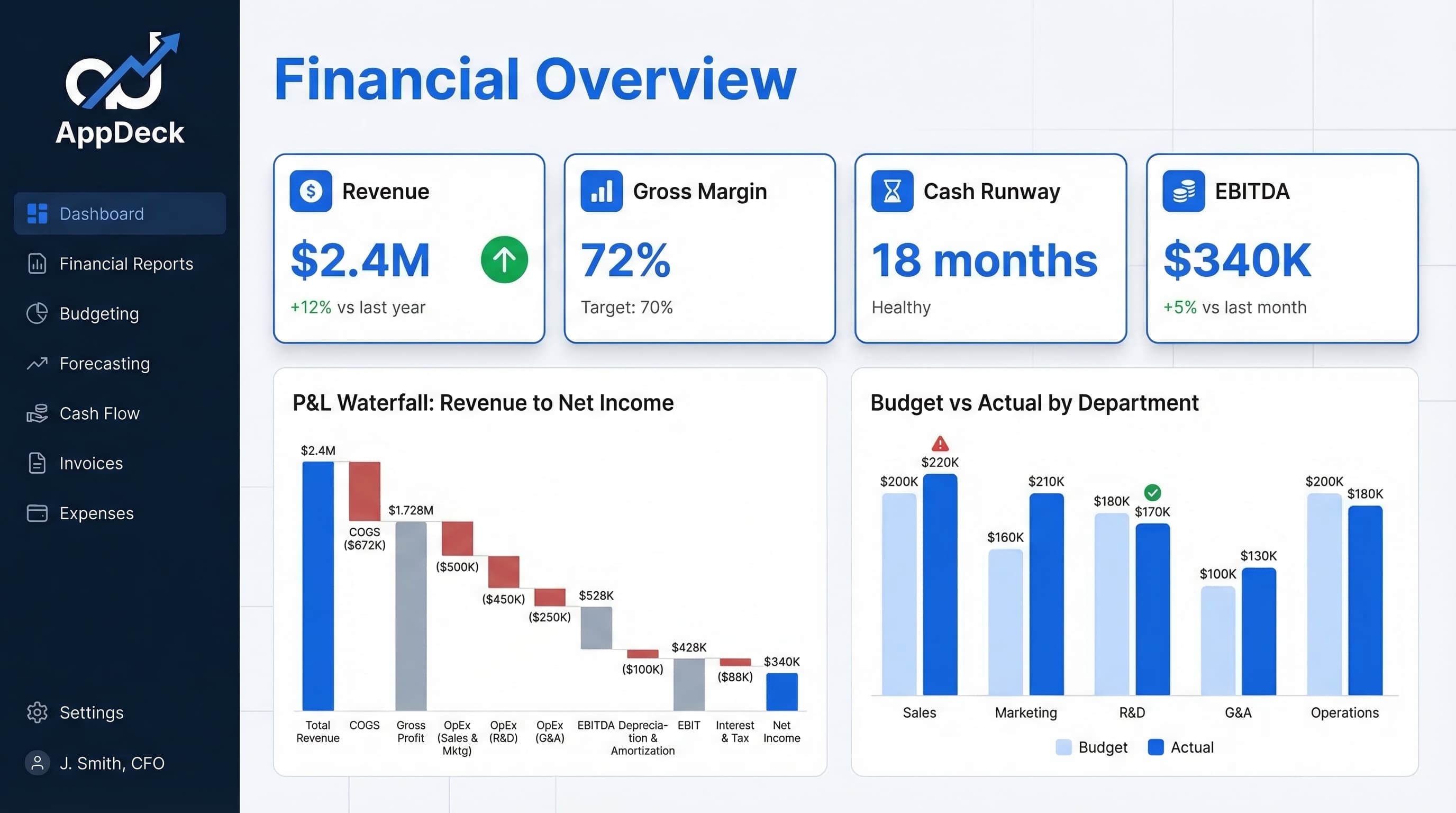
If you use an executive dashboard, consider sharing real-time financial dashboards during the CFO's presentation. Live data is more compelling than static slides and demonstrates transparency.
4. Keep Presentations Concise
Nobody came to your annual meeting to watch a 45-minute corporate video. Keep the CEO's business review to 15 minutes and the CFO's financial review to 10 minutes. Use visuals, not walls of text. Get to the numbers, the strategy, and the outlook — then open the floor for questions.
5. Record and Archive Everything
Record the full meeting — audio, video, and screen shares. Generate a transcript. Archive the recording, transcript, proxy materials, vote tabulation, and minutes in a secure, searchable repository. You'll need these records for regulatory filings, litigation defense, and institutional investor due diligence.
6. Follow Up Within 48 Hours
If a shareholder asked a question that management promised to follow up on, deliver that answer within 48 hours. Post the meeting recording and preliminary vote results to your shareholder portal within 24 hours. Speed signals respect for shareholders' time and engagement.
7. Debrief with the Board
Within a week of the meeting, hold a debrief with the board and management team. Review what went well, what questions caught you off guard, and what to improve for next year. This is especially important for shareholder communications strategy — the themes from Q&A often signal what shareholders will be focused on for the rest of the year.
Common AGM Mistakes
These are the mistakes I see most often, even at companies with experienced governance teams.
Insufficient Notice
State law and SEC rules specify minimum notice periods. Delaware requires at least 10 days' notice for the annual meeting. SEC rules require proxy materials to be delivered at least 40 days before the meeting for public companies using the "notice and access" model. Miss these deadlines, and your meeting — and every vote taken at it — could be challenged.
No Quorum Contingency Plan
If you don't achieve quorum, you can't conduct business. Period. The meeting must be adjourned and rescheduled, which is expensive and embarrassing. Start tracking proxy returns 30 days out. If you're trending below quorum at day 14, engage a proxy solicitation firm or have investor relations call your top 20 shareholders directly.
Unprepared for Hostile Questions
Every annual meeting has at least one shareholder with a grievance. It might be an activist investor pushing for a board seat, an ESG advocate demanding a climate transition plan, or a retail investor angry about the stock price. If you haven't rehearsed your responses, you'll end up making news for the wrong reasons.
Poor Virtual Meeting Technology
Audio dropping out during the CEO's remarks. Shareholders unable to log in. Votes not recording properly. These aren't hypothetical — they happen every proxy season. Test your technology end-to-end, including from the shareholder's perspective, at least two weeks before the meeting.
Missing Compliance Deadlines
Public companies have a web of deadlines: proxy filing dates, notice periods, Form 8-K filing after the meeting, and annual report distribution. Create a compliance calendar at the start of the planning process and assign clear ownership for each deadline.
Ignoring Retail Shareholders
Institutional investors get the attention, but retail shareholders are increasingly vocal — especially through online forums and social media. Don't dismiss retail investor questions during Q&A. Treat every shareholder's question with respect, regardless of their share count.
Technology Stack for Modern AGMs
Running a modern annual shareholder meeting requires more than a conference room and a projector. Here's the technology stack I recommend.
Shareholder Portal
The hub of your AGM technology stack. A shareholder portal provides secure document distribution, proxy voting, meeting access, and post-meeting archives — all in one authenticated platform. Look for granular permissions (so different share classes see different materials), activity tracking, and mobile access.
Virtual Meeting Platform
If you're running a virtual or hybrid meeting, you need a platform that supports authenticated login, real-time voting, live video, moderated Q&A, and recording. This can be a standalone platform or integrated into your shareholder portal.
Proxy Voting System
Your transfer agent (Broadridge, Computershare, EQ, etc.) typically provides the proxy voting infrastructure. Ensure it integrates with your shareholder portal so shareholders can vote and access materials in the same place.
Document Management
Proxy statements, annual reports, board presentations, vote tabulations, meeting minutes — all of these need to be organized, versioned, and accessible. A board portal with document management capabilities keeps everything in one secure location. If you're already using a board portal for your board meetings, extending it to shareholder governance creates a unified platform for all corporate governance activities.
Financial Reporting
For the CFO's presentation, real-time financial dashboards are more compelling than static slides. An executive dashboard that pulls live data from your accounting and BI systems can be shared on screen during the meeting, giving shareholders confidence that the numbers are current and transparent.
Frequently Asked Questions
How often must a company hold a shareholder meeting?
Most state corporate laws require an annual meeting for the election of directors. Delaware law (DGCL Section 211) requires it, and both the NYSE and NASDAQ mandate annual meetings as a listing requirement. If no meeting is held within 13 months of the last one, any shareholder can petition the court to order one.
What is the quorum requirement for a shareholder meeting?
Quorum requirements are set by the company's bylaws, typically a majority of outstanding shares represented in person or by proxy. Some bylaws set a lower threshold — as low as one-third of outstanding shares — but a majority is standard.
Can shareholders attend virtually and still vote?
Yes, if your state permits virtual meetings and your platform supports authenticated voting. Delaware and most other states allow shareholders to attend and vote at virtual meetings with the same legal effect as in-person attendance.
What happens if the company doesn't achieve quorum?
The meeting cannot conduct any business. The chair must adjourn the meeting to a later date, typically with 10–30 days' notice. This is why quorum tracking and proxy solicitation are critical parts of the planning process.
How long should an annual shareholder meeting last?
Most AGMs run 90–120 minutes. Formal business (elections, ratifications, votes) takes 30–45 minutes. Presentations take 25–30 minutes. Q&A takes 30–45 minutes. Don't let it run past two hours — shareholders lose attention, and you risk rambling answers to difficult questions.
What is a say-on-pay vote?
The Dodd-Frank Act requires public companies to hold a non-binding advisory vote on executive compensation at least every three years (most companies do it annually). While the vote is non-binding, a significant "against" vote sends a powerful message and can trigger engagement from proxy advisors and institutional investors.
Who is the inspector of elections?
The inspector of elections is an independent party (often the company's transfer agent) responsible for verifying the quorum, tabulating votes, and certifying the election results. Appointing an inspector is a best practice for all companies, even private ones, to ensure voting integrity.
Can shareholders submit proposals for the annual meeting?
Public company shareholders who meet certain ownership thresholds (generally $2,000 of stock held for at least three years, or higher amounts for shorter holding periods) can submit proposals under SEC Rule 14a-8. The company must include the proposal in its proxy statement unless it obtains a no-action letter from the SEC permitting exclusion.
Make Your Next AGM Your Best One
The annual shareholder meeting is the one event each year where your company's governance is on full display. Get it right, and you reinforce shareholder confidence, strengthen board accountability, and demonstrate that management takes ownership seriously. Get it wrong, and you hand activists, litigators, and the media an easy target.
Start with the 90-day timeline above. Build your agenda around the template in this guide. Invest in a shareholder portal that makes proxy distribution, voting, and meeting access seamless for every shareholder. And prepare relentlessly for Q&A — because that's where trust is built or broken.
If you're looking for a platform that handles shareholder meetings, board meetings, and investor communications in one place, explore AppDeck's shareholder portal or see how our board portal works for companies that want to unify their governance technology.
Related reading:

Founder & CEO, AppDeck
Serial entrepreneur with 20+ years building B2B software companies. Former executive managing 2,800+ employees across three continents. Vik reviews all AppDeck content for accuracy and practical relevance.
Tags
Share this article
Explore Related Solutions
Related Articles
Shareholder Communications Guide: Best Practices for IR Teams
Complete guide to shareholder communications for investor relations teams. Covers shareholder portals, proxy voting, annual reports, dividend communications, and SEC compliance.
Board Meeting Best Practices: 25 Tips for More Effective Board Meetings
Proven board meeting best practices and protocol from 100+ board meetings. Pre-meeting preparation, agenda design, formal procedures, engagement strategies, and follow-up.
Board Meeting Minutes Template: 5 Free Templates for 2026
Download free board meeting minutes templates for corporations, nonprofits, and startups. Includes formal, informal, and action-focused formats with examples.