
What is a Investor Data Room?
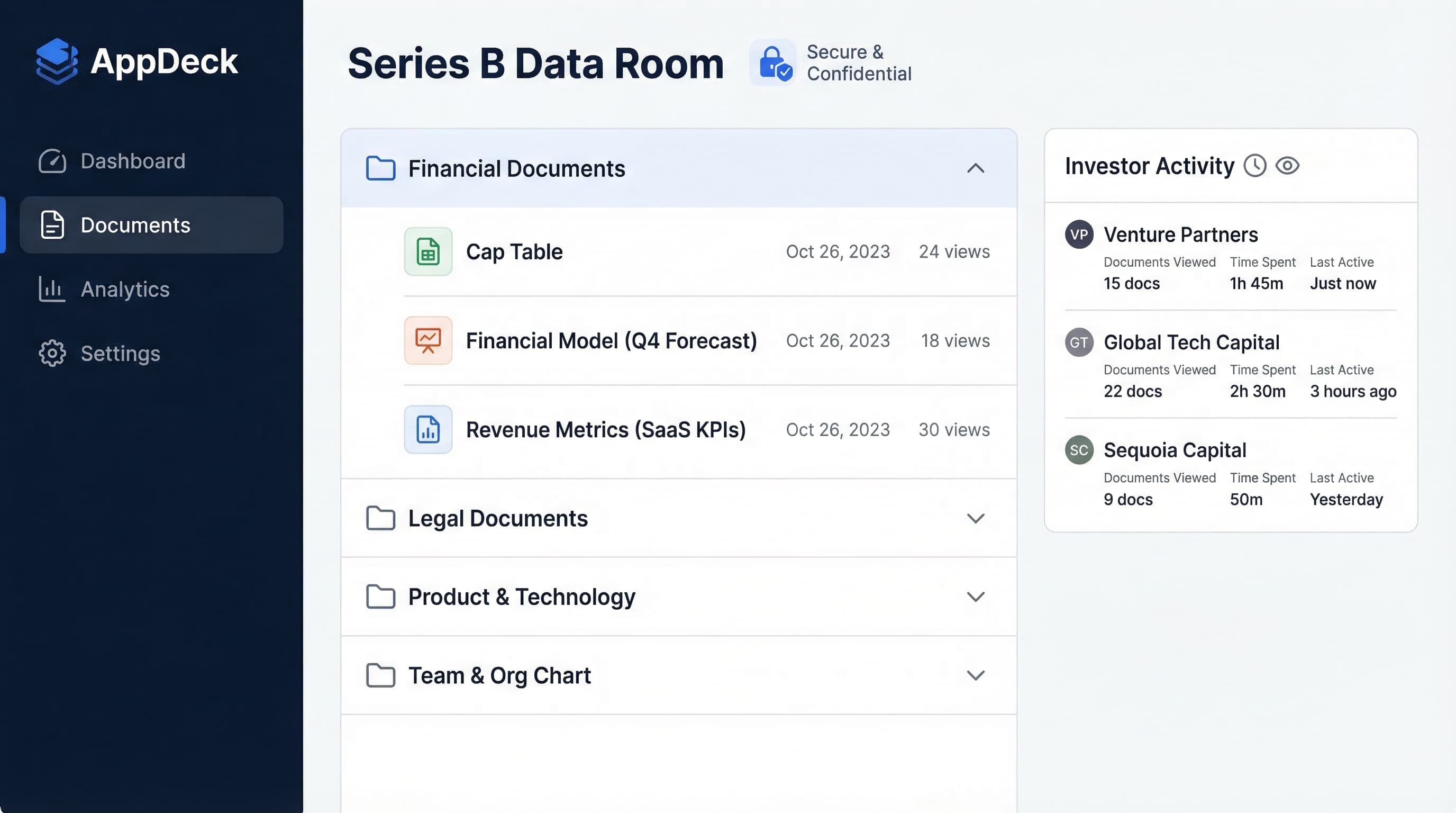
An investor data room, also called a virtual data room (VDR), is a secure online repository for sharing confidential documents during fundraising, due diligence, and M&A transactions. It provides granular access controls, watermarking, and detailed activity tracking to protect sensitive information. Startups and enterprises alike use data rooms to streamline capital-raising processes.
When a company raises capital or enters an acquisition process, dozens of sensitive documents need to be shared with potential investors or buyers. An investor data room organizes these materials into a logical folder structure covering financials, legal agreements, intellectual property, team information, and market analysis. Drag-and-drop uploading and bulk operations make it easy to populate the room quickly.
Security features go far beyond basic passwords. Administrators can restrict downloads, apply dynamic watermarks with the viewer's name, set document expiration dates, and revoke access instantly. Fence-view technology prevents screen captures, and detailed audit logs record every page view, download, and print. These controls give sellers confidence that their information will not be misused.
Activity analytics are equally important. Founders and deal teams can see which investors spent the most time reviewing materials, which sections attracted the most attention, and where drop-off occurred. These insights help prioritize follow-up conversations and gauge investor interest before term sheets are even discussed, giving sellers a strategic advantage in negotiations.
Key Features
Common Use Cases
- 1Startups sharing pitch decks and financials with VCs
- 2Companies preparing for M&A due diligence
- 3Private equity firms managing portfolio company documentation
- 4Real estate firms distributing investment memoranda
- 5Biotech companies sharing clinical trial data with partners
Investor Data Room FAQs
What documents should be in an investor data room?
An investor data room should include: pitch deck, financial statements (P&L, balance sheet, cash flow), cap table, legal documents (articles of incorporation, bylaws), customer contracts, IP documentation, board meeting minutes, and market research. Organize into clear folders for easy navigation.
What is the difference between a data room and Google Drive?
Investor data rooms provide security features that Google Drive lacks: granular per-document permissions, dynamic watermarking, download restrictions, detailed viewer analytics (who viewed what and for how long), NDA workflows, and complete audit trails. These features are critical for protecting sensitive financial data during fundraising.
When should a startup set up a data room?
Set up your investor data room 4-6 weeks before you start taking investor meetings. This gives you time to organize documents, set permissions, and test the experience. Having a well-organized data room signals professionalism and operational maturity to investors.
Related Terms
Executive Dashboard
An executive dashboard is a real-time data visualization tool that presents key performance indicators and business metrics to leadership teams. It consolidates data from multiple sources into a single view so executives can monitor organizational health at a glance. Well-designed dashboards enable faster, data-driven decision-making.
Shareholder Portal
A shareholder portal is a secure platform where companies distribute annual reports, proxy materials, and dividend information to their investors. It simplifies proxy voting, regulatory filings, and investor communications into one digital workspace. Companies use shareholder portals to reduce mailing costs, improve voter turnout, and maintain regulatory compliance.
Ready to Get Started?
Launch your portal in 30 minutes. Choose a portal type and see it in action.